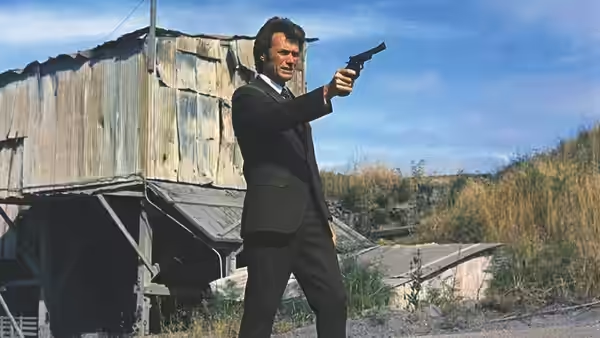
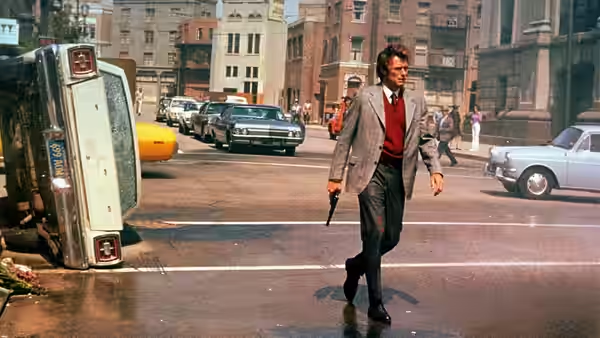
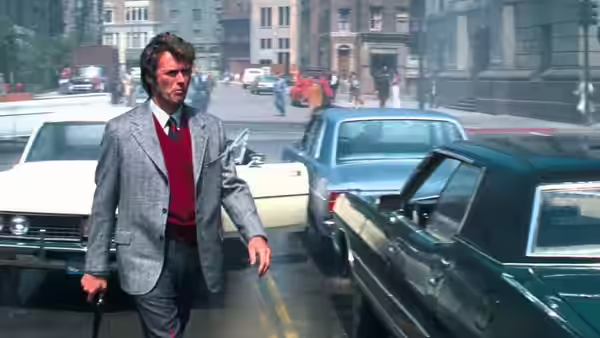
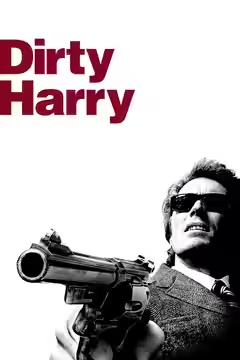
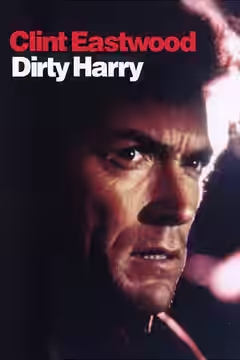
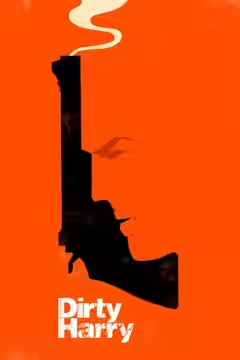
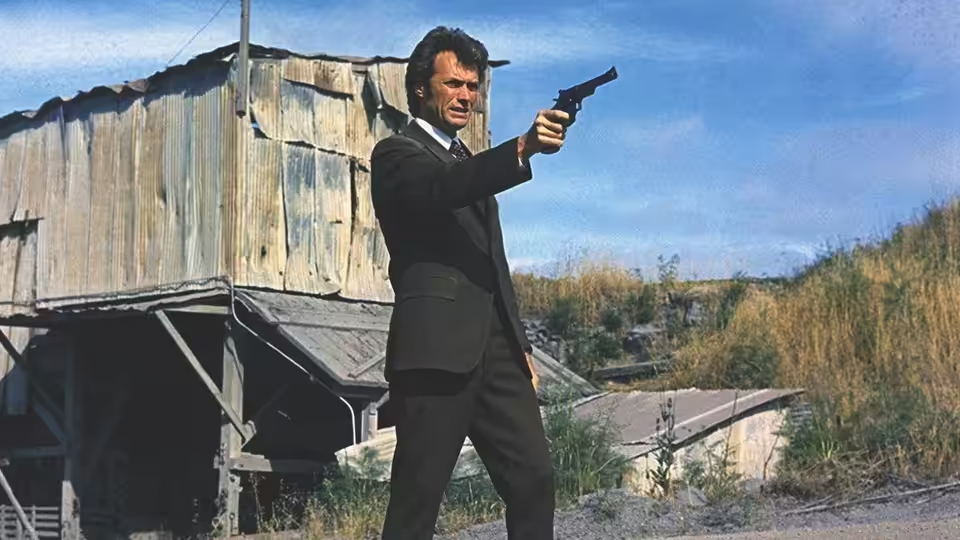
Harry (Clint Eastwood) aims a revolver beside a wooden industrial building
Film review

Dirty Harry

1971 · Directed by Don Siegel · 1h 42m

In a sentenceClint Eastwood makes asking about luck sound like a disciplinary procedure

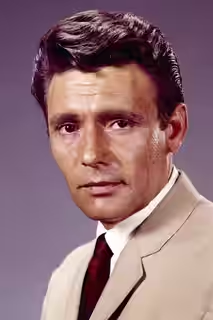
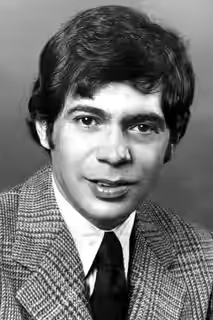
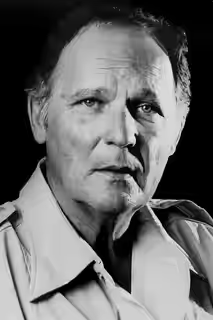
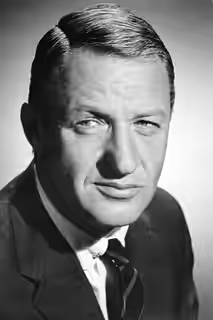
Detective Harry (Clint Eastwood) pursues the Killer (Andrew Robinson), bringing his own ideas about force and justice to the job. The pursuit also involves Bressler (Harry Guardino), Chico (Reni Santoni) and The Mayor (John Vernon). Harry wants to stop a murderer, but has little patience for restrictions on the way he does it. His willingness to use violence puts police authority at the centre of the conflict. Catching his target means confronting the limits placed on the man doing the catching.

Plays from YouTube when you press play; nothing loads from them until then.

Fi1m review

Don Siegel’s police thriller is gripping enough to recommend, though its excuses for brutality are too convenient. Clint Eastwood gives Harry an authority that the screenplay seems reluctant to question.

Don Siegel’s Dirty Harry is a tense, well-controlled police thriller with a serious weakness in its treatment of justice. It asks us to enjoy Harry’s freedom to use force, and gives Clint Eastwood enough authority to make that invitation difficult to resist. We recommend it for the command of the action and the central performance, with a substantial reservation about how readily it excuses brutality. It runs a brisk 102 minutes.

Clint Eastwood understands how little Harry needs to do to hold our attention. His delivery makes the question about luck feel protracted and nasty, with the confidence of a man who expects everyone else to wait for him. We were tense during that challenge because his composure makes the threat feel horribly casual. The performance has humour, but the joke depends on Harry being able to intimidate someone without needing to raise his voice.

Bruce Surtees’s shadowy cinematography makes the violence feel grubby, which is useful when the leading man is so commanding. It is harder to take Harry as a reassuring figure when the images are this severe. Carl Pingitore’s editing keeps the action clear and allows the leading actor’s stillness to register without making the pace drag. Don Siegel retains control of the action rather than letting Harry’s personality overwhelm it.

Lalo Schifrin’s music adds unease rather than letting the action settle into a comfortable rhythm. It helps sustain the sense that Harry’s world is unpleasant even when the film is enjoying his command of it. Andrew Robinson, credited as the Killer, supplies a more overt disturbance, and his performance prevents the leading man’s reserve from making their confrontations monotonous. He is effective, although the extremity of the opposition also makes Harry’s position too easy to defend.

The screenplay by Harry Julian Fink, Rita M. Fink and Dean Riesner is much less convincing about justice. It repeatedly encourages us to treat restraint as a nuisance, with too little curiosity about why police powers might need limits. That complaint matters because the excitement is so closely tied to Harry being allowed to do what he wants. The writing gives objections to his methods insufficient weight, then lets his certainty do the persuading. We can enjoy an unpleasant central character without requiring the film to make everybody who questions him seem mistaken.

Reni Santoni, as Chico, and Harry Guardino, as Bressler, have to work within a film built to keep returning to Harry. Their comparatively ordinary presence is welcome, giving us a break from his severity. But the screenplay seldom makes the people around him seem as interesting as the trouble he can cause. That narrowness limits the drama, even while it helps keep the pursuit moving.

Within the police thriller, this is a persuasive example of how much a director and a leading actor can achieve through timing. The action holds our attention without requiring us to approve of the man at its centre. That is enough to make it worth an evening, provided its treatment of justice does not need to withstand much questioning. Watch it for Clint Eastwood and Don Siegel, but bring your own objections to Harry.

Critical consensus AI synthesised

59
Positive
3
Mixed
4
Negative
2

The reviews are mixed, with praise clustering around Don Siegel’s handling of action and suspense, and sharp disagreement over the film’s politics. Admirers value the crisp direction and Clint Eastwood’s hard-boiled presence, treating both as central to its influence and lasting appeal. Even some detractors acknowledge the skill with which the tension is managed. The favourable readings also find substance beneath the violence, seeing a bleak thriller that questions justice and American ideals.

The spread is wide, and the reservations concern more than taste in action films. RogerEbert.com objects to the vigilante politics and portrayal of justice, while The New Yorker sees expert suspense serving an immoral defence of police power. Variety also rejects the glorification of brutality, adding complaints about plot holes and an inert Eastwood performance. His acting is therefore a particular point of division: what admirers find commanding, one of the strongest dissenters finds lifeless.

Radio Times
★★★★★ · Alan Jones
100

Jones calls it a masterpiece of action filmmaking and Eastwood’s best outing as Dirty Harry. He praises Don Siegel’s tough, crisp direction and Eastwood’s hard-boiled screen persona.

Read the full review →
Empire
1 January 2000 · Mark Dinning
85*

The critic regards the film as landmark cinema and an enduringly cool, influential achievement. He singles out Eastwood’s virtuoso performance and Siegel’s assured orchestration of the action.

Read the full review →
Time Out
· PT
65*

The page is a review of the 1971 film, but the available text does not reveal the critic’s overall verdict. Its description highlights the screenplay’s Kurosawa influence and its provocative antagonists.

Read the full review →
The New York Times
23 December 1971 · Vincent Canby
64*

The page is inaccessible, so the critic’s verdict cannot be verified. Its headline identifies a review of the film, but no praise or complaint is available to summarize.

Read the full review →
RogerEbert.com
22 December 1971 · ★★/4 · Roger Ebert
50

Ebert’s verdict is negative. He objects to the film’s vigilante politics and its portrayal of justice.

Read the full review →
Variety
31 December 1970 · Variety Staff
25*

The critic finds the film shallow and its glorification of brutality phony, despite competent action filmmaking. They single out its plot holes and Eastwood’s inert performance as major weaknesses.

Read the full review →

Straight answers AI written, from our review

Is Dirty Harry worth watching?
Dirty Harry is worth watching for its tense, controlled action and Clint Eastwood’s intimidating central performance, and we score it 74 out of 100. We recommend it to police-thriller enthusiasts, with a substantial caveat: the screenplay makes convenient excuses for brutality and gives objections to Harry’s methods too little weight.
How long is Dirty Harry, and what is it rated?
Dirty Harry runs 1h 42m. It is an action and crime film.
Where can I watch Dirty Harry in Hungary?
Dirty Harry is not on any streaming or rental service in Hungary at the moment. It is available in 13 other countries; change your country at the top of the page to see where. Availability is checked daily.
How violent or frightening is Dirty Harry, and is it suitable for children?
Dirty Harry carries a UK 18 certificate and is not suitable for children; its violence, intimidation and casual threats make it an adult police thriller. We find the tension unsettling because Harry remains composed while threatening force, and the shadowy images make the brutality feel grubby rather than reassuring.
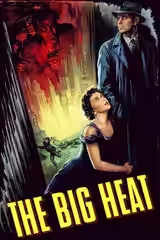
How does Dirty Harry compare to The Big Heat?
Dirty Harry is the choice for Clint Eastwood’s controlled intimidation, while we recommend The Big Heat as the more searching treatment of a furious policeman and the damage he causes. Both are tense, unpleasant crime thrillers with plotting weaknesses, but The Big Heat gives its violence consequences that Dirty Harry too readily excuses.
What should I watch after Dirty Harry?
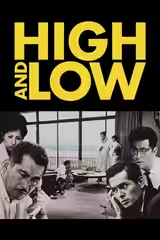
After Dirty Harry, try The Big Heat (1953, Fi1m 86): Another furious policeman, with more attention paid to what his fury destroys. Then High and Low (1963, Fi1m 90): A police hunt that gives questions of responsibility room to trouble us; and The French Connection (1971, Fi1m 85): Relentless police work, abrasive company and action with a properly unpleasant edge.

Cast

If you liked this, try…

  1. The Big Heat (1953, Fi1m 86)Another furious policeman, with more attention paid to what his fury destroys.

  2. High and Low (1963, Fi1m 90)A police hunt that gives questions of responsibility room to trouble us.

  3. The French Connection (1971, Fi1m 85)Relentless police work, abrasive company and action with a properly unpleasant edge.

  4. The Offence (1973) · not on Fi1m yetA harsher look at police violence, without the comforting heroic pose.

  5. Memories of Murder (2003, Fi1m 91)Detectives blunder through a murder investigation that makes their certainty look dangerous.