Caleb Landry Jones gives the whole of himself to a lonely man in a wheelchair who robs the rich with dogs and sings Piaf in a wig, and Luc Besson does not know what to do with him. Odd, watchable, and thinner than it looks.
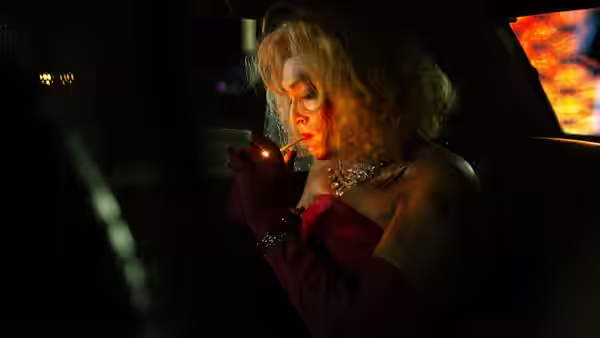
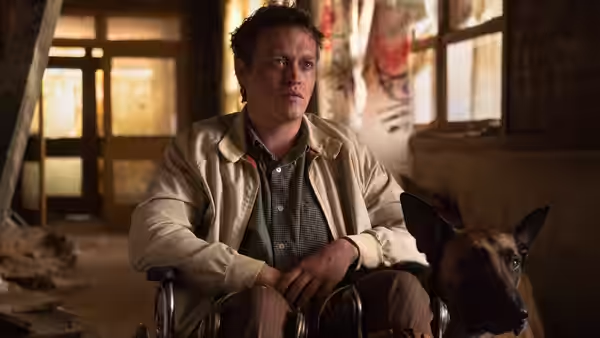
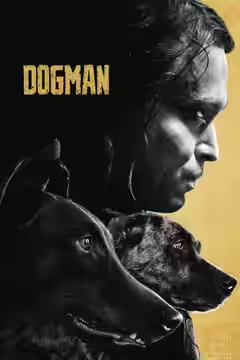
Luc Besson has written and directed a film about a man who prefers dogs to people and has been given every reason to. Douglas (Caleb Landry Jones) is stopped by the police one night at the wheel of a truck, in a blonde wig and a dress with blood down the front, with a pack of dogs in the back. A psychiatrist, Evelyn (Jojo T. Gibbs), is sent to his cell to find out what he is, and he tells her, at length. Besson opens on a line from Lamartine, “Wherever there is an unfortunate, God sends a dog”, and for the next 115 minutes he illustrates it.
The childhood is the strongest stretch. Douglas’s father Mike (Clemens Schick) breeds fighting dogs in the yard, and when the boy (Lincoln Powell) takes their side he is locked in the cage with them, while his brother Richie (Alexander Settineri) looks on. We were horrified, and what did it was how ordinary Besson made it look: a chain-link pen on scrubby grass, a house with its lights on a few yards away, a child sleeping with his face between a dog’s paws. The dogs do not hurt him. What happens next belongs to the first act and leaves him in a wheelchair, and we will say no more than that.
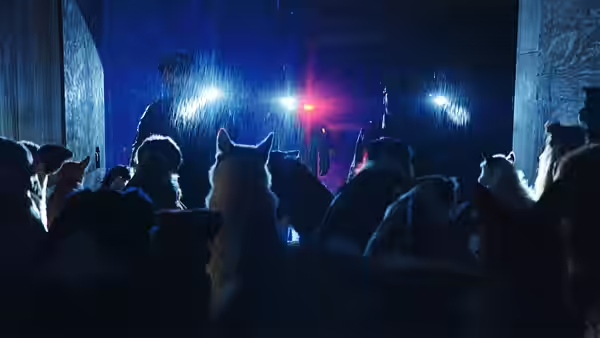
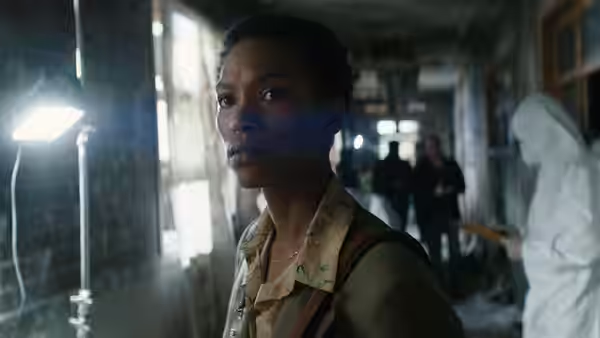
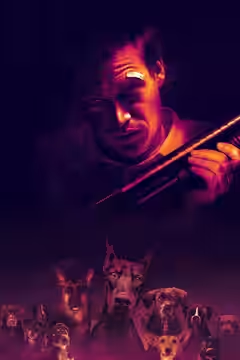
Grown up, Douglas works at a dog shelter, keeps the animals nobody claims, and lives with them in a derelict building where they come when he calls. The dogs are the film’s best idea and its best performers. They open doors, stand guard in rows, and carry other people’s jewellery down other people’s staircases. We laughed, at a small dog trotting out of a mansion with a necklace in its mouth, and then wondered whether Besson was laughing too. We think he was. The trouble is that he wants the man’s suffering taken seriously at the same pitch, in the same scene, and the two do not fit.
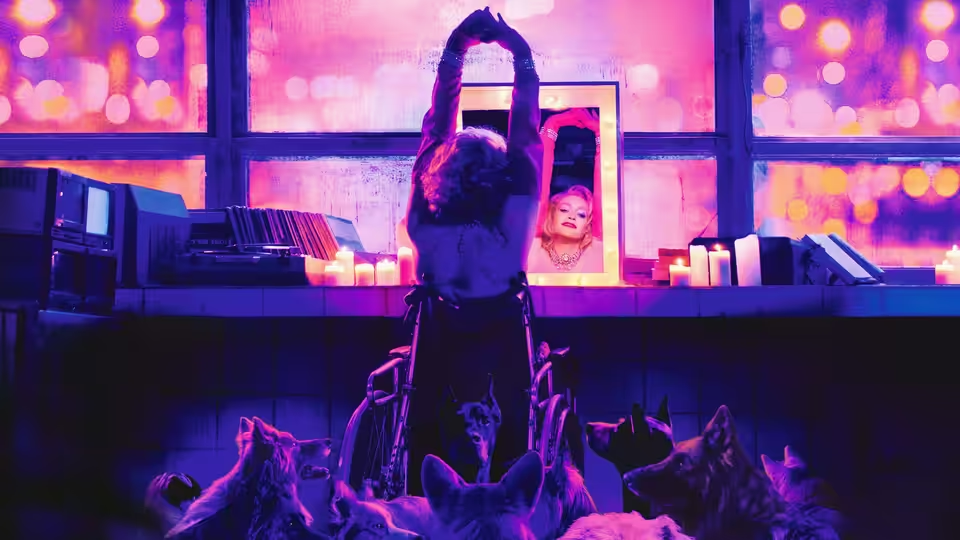
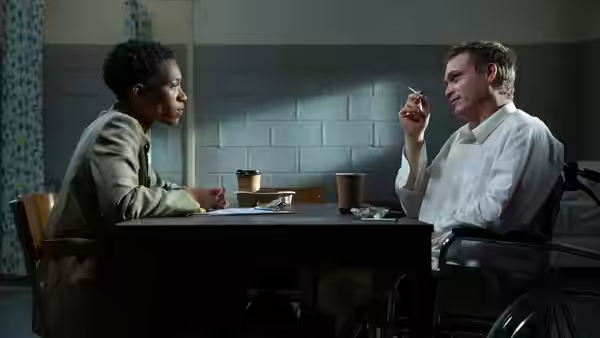
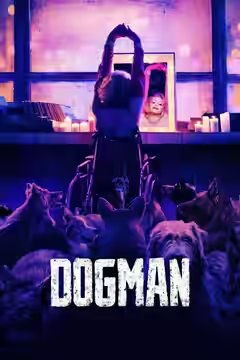
Jones gives Douglas a soft, careful voice and no vanity at all. He plays a man who has been hurt so thoroughly that he has stopped expecting anything, and when the film lets him sit still with Gibbs he is quietly good. He is better than that on stage. Douglas finds performing through a drama class run by Salma (Grace Palma) and ends up in a club, in a black wig under one light, mouthing Piaf with everything from the ribs up while the chair stays where it is. It is the point at which we stopped being embarrassed on the film’s behalf and started watching it. Éric Serra’s score keeps low and out of the way of the songs, which is sensible; the songs are the better music.
The structure works against all of this. Everything is told from the cell, so Julien Rey has to cut back to Gibbs’s patient face every few minutes, and each episode is announced before we see it and explained after. Gibbs is steady and unshowy and given nothing but questions. Colin Wandersman and Adrien Bertolle shoot the interview room flat and grey, the club warm, and the late violence mostly in the dark, so that when the action finally arrives it is hard to tell which dog is doing what to whom. A gangster, El Verdugo (John Charles Aguilar), turns up in the second half, and the story takes turns we will not describe, except to say that the film gets less interesting the more blood it spills.
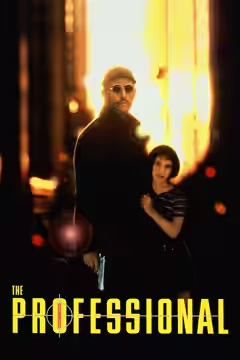
Besson’s Léon, from 1994, was also about a damaged loner with a strange domestic arrangement and a violent trade, and it knew exactly what it was. Dogman wants to be a case history, a fable, a heist comedy and a revenge picture, and says its theme aloud every twenty minutes in case we have lost the thread. Hugues Tissandier’s derelict building, all mattresses, cages and a dressing-table mirror, is the one place where the film’s several moods manage to live together. Corinne Bruand dresses Douglas for the stage with more care than the script takes over anything else.
The reviews have run from a rave to one star, sometimes about the same scenes, and we are in the middle: with the sceptics on the story, with the admirers on Jones. Worth an evening if you can take a film that changes its mind about what it is every reel, and the 15 certificate is earned by the cage as much as by anything later. The dogs are excellent throughout and never once look as though they have read the script.