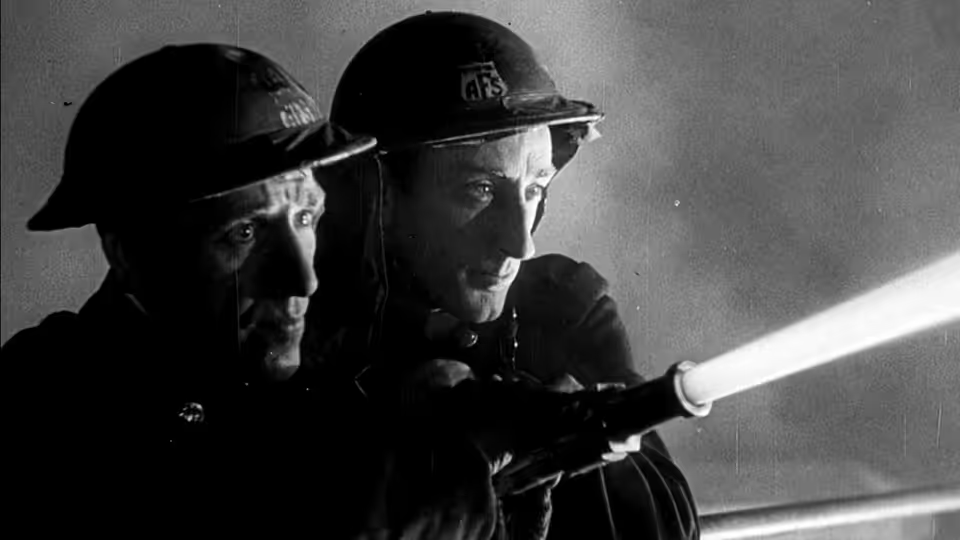
Humphrey Jennings makes the companionship of a wartime fire crew quietly moving. We learn little about individual lives, but the performances and precise editing give us good reason to care about the men doing the work.
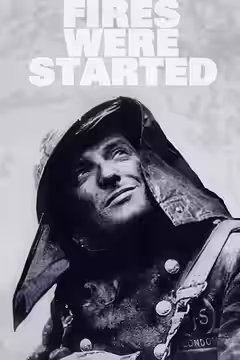
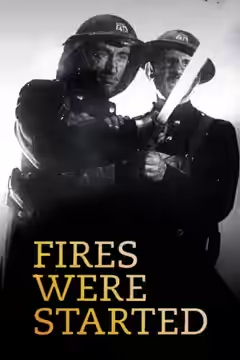
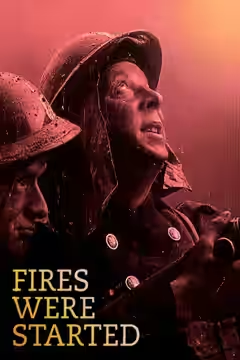
Fires Were Started asks us to spend time with a fire crew and take their work seriously. Humphrey Jennings, who writes and directs, finds enough in their companionship to make a war drama without forcing every man to explain what he represents. We recommend it warmly, with a reservation about how little we learn of some individuals. At 70 minutes, it gives the group more attention than any single personal story.
Phillip Wilson-Dickson plays Walters, George Gravett plays Dykes and Fred Griffiths plays Johnny Daniels. They make a convincing company, and the pleasure comes from watching people become comfortable together without any performance demanding special attention. We believe that these men could depend on one another when they have to. Their ease together establishes that confidence, without making every exchange announce the importance of comradeship.
William Sansom’s fireman at the piano matters to this. We were moved by that ordinary pleasure among men whose work exposes them to danger. There is nothing grand about someone making music for company, and the film has the sense to let it matter without labouring the point. It becomes easier to care what happens to the firefighters once we have spent some undemanding time with them.
C.M. Pennington-Richards’s cinematography serves the crew well: the firefighting holds our attention without making the people doing it seem incidental. We remain interested in the men, even when there is plenty else to look at. Stewart McAllister’s editing is particularly good at sustaining that attention; the film has pace without treating time spent together as an interruption. We have room to register the relationships. That helps the firefighting remain free of melodrama while still giving us reason to worry.
William Alwyn’s music contributes to the feeling without overwhelming the men, though the piano player is what we remember most clearly. A more insistent score could easily have made this account of ordinary courage feel overbearing. The music leaves enough room for us to respond to the firefighters without feeling that admiration is compulsory. That restraint suits a film whose performances already give us much of what we need.
The limitation is that we sometimes want to know more about a particular man than the film has room to tell us. The cast convince us that lives extend beyond the job, but those lives remain lightly sketched. The choice makes sense for a short film about a crew, though we occasionally wished a conversation could continue beyond what it tells us about the group. The warmth does not quite remove that frustration.
As a war drama, it puts considerable trust in people doing necessary work together. There is courage here, but the director does not keep stopping to point at it, and the lack of fuss makes the danger more persuasive. Anyone looking for a single commanding hero may find the attention too widely shared. Give the quieter passages as much attention as the fires; the man at the piano has earned his place.