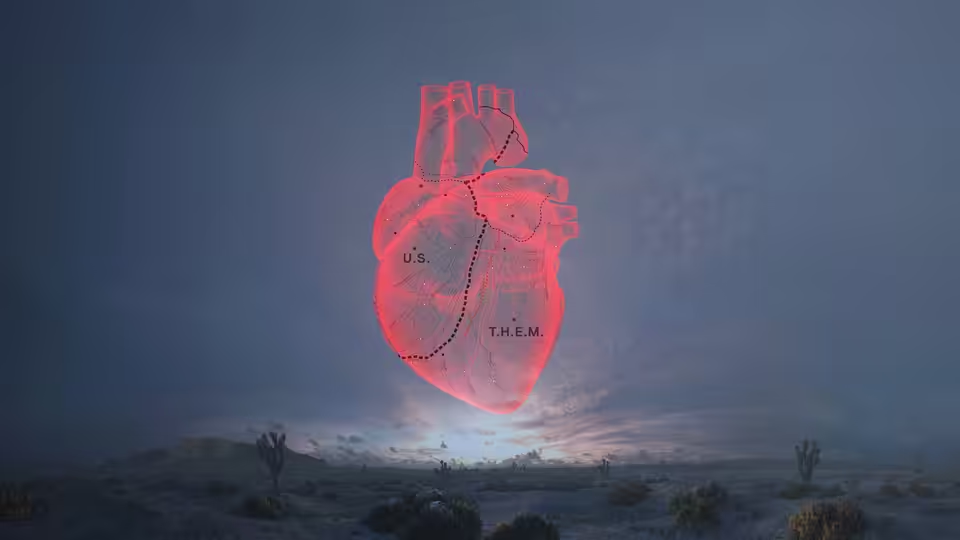
Flesh and Sand makes a border confrontation frighteningly immediate, and its compassion is persuasive. We recommend this seven-minute experiment with a reservation: sharing a moment of fear tells us only so much about another person’s life.
Flesh and Sand uses virtual reality to make a border confrontation physically frightening, and it succeeds. Alejandro González Iñárritu places the spectator among migrants and patrol officers in the Sonoran Desert, with real sand beneath bare feet. It is a worthwhile experiment, made with care for the people whose danger it recreates. We recommend it with a reservation about what such an encounter can teach us: the fear arrives much more readily than an understanding of these particular lives.
The choice of form matters before we consider the story. Walking barefoot on sand gives the desert encounter a physical starting point; the spectator has already been asked to participate. That can sound like an elaborate way of insisting on attention, but the encounter earns it when the guards assert control. We were frightened by the order to get down at gunpoint, because the weapon seems directed towards us, with none of the comfortable distance of a cinema seat.
Emmanuel Lubezki’s cinematography makes that proximity count: bodies and weapons share a space that the spectator seems to occupy. The technical achievement is considerable, although the digitally rendered people can occasionally look artificial. Those moments matter because so much depends on accepting the people in front of us as vulnerable human beings. A figure that seems slightly wrong draws attention back to the equipment precisely when the encounter needs us to forget it.
Richard B. Molina’s editing keeps the encounter concentrated, although seven minutes hardly leaves room for digression. We found the confrontation easy to follow despite its capacity to disorientate. Alva Noto’s music is secondary to that effect; what stays with us is the apparent proximity of the guards, not a musical phrase. The work is at its strongest when it lets that immediate threat hold our attention.
The immigrant stories on which the work is based give the staging a responsibility beyond making a persuasive simulation. Alejandro González Iñárritu approaches the people with sympathy, and we never doubted the wish to make their fear matter. Still, the emphasis on an armed confrontation risks leaving us with a familiar picture of migrants chiefly as people to whom terrible things happen. We wanted a fuller sense of their choices and circumstances, something the short encounter struggles to provide.
Most critics have responded to that sympathy and to the force of the technology; we share their respect without sharing all their enthusiasm. The suggestion that this medium delivers a new degree of human understanding asks too much of a convincing simulation. A drama about migration can make room for work, family, boredom and humour alongside danger. Here the confrontation is so dominant that our strongest memory is of the guards’ power.
The seven-minute running time keeps the pressure concentrated and gives the work little room to repeat itself. For anyone interested in what virtual reality can contribute to drama, there is enough here to justify serious attention. Approach it as a short drama, and allow yourself to question the feelings it produces afterwards. Do not mistake those seven minutes for an education in crossing a border.