Hayley Kiyoko’s first feature is tender, well acted and about as surprising as a sunset. Maya da Costa and Myra Molloy make the wanting real; the script around them keeps choosing the safe line, and the film is smaller for it.
Hayley Kiyoko wrote a song called Girls Like Girls in 2015, then a novel of the same name, and now she has directed the film, from a screenplay she wrote with Stefanie Scott. It is the summer of 2006 in small-town Oregon. Coley (Maya da Costa) has lost her mother and been delivered to Curtis (Zach Braff), the father who was never around, and within a week she has met Sonya (Myra Molloy) and the summer has stopped being about grief. What follows is a first love story told with warmth, two good central performances and a script that flinches whenever it could have gone somewhere harder. It runs 95 minutes, it is likeable company, and we wanted it braver.
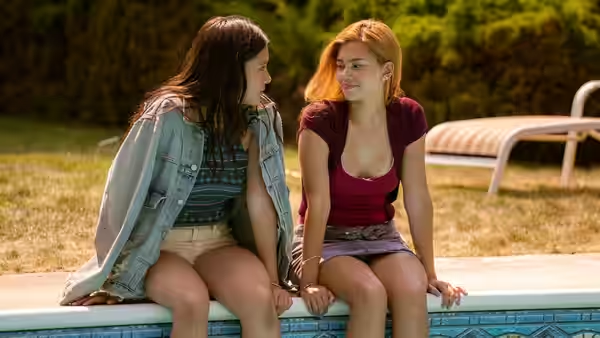
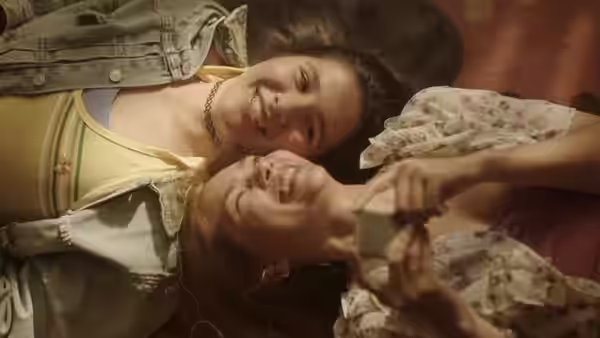
Da Costa carries it. She plays Coley as a girl who has learnt to take up as little room as possible, arms folded, eyes on the floor, and then what happens to that posture when Sonya comes into a room. Molloy has the harder part. Sonya knows what she wants and pretends not to, and Molloy plays the pretending as a show Sonya puts on for her friends and for Trenton (Levon Hawke), a boyfriend decent enough that the film cannot quite make him the villain. When the two girls are alone together the film is alive.
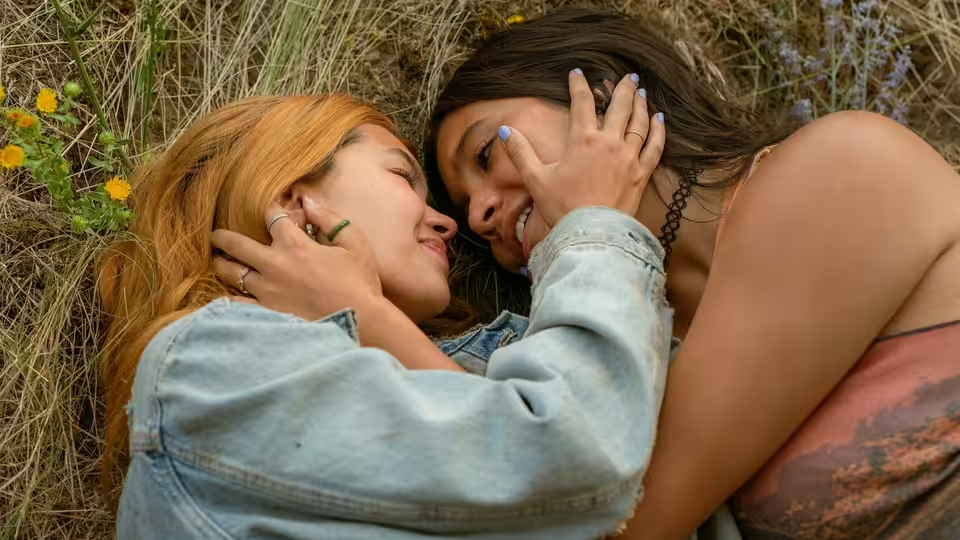
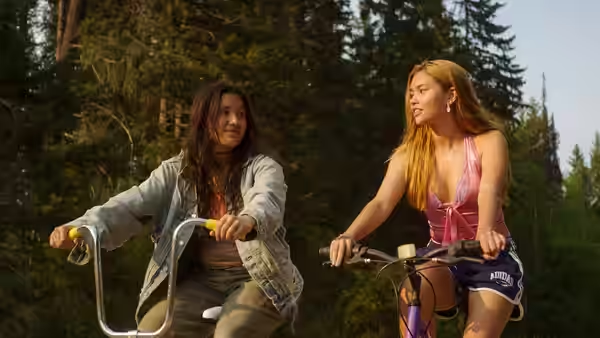
Sonja Tsypin shoots the summer in late-afternoon light, mostly from close, so that a shared cigarette or a hand resting on a car door fills the frame. Morgan Lindsey Price’s production design does the period work quietly: bedroom walls papered in magazine pages, a family computer in a hallway, a CD wallet on a passenger seat. Kelli Dunsmore puts the girls in low-slung jeans and layered vests without winking at them. Jessica Rose Weiss’s score is soft piano and guitar under nearly everything, and there is too much of it; the best scenes are the ones where it stops.
The trouble is the writing. Kiyoko and Scott give the girls things to say to each other that sound written rather than said, speeches about letting people in that a real seventeen-year-old would die before delivering. Curtis is a sketch, a man who grills and apologises, and Braff plays him gently with nothing underneath to play. Alex (Alozie LaRose) and SJ (Sierra Sidwell) exist to be in the way at parties. The story, credited to Kiyoko and Chloe Okuno, has one turn, and anyone who has seen a film about a girl, a boyfriend and a new best friend will see it coming from the first reel. Christine Armstrong and Sabine Hoffmann cut it briskly enough that the waiting never becomes a chore.
And yet. There is a scene late at night, when the others have gone, in which Sonya asks Coley something ordinary and Coley cannot answer, and da Costa lets us watch her decide not to. It moved us more than we expected from a film this careful. It is the look of someone who has spent a year being sad and has just noticed she is frightened instead. For about four minutes the film is exactly what it wants to be.
Kiyoko is not sentimental about Sonya, either. The crush has a cruelty in it, a hot-and-cold the film watches without excusing, and that honesty is its best quality. The second half takes a turn we will not describe; what we can say is that things resolve more tidily than the previous hour has earned.
Films about girls falling for girls used to be about the falling being forbidden. This one takes it as given, which most critics have rightly welcomed. That also removes the one pressure the genre used to supply, and Kiyoko has not found another. Show Me Love (1998) and My Summer of Love (2004) both understood that the world outside the pair has to push back, hard, for the pair to matter. Here the world mostly waits politely for the girls to work it out.
See it if the subject is yours, or if you were seventeen in 2006 and would like to be reminded, gently. Bring someone who will not mind you predicting the ending, because you will.