Richard Dormer gives Good Vibrations the warmth and conviction its Belfast music story needs. The film is too forgiving of Terri Hooley’s failings, but its pleasure in discovering punk is hard to resist.
Good Vibrations is a good music film with a generous performance at its centre and a habit of forgiving its subject too quickly. Directors Lisa Barros D’Sa and Glenn Leyburn follow Terri Hooley’s music-promotion work in Belfast during the Troubles, finding ample reason to take his enthusiasm seriously. They want us to understand how hearing a band can change what someone expects from the place they live. When they stay with that experience, we are happily persuaded.
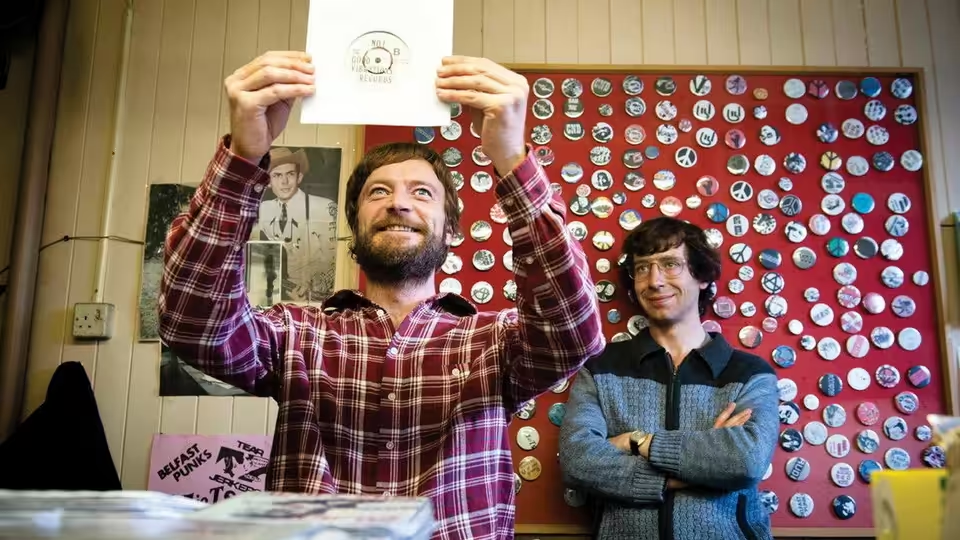
Richard Dormer gives Terri Hooley the sort of charisma that explains why other people might tolerate him beyond the point of good sense. His enthusiasm is infectious, and we can understand the attraction of this man without believing that all his decisions are sensible. That matters in a film about someone whose musical conviction puts demands on the people around him. Dormer makes the charm persuasive enough that the film sometimes seems reluctant to examine his behaviour.
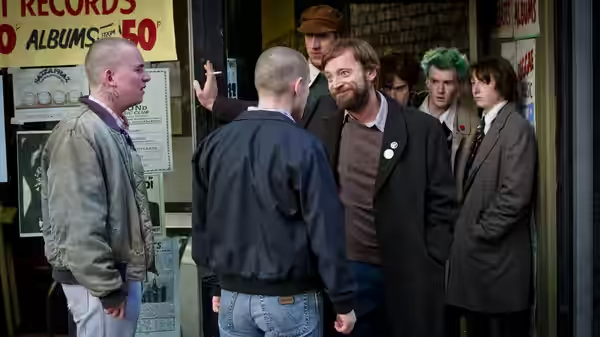
We were moved by Hooley discovering punk among a pogoing crowd. The pleasure comes from watching someone recognise a reason to be hopeful in people making a tremendous noise together. Ivan McCullough’s cinematography makes that crowd feel inviting, and David Holmes’s music work helps the performances explain an enthusiasm that dialogue could easily flatten. For a while, the film gives us the simple satisfaction of understanding why a person would want to spend his life doing this.
The Belfast setting also gives the music a purpose beyond the familiar ambitions of a performer. Derek Wallace’s production design makes the period convincing, and the archival footage prevents the film from becoming entirely absorbed in its hero. Its use is restrained enough to leave room for the pleasure of hearing a band, rather than making every song the cue for a history lesson. Music matters here because there is so much keeping people apart.
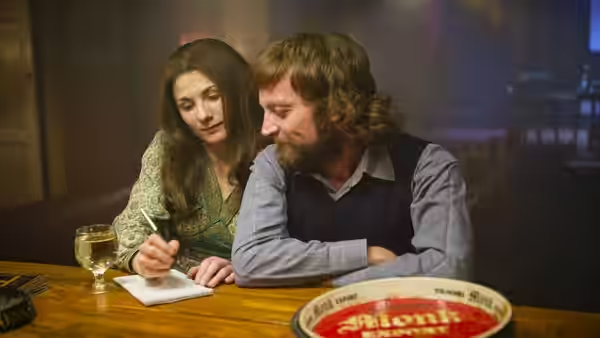
Colin Carberry and Glenn Patterson’s screenplay is less convincing about the cost to Hooley’s family. It acknowledges neglect but gives that neglect too little weight, so that the same charm Dormer supplies becomes an excuse to move on. Those who have to live with his choices deserve more attention. A sympathetic portrait can admit that its subject is difficult, but this one too often treats the admission as sufficient and gets back to the music.
That indulgence is also where the familiar musical-biography habits begin to show. Once the film has established Hooley’s conviction, its continuing faith in him becomes predictable; the people around him cannot always compete with the pleasure of watching Dormer take charge. Nick Emerson’s editing keeps the musical passages lively, but across 111 minutes the film has more time for Hooley’s appeal than it needs. The family scenes could have used some of that time.
These are real limitations, although they do not cancel the pleasure of seeing musical discovery taken seriously. The directors understand that a listener’s excitement can carry a scene as surely as the performance on stage, and Dormer gives them plenty to work with. Anyone drawn to stories about local music scenes has good reason to spend an evening here. Allow for a generous view of Hooley, especially when the music stops.