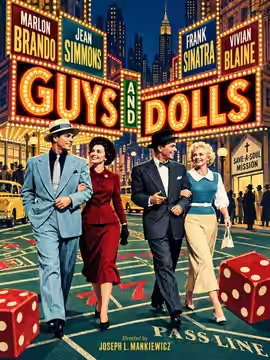
Joseph L. Mankiewicz’s musical is funny, warmly performed and worth forgiving for its leisurely pace. Jean Simmons and Vivian Blaine give it feeling, while Frank Loesser’s songs survive some uneven singing and an excess of talk.
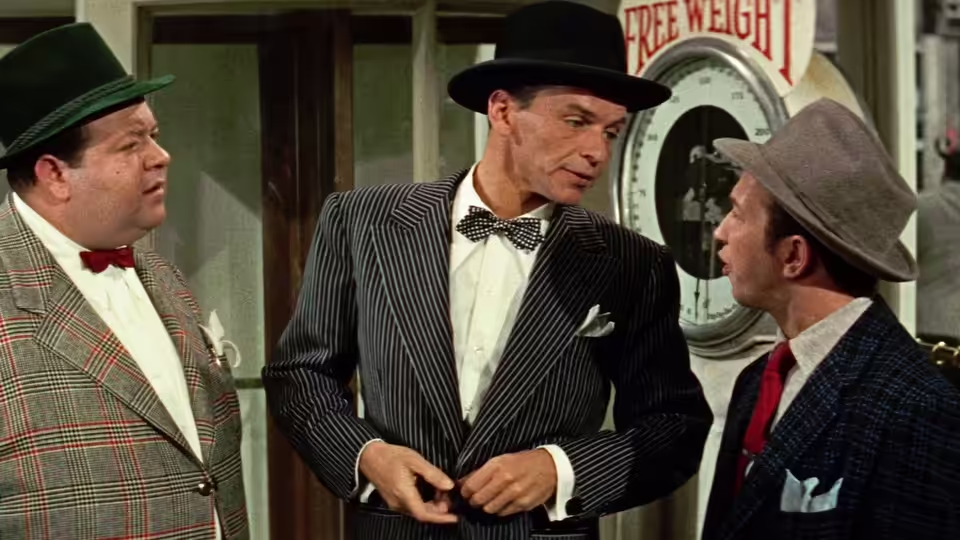
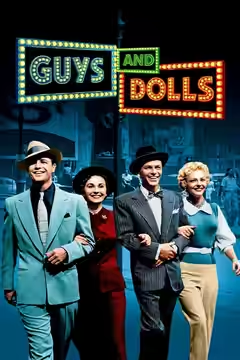
Guys and Dolls is a generous, funny musical whose songs and performers more than repay the patience it occasionally asks of us. Joseph L. Mankiewicz directs it with affection for people who can make even ordinary conversation sound faintly ceremonial. That manner suits Damon Runyon’s characters, although the screenplay sometimes keeps them talking after the joke has landed. At 149 minutes, this is an evening’s entertainment with little concern for an early night.
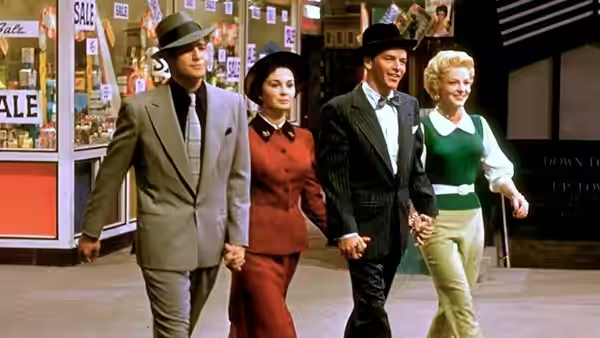
Jean Simmons gives the film its most persuasive reason to slow down. As Sarah Brown, she makes the romance with Marlon Brando’s Sky Masterson feel like something happening to two particular people, rather than a pause between songs. We were unexpectedly moved by If I Were a Bell: she makes the discovery of a feeling seem to happen as she sings. Her lightness also makes the more studied passages around her easier to forgive.
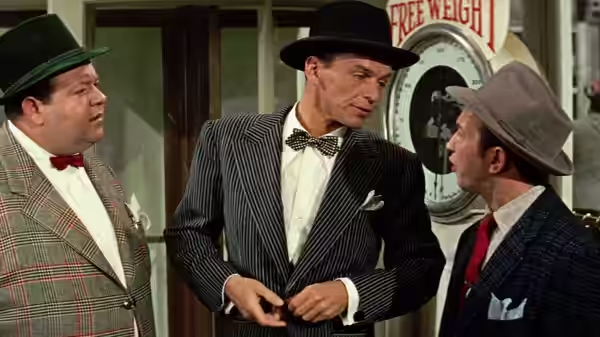
Marlon Brando’s singing takes some getting used to. His voice is tentative, and the care with which he approaches a number can become more noticeable than the number itself. Still, there is tenderness in his performance, and the romantic scenes benefit from his willingness to seem a little uncertain. Frank Sinatra, as Nathan Detroit, supplies the musical assurance, although the casting does not always give either man the most natural use of his abilities.
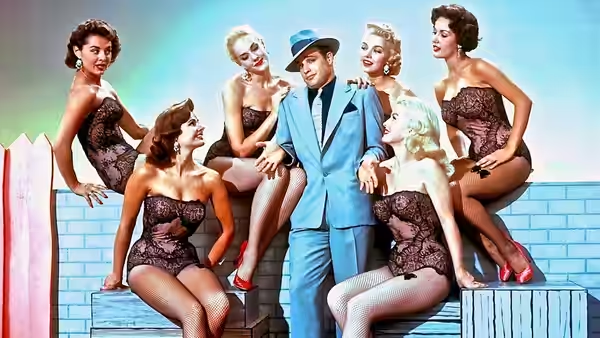
Vivian Blaine’s Miss Adelaide brings a welcome directness to a film that can be rather pleased with its own elaborate speech. She lets the comedy carry the feeling without pausing to make sure we have noticed it. Frank Loesser’s music gives the performers similarly useful material: the melodies are immediately inviting, but leave room for individual quirks and hesitations. Sit Down You’re Rockin’ the Boat supplies the sort of momentum that makes the preceding delays seem forgivable. The ensemble dancing is another reliable source of pleasure.
Oliver Smith’s production design embraces the artificial Broadway setting, and the obvious sets are part of the enjoyment. Harry Stradling’s photography makes the colour inviting without persuading us that these streets extend far beyond the frame. The theatrical look works best during the dancing, when the performers seem to belong in such a carefully arranged space. In conversation, the same surroundings can make the actors look as though they are waiting for their cue.
Daniel Mandell’s editing is accommodating to a fault. We are allowed to enjoy a performance without having it chopped into distractions, but there are conversations where an earlier cut would have been a kindness. The length matters because the energy varies so much between those exchanges and the dancing. Joseph L. Mankiewicz understands the pleasure of a carefully delivered line; he is less alert to the moment when we would prefer another song.
A screen musical ought to make the stretches between numbers feel as alive as the numbers themselves, and the director does not always manage it. That is a caveat worth taking seriously if patience with theatrical dialogue is already in short supply. For us, the pleasure of spending time with this cast comfortably outweighs it. Set aside an unhurried evening; Jean Simmons and Vivian Blaine deserve more attention than a glance at the clock.