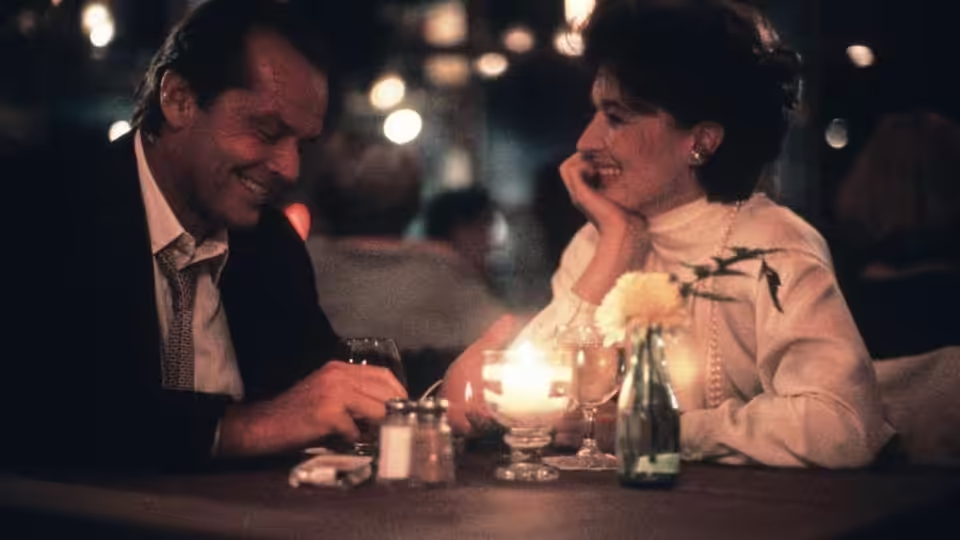
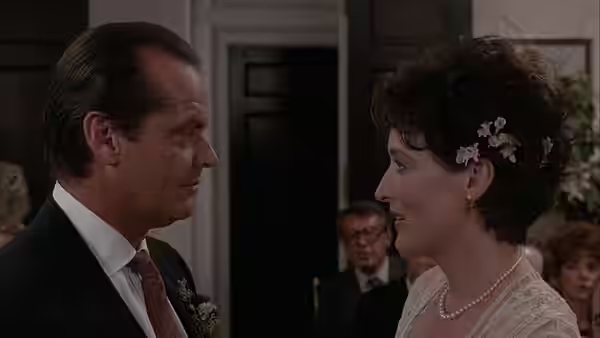
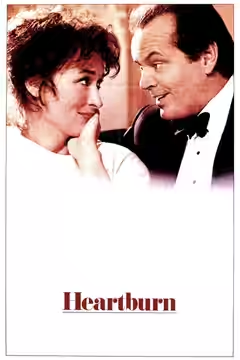
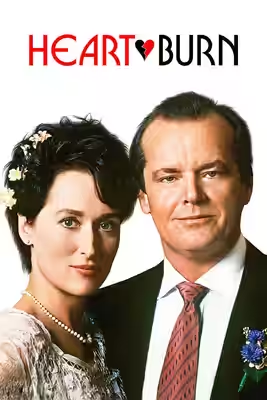
Mike Nichols makes Rachel and Mark’s daily life convincing, but Heartburn gives us too little sense of why they need each other. Meryl Streep and Jack Nicholson supply pleasures the thin writing cannot sustain.
Heartburn is a disappointing marriage comedy, despite two actors who can make an underwritten exchange worth listening to. Mike Nichols directs Nora Ephron’s adaptation of her own novel, and the care taken over the couple’s everyday life is evident. What remains obscure is what Rachel and Mark need from each other, a substantial problem when their relationship is meant to hold our attention. The film has enough incidental pleasure to avoid becoming a chore, but too little insight to make its disappointments seem worth the time.
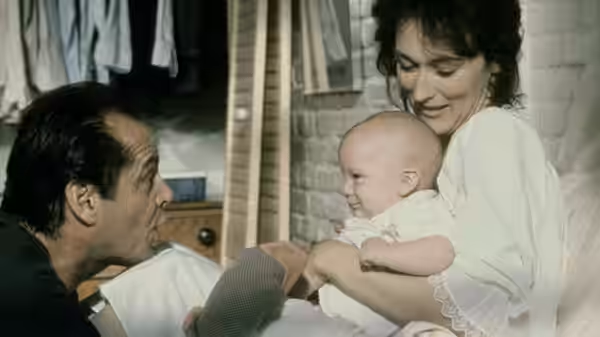
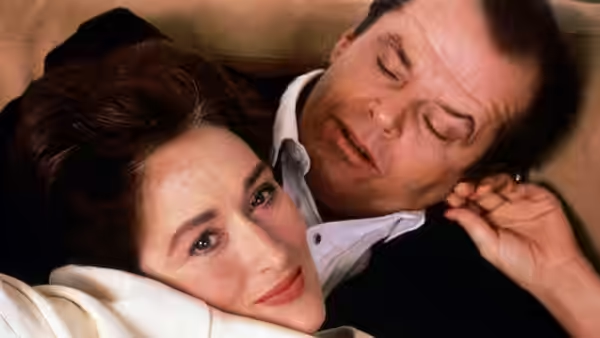
Meryl Streep gives Rachel a credibility that the screenplay does not always earn, and we would put much of what works here down to her. The performance encourages us to stay interested even when the character’s wants remain indistinct. We were frustrated by how often that interest went unrewarded: the daily business of Rachel and Mark’s life feels convincing, yet their feelings about it remain difficult to read. Streep has to supply a good deal of what the script has failed to explain.
Jack Nicholson gets more immediate pleasure out of Mark, a thin role with lines that suit his delivery. He can make an amusing moment feel sufficient while it lasts, and that is a useful skill in a film so dependent on the attraction of its leads. The limitation becomes apparent when we try to see beyond the enjoyable performance to the husband he is playing. Nicholson makes the material entertaining, but the writing gives him too little to explore.
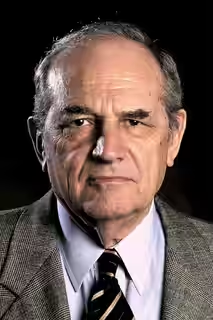
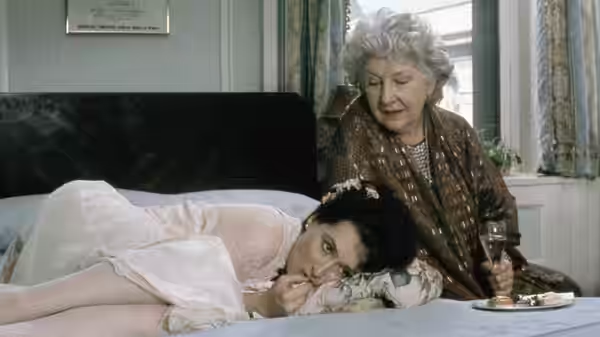
Néstor Almendros’s cinematography and Tony Walton’s production design are important to the film’s convincing sense of daily life. We accept the couple’s surroundings readily, and the attention given to that world makes the thin characterisation more noticeable. A marriage comedy needs this sort of ordinary detail, since people can reveal a great deal through the small business of living together. Here, though, the physical world is more fully realised than the people occupying it, and the attractive finish sometimes makes the drama feel over-careful.
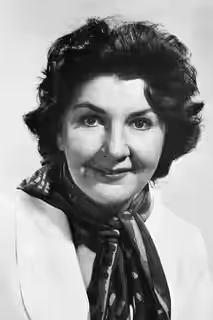
Sam O’Steen’s editing preserves the appeal of individual moments, although the film struggles to build much interest from one to the next. Carly Simon’s music supplies warmth, but it cannot settle the more basic question of how we should feel about these two people. The running time is 108 minutes, which ought to be ample room for the screenplay to give each of them greater definition. Instead, too many of the pleasant touches leave our understanding of the marriage where it was.
A marriage comedy can leave us uncertain about who is right, so long as we understand what each person is asking for. Ephron’s writing gives us too little to work with, and the actors can only supply so much on their own. Nichols draws appealing work from the cast without making the couple’s problems especially involving. Consider it for the leads, and keep expectations of the writing low.