McNaughton’s debut watches a murderer the way a security camera watches a car park: flatly, without comment, for as long as it takes. It is cheap and dated in places, uneven in its last stretch, and still hard to sit through, which is the point.
John McNaughton’s first film opens on the dead. A woman, a floating woman, a couple, each held as a still picture for a beat longer than is comfortable. Then the film cuts to Henry (Michael Rooker) finishing a meal in a diner, tipping the waitress and driving on. That is the method, laid out in the first five minutes, and it holds for the remaining 78.
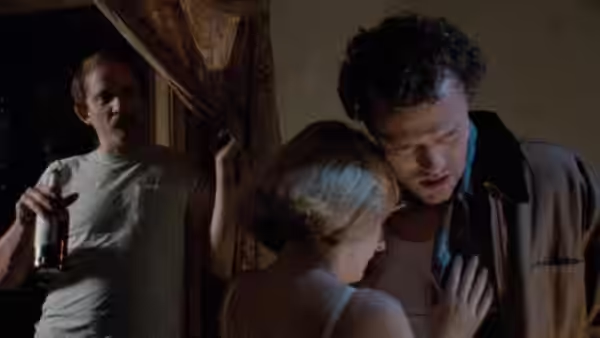
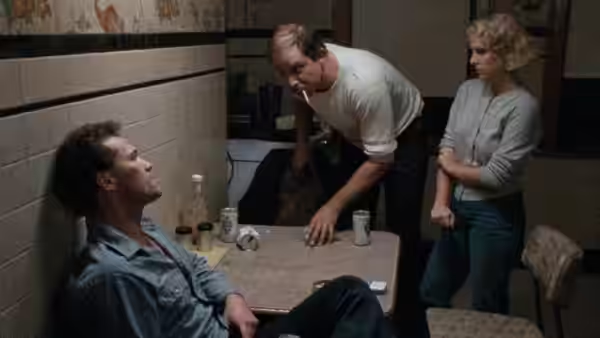
Henry shares a flat with Otis (Tom Towles), who has never asked what Henry does with his evenings. Otis’s sister Becky (Tracy Arnold) turns up with a suitcase, needing somewhere to stay and a job, and she gets both; she also gets Henry, who holds doors for her and listens. Over a beer at the kitchen table he tells her about himself, and before the scene is over the account has shifted. Becky notices and lets it go.
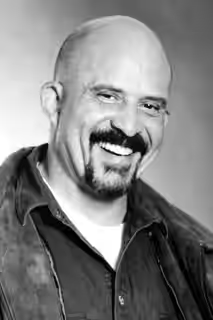
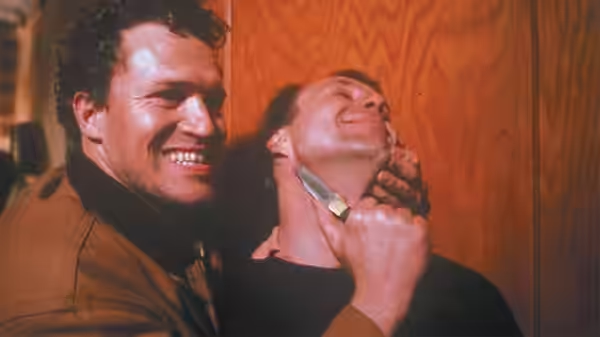
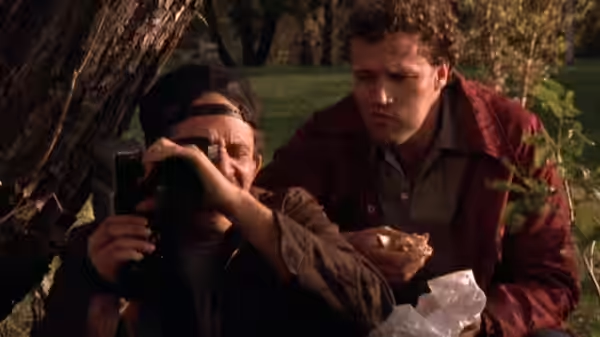
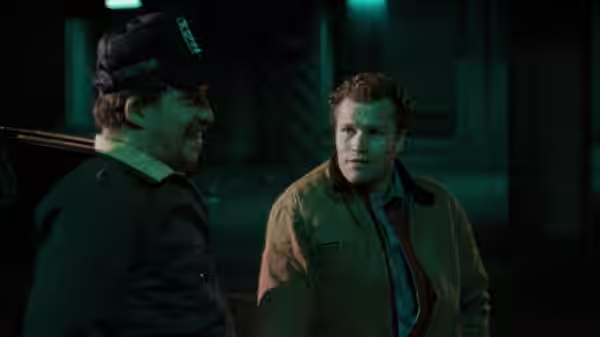
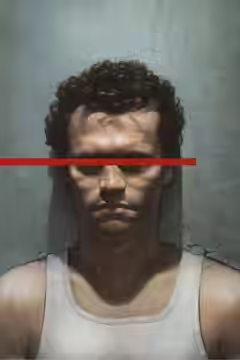
Rooker plays him with almost nothing. He speaks softly, says thank you, pays his bills, and walks through a shopping mall with the same face he uses to order coffee. There is no twitch, no relish, no speech about why. Towles gives Otis all the appetite Henry lacks, and when Henry starts taking him along the film watches Otis discover that he likes it. Towles is broad where Rooker is still, and once or twice he tips into a leering cartoon, but the film needs the contrast and mostly gets it.
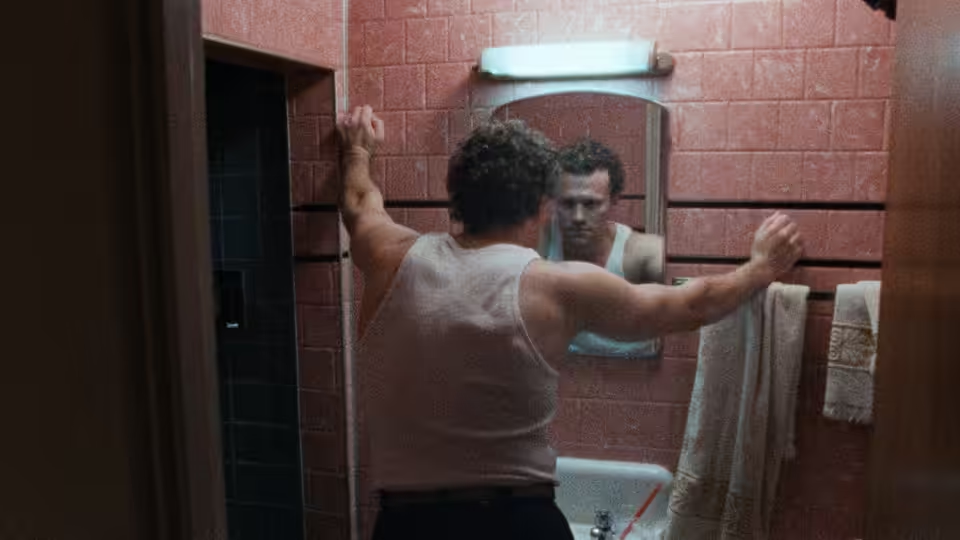
Charlie Lieberman shoots it in the light that was there: fluorescent strips, one bulb over the kitchen table, sodium orange on the street. The image is grainy and the colours are the colours of a rented flat, brown and beige and nicotine. The camera hardly moves, and when a killing happens it tends to happen at the edge of the frame or after a cut. Elena Maganini’s editing does the film’s most important work in that opening, holding each corpse and then cutting to Henry doing something dull. Patricia Hart puts everyone in work jackets and thin T-shirts that look slept in. The music, by Robert McNaughton, Steven A. Jones and Ken Hale, is a low electronic drone that works under the opening and dates the film badly whenever it reaches for a tune.
The sequence people talk about comes in the middle and involves a video camera and a family’s living room. We will not describe it. We will say that we felt sick, and that the sickness was not at what was on screen, because McNaughton shows less than most television crime dramas do. It was at the fact that we were still watching, and that Otis was watching too, on the flat’s own television, with the remote in his hand. McNaughton makes that point once, hard, and does not make it again.
It is a cheap film and it looks cheap, which is mostly a virtue and sometimes not. The sound recording is rough and lines go missing under traffic. Outside the three leads the acting is patchy. The script, by McNaughton and Richard Fire, has a development late on involving Otis and Becky that we found harder to believe than anything Henry does, and the film needs us to believe it. And the score, in its melodic moments, belongs to a different and worse film.
The tagline sold it against the slasher cycle: “He’s not Freddy, he’s not Jason… he’s real.” That is fair. A slasher tells you when to flinch, with a chord, a shadow, a hand on a doorknob. Here there is no cue, and after twenty minutes you stop waiting for one and start dreading the quiet. It was made in 1986 and did not reach British cinemas until 12 July 1991, and critics have been split down the middle ever since; roughly half find it still frightening and half find it creaky. We do not think creaky is the right word. The cars have changed. The men have not.
It runs 83 minutes and carries an 18. Watch it in the daytime. It will not help.