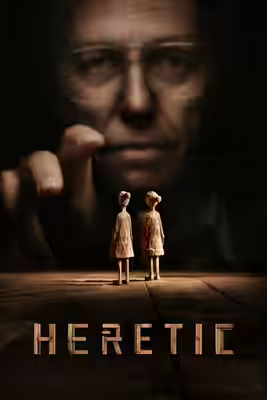
Hugh Grant turns thirty years of bashful charm into something you back away from, and for an hour this locked-house horror is sharp, funny and properly tense. Then the second half arrives, and it is the ordinary horror film the first half had been laughing at.
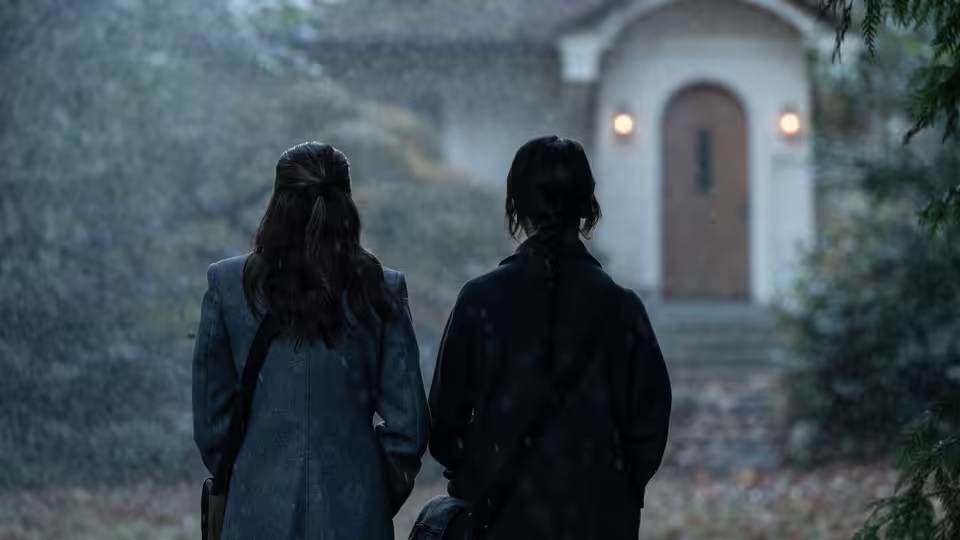
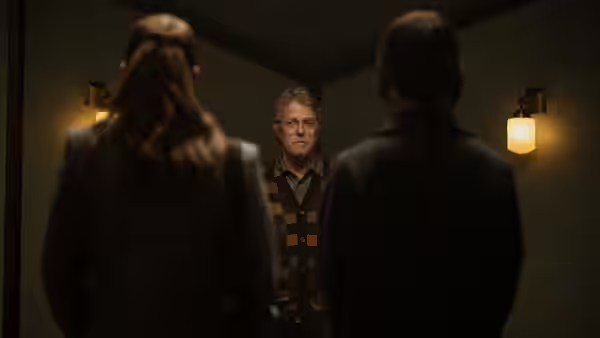
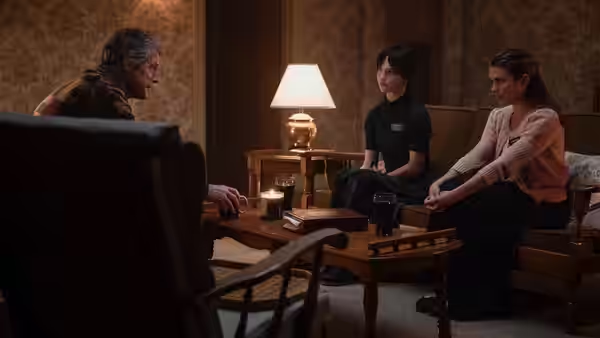
Two young women in long skirts and name badges knock on a door in a small American town as the weather turns. Sister Barnes (Sophie Thatcher) and Sister Paxton (Chloe East) are Mormon missionaries, and the man who answers, Mr Reed (Hugh Grant), is the first person all day to seem pleased to see them. He has questions. He has read their book. He asks them in, and the door, once shut, stays shut. Scott Beck and Bryan Woods, who wrote A Quiet Place, have made a horror film in which, for an hour, nobody is chased and nobody bleeds and we were as frightened as we have ever been by three people talking in a front room. Then the second half arrives and spends the goodwill. It is still worth your evening.
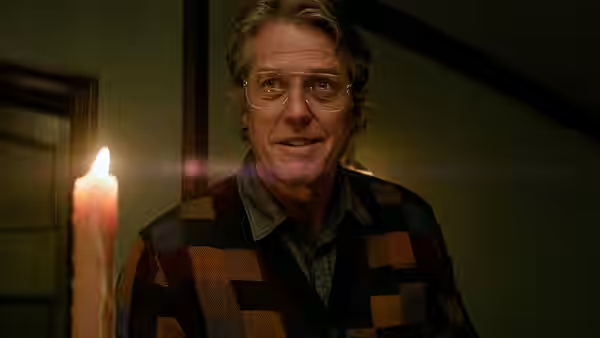
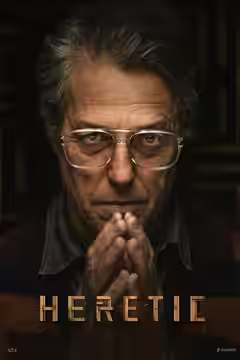
Grant is the reason. He plays Reed with every trick he has spent thirty years being loved for: the apologetic stammer, the hand raised to stop himself mid-sentence, the small laugh at his own cleverness. Betsy Heimann puts him in a cardigan and reading glasses and he looks like a man who would apologise for the rain. Then he starts to talk about religion, by way of a lecture on board games, and the same stammer that was charming starts to frighten. We laughed at his first few lines, and at some point we noticed we had stopped, and could not say which line had done it. He manages all of this without once raising his voice.
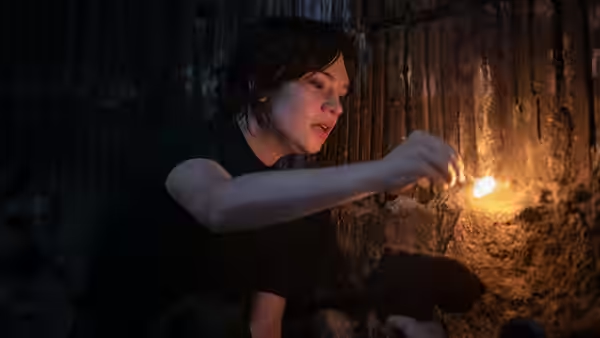
Thatcher and East are not there to scream. Barnes is the wary one, older in the ways that count, watching Reed’s hands while he talks about his wife in the next room; Paxton is eager, a little silly, and the film keeps letting her be cleverer than she looks. Their whispered exchanges while he is elsewhere in the house are short and exact about what it is to be a young woman selling faith door to door and being told where to sit. Topher Grace turns up as Elder Kennedy, the man who is meant to notice if they do not come back, and does what the part needs in a handful of scenes.
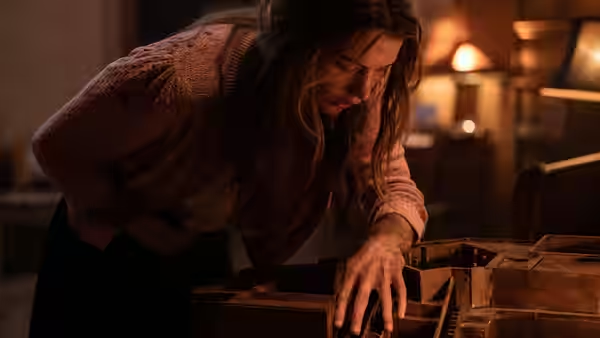
Chung Chung-hoon lights the front room with table lamps and a fire, so it looks like anyone’s grandmother’s house, and he holds on faces during the long speeches rather than cutting away for reactions, which leaves us to decide who is winning. Philip Messina’s house is the film’s best trick after Grant: lace, patterned wallpaper, a room a shade too tidy. Justin Li lets whole exchanges run without a cut, and when the cuts do come they land like a raised eyebrow. Chris Bacon’s score stays low under the talk, which is the right choice.
The second half takes a turn we will not describe. What we can say is that the film that follows is the one the first hour was mocking: corridors, a blade, somebody crawling, a run of reveals that get smaller as they arrive. The argument about belief, which had been the thing under threat, is put down and not picked up again. Reed says a great deal, and the writers have a good excuse for never deciding whether any of it is true, because he might be lying; in the last half hour that excuse becomes the whole plan. By the closing stretch we were watching a man with a knife and wondering where the man with the argument had gone, and we were disappointed rather than scared.
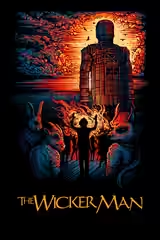
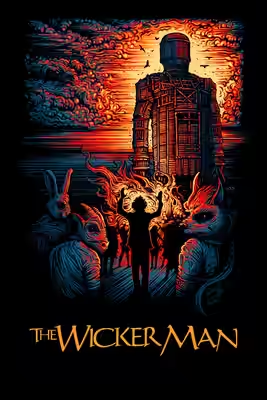
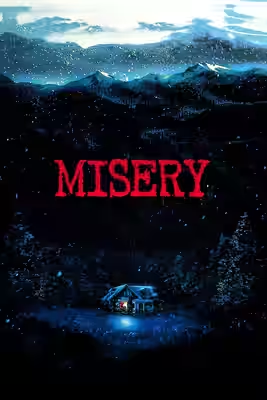
Most critics have landed roughly where we have, admiring the first hour and forgiving the rest, and the forgiveness is earned. Misery understood that a locked room and a talker are enough; The Wicker Man understood that a religious argument can be a horror film all by itself. Heretic knows both those things for an hour, and then reaches for a knife.
See it for Grant, who has found a use for his charm nobody had thought of, and for two young actresses who hold their own against it. It runs 111 minutes and carries a 15. Bring someone who likes to argue afterwards; the film will have started the argument and then walked out on it.