Jia Ling’s family comedy is untidy and overlong, but the encounters between mother and daughter across time are moving enough to earn our patience. We recommend it with some tolerance for scenes that outstay their welcome.
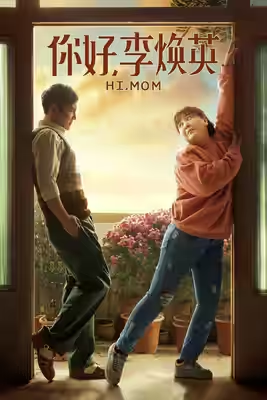
Hi, Mom is a moving family comedy with some untidy storytelling, and we recommend it with a warning about its length. Jia Ling directs, co-writes and plays Jia Xiaoling in a film whose strongest passages connect a daughter with her mother across time. That premise gives the comedy somewhere worthwhile to go. Getting there takes longer than it needs to, particularly when a scene keeps going after its comic possibilities have been exhausted.
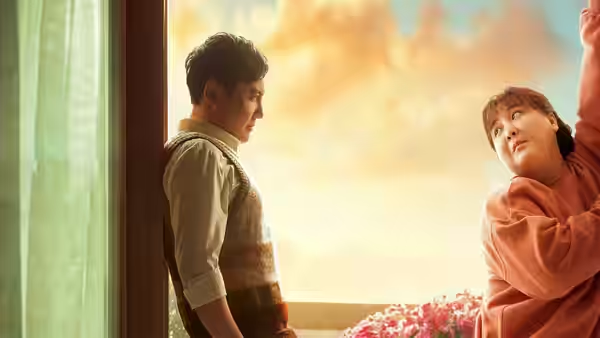
The fantasy allows the film to approach an ordinary family relationship from an unusual direction. Its appeal rests on the chance to spend time with a mother, and to consider what that time might mean to her daughter. Jia Ling keeps that connection central even when the surrounding plotting becomes cumbersome. The encounters themselves have an ease and tenderness that make us willing to tolerate a fair amount of untidiness elsewhere.
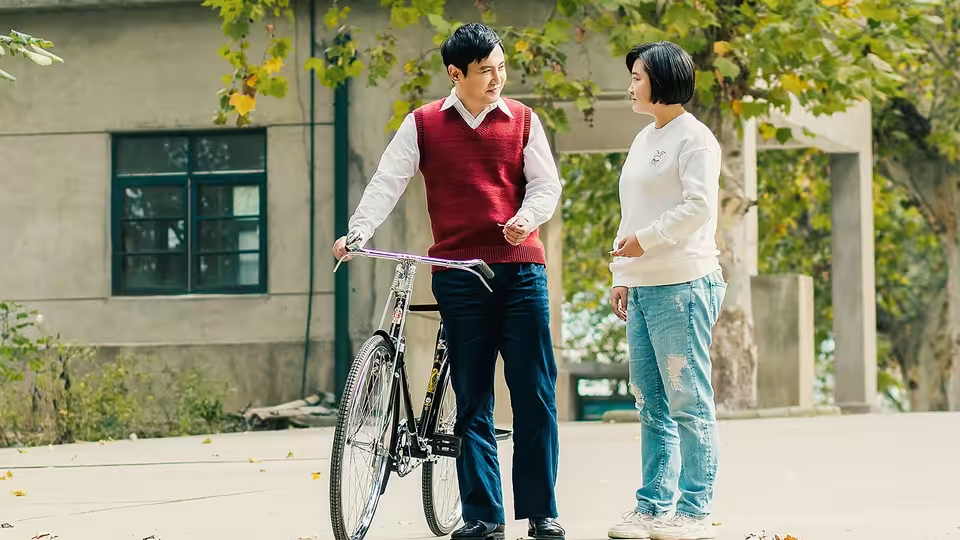
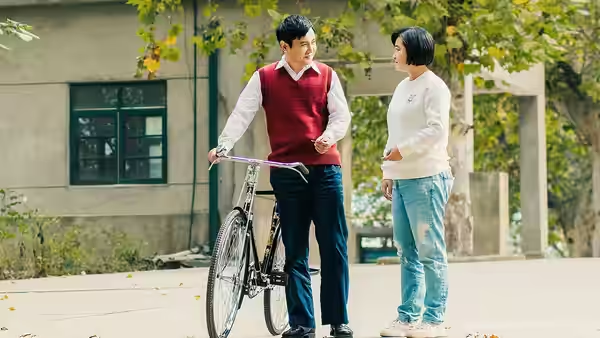
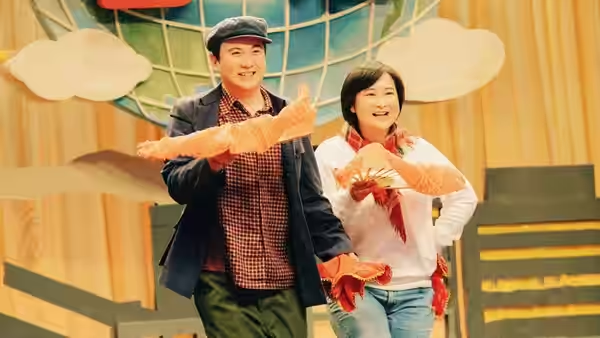
We were moved more than we expected by the passages bringing daughter and mother together across time. Their graceful handling gives the relationship enough space to matter without requiring every complication around it to be equally convincing. Jia Ling and Zhang Xiaofei, credited as Jia Xiaoling and Li Huanying, give us a reason to remain interested through the slower stretches. The family scenes are where the film most reliably holds our attention.
The writing is less consistent about how long everything should take. Jia Ling shares the screenplay credit with Sun Jibin, Wang Yu and Bu Yu, and some of the comic business feels insufficiently tightened before being fitted into the larger story. Ye Xiang’s editing leaves stretches that could lose material without losing much pleasure. At 128 minutes, the film gives us ample opportunity to notice when an enjoyable scene has become an extended one.
Sun Ming and Michael Liu are the cinematographers, with music credited to Michael Lai and Peng Fei. The most elegantly handled sequences are those connecting mother and daughter across time, where the film’s attention feels properly directed towards the relationship. Their success makes the unevenness elsewhere more noticeable, because we have seen how assured the film can be. The broader comic passages do not always justify being given comparable room, and the pace suffers when they linger.
For a fantasy comedy built around family feeling, the difficult business is making a change towards sadness feel welcome. Hi, Mom manages that well enough to justify its sentiment, although the clunky plotting remains visible. We do not need this sort of film to be embarrassed by its desire to move us. We do need the comedy to remain worth sitting through, and there are passages here where a firmer decision about what to cut would have helped.
Those wanting a tightly organised fantasy will have reasonable objections, and we share some of them. Yet the mother–daughter encounters offer a clear reason to stay with Jia Ling through the overlong stretches, rather than merely waiting for the film to finish its business. Choose it for that relationship, and allow a little patience for the jokes that have not quite noticed it is time to leave.