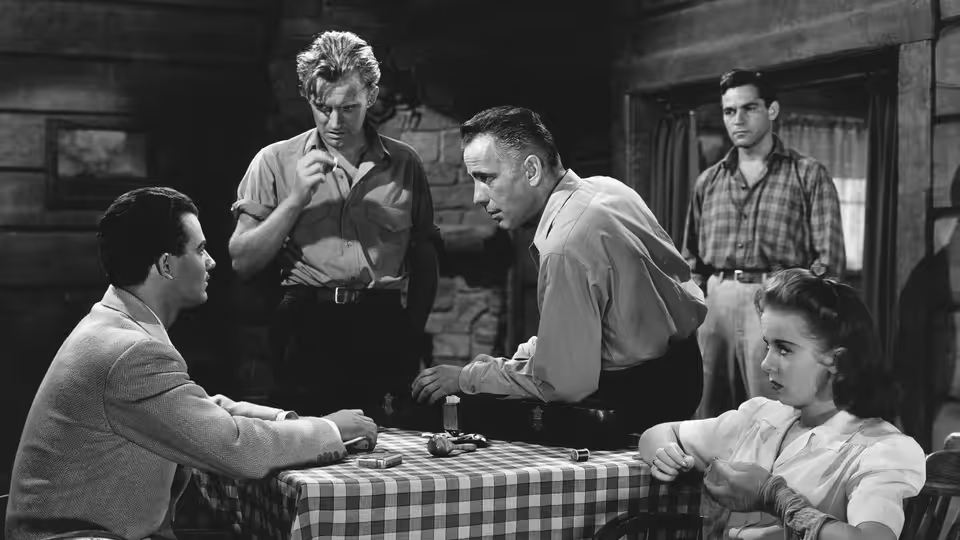
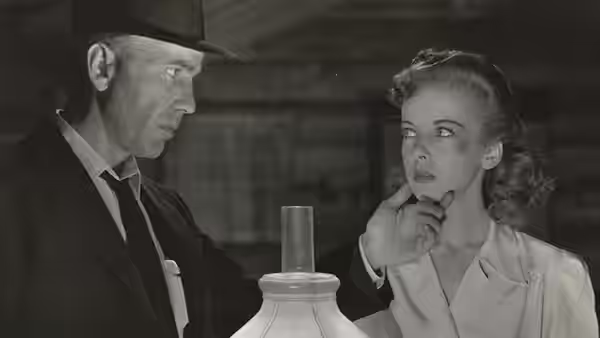
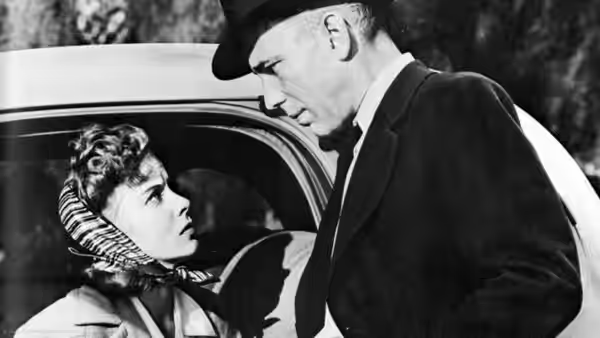
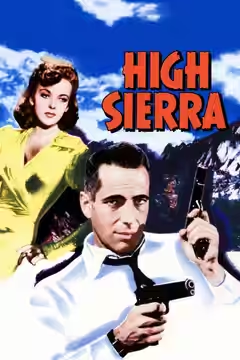
High Sierra is a fine crime drama, held together by Humphrey Bogart and Ida Lupino. Its crowded plotting sometimes tests the patience, but Raoul Walsh gives its difficult people enough feeling to reward the attention.
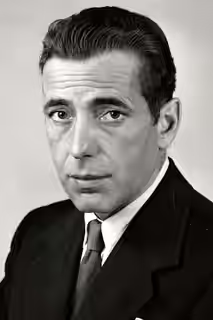
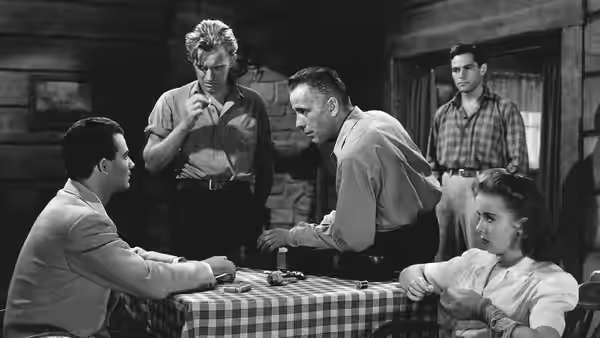
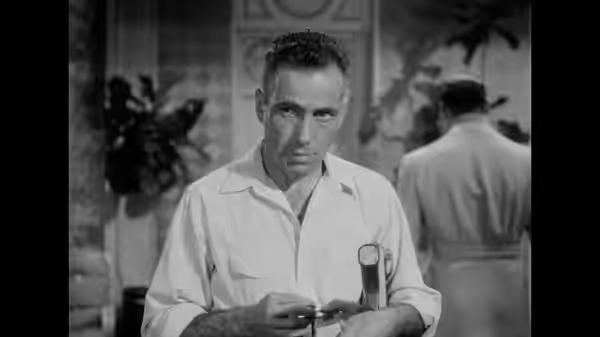
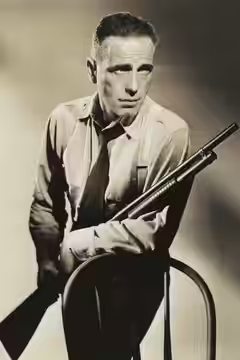
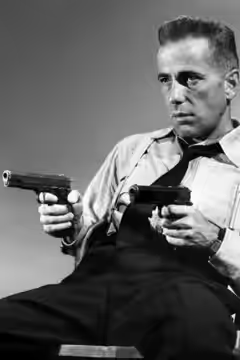
Raoul Walsh gives High Sierra a tired criminal worth spending time with, even when the story around him grows crowded. It is a fine crime drama, sustained by two performances that deserve more uninterrupted attention than the script allows. Humphrey Bogart plays Roy Earle with the weary authority of someone for whom crime has become work. There is enough assurance to explain why we watch him, and enough fatigue to make us wonder what the work has cost.
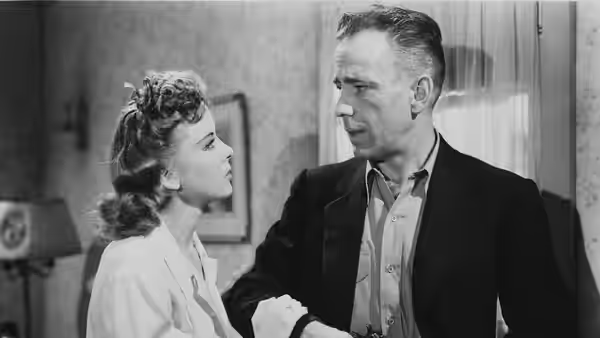
The screenplay by John Huston and W.R. Burnett, adapted from W.R. Burnett’s novel, is particularly good on Earle’s attempts to help other people. Those efforts can be awkward, and the writing resists presenting them as grounds for an immediate pardon. We were moved by his wish to be useful, because Humphrey Bogart gives it a hesitancy that makes the kindness seem difficult. We can care about this man without having to pretend that his occupation has slipped our minds.
Ida Lupino gives Marie a welcome directness, keeping the feeling clear when the plot threatens to become fussy. Her performance has enough firmness to prevent tenderness from turning into an appeal for pity. Alongside Humphrey Bogart, she makes us attentive to the difficulty of accepting affection as well as offering it. The writing supplies plenty of complications, but the actors need little help to make their company interesting.
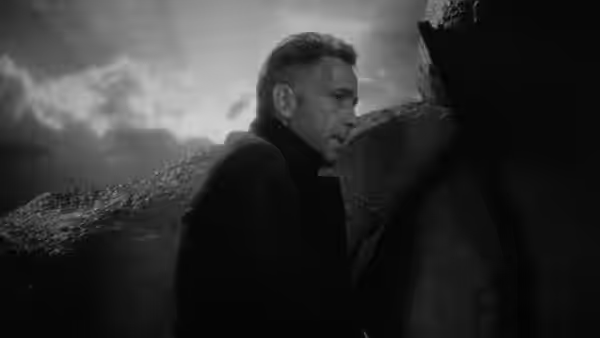
Tony Gaudio’s cinematography makes the Sierra setting feel bleak rather than liberating. Moving the gangster out of the city opens up the images without making Earle’s circumstances seem any more comfortable. Raoul Walsh uses that discomfort well: the scenery never becomes a holiday from the people we are watching. It is a useful change of surroundings for a genre so often energised by crowded streets, and the exposed landscape suits the weariness of the leading performance.
Jack Killifer’s editing cannot quite persuade us that every supporting strand deserves its place. The pace becomes uneven as the screenplay divides its attention, and some of the diversions ask for interest the film has not earned. Adolph Deutsch’s music supplies emotional weight, occasionally pressing harder than the performances require. These interruptions are frustrating because the actors have already made the central relationships absorbing, and returning to them can feel overdue.
The movement towards film noir is apparent in the attention paid to a criminal’s exhaustion. Earle’s professional standing gives him little protection from the awkwardness of dealing with other people, particularly when he wants to help them. Humphrey Bogart makes that uncertainty as interesting as the character’s authority. Raoul Walsh allows sympathy to develop without repeatedly asking us to approve of the man, which keeps the sentiment from becoming oppressive.
At 100 minutes, the film still feels a little overstocked, especially beside the economy of its leading performances. We would recommend it with that reservation; the supporting stories do not all earn their time. There is considerable pleasure in watching Humphrey Bogart and Ida Lupino keep the feeling direct while the writing gets busy around them. Choose it when there is time to let a crime drama linger over its people.