Joe Johnston’s garden adventure is inventive, brisk and easy to enjoy. Rick Moranis helps keep the family comedy appealing, though some of the adult performances push their jokes harder than they need to.
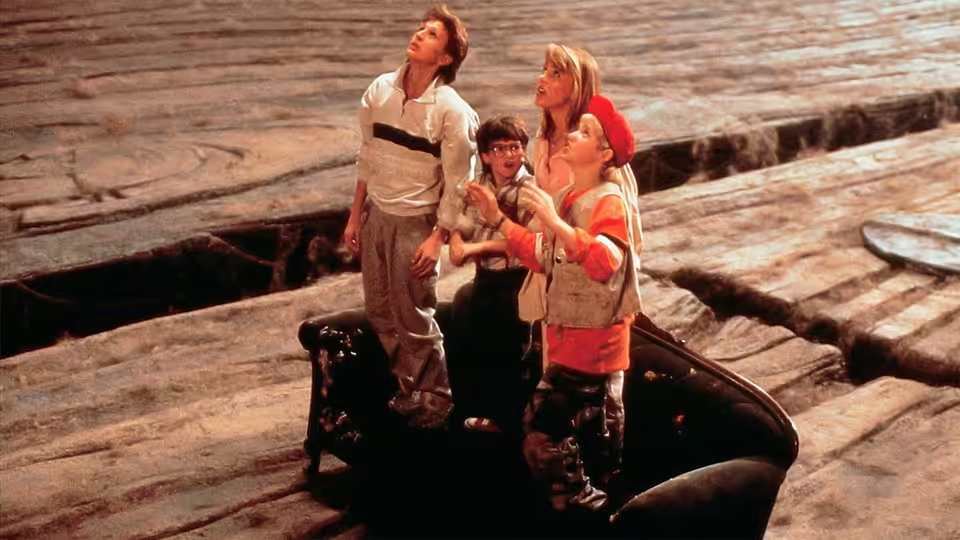
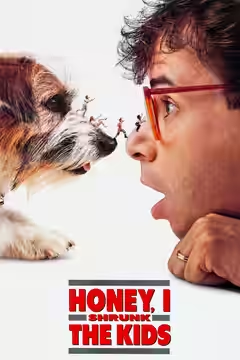
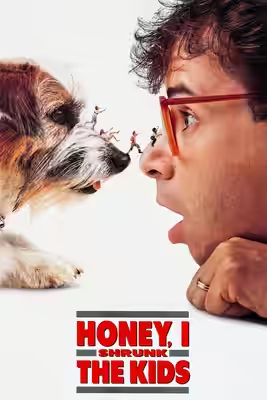
Joe Johnston’s Honey, I Shrunk the Kids is a good family adventure whose special effects have a clear job to do. They make a garden difficult to cross and keep the children recognisable enough for us to care about the crossing. Some of the adult comedy is pushed harder than the jokes can bear, but there is enough invention here to forgive it. The film does not hang about. It runs 93 minutes.
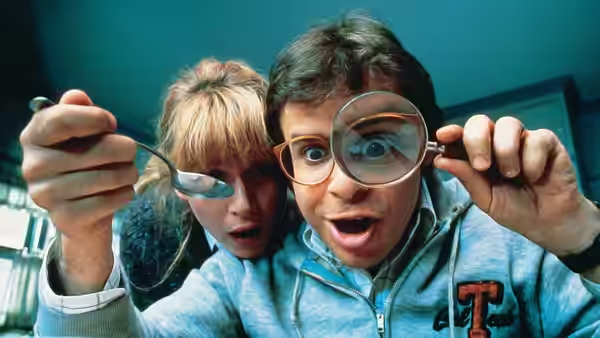
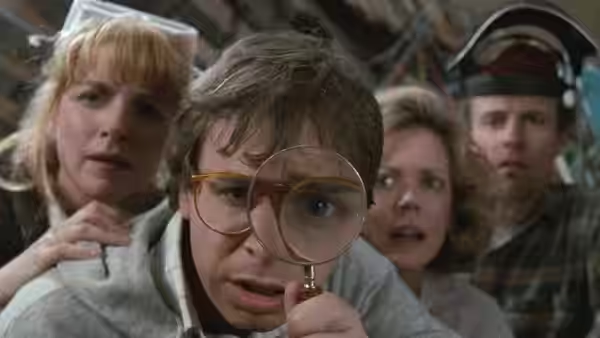
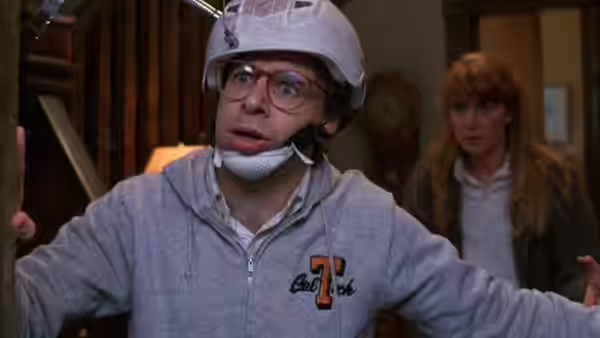
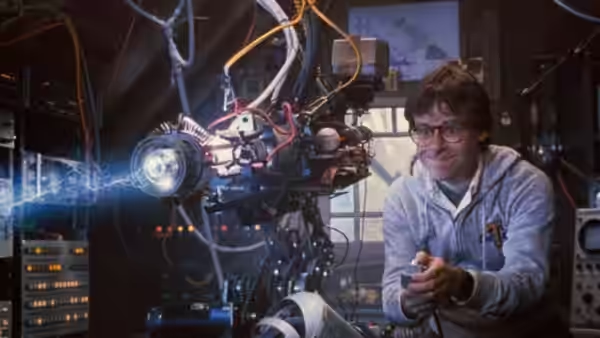
The screenplay by Tom Schulman and Ed Naha sensibly keeps the family comedy close to the adventure. Rick Moranis, as Wayne Szalinski, is particularly useful because his comic presence gives us an adult to watch without making the children feel like an interruption. His comparatively restrained performance helps the absurd situation feel manageable, even when it plainly is not. He makes dealing with it seem like another household responsibility for which nobody has left adequate instructions.
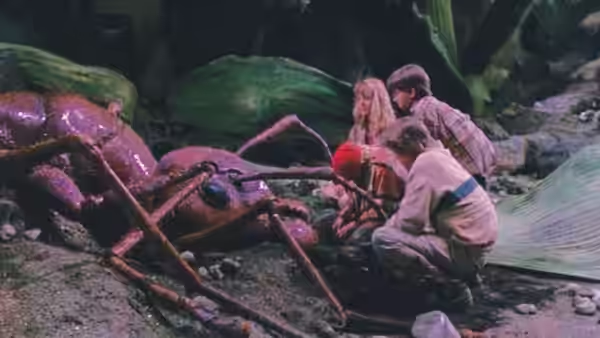
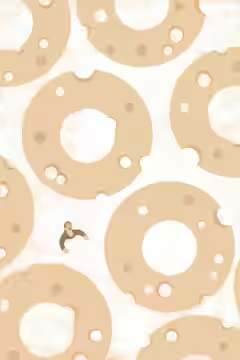
Hiro Narita’s photography makes the children’s reduced size easy to read against their surroundings. Production designer Gregg Fonseca makes the enlarged garden feel difficult to move through, giving the effects something more useful to do than invite admiration. We can imagine the effort involved in crossing this familiar ground, with ordinary distances suddenly becoming a problem. The garden remains recognisable throughout, which helps us understand the children’s predicament without needing constant explanations.
Michael A. Stevenson’s editing keeps the expedition brisk, with little room for an obstacle to exhaust its welcome. That matters in a film whose central idea could become repetitive long before the children have finished walking. James Horner’s score supplies plenty of encouragement, although its insistence on excitement can make busy passages feel busier than they need to. We prefer the stretches in which the size of the surroundings makes the danger clear without quite so much musical assistance.
The weakness is the broadness of some of the adult playing, most noticeably Matt Frewer’s Big Russ Thompson. There is comic value in the contrast with Thomas Wilson Brown’s Little Russ Thompson, but the more emphatic performance can make a simple joke feel laboured. The script has already given the characters enough difference for the audience to notice. The younger actor’s less forceful presence proves welcome alongside all that effort, and the pairing survives the occasional excess.
The effects also let the ant Anty register as a creature with a personality, which takes more care than simply making it large. We became embarrassingly fond of it, because its expressiveness earns the attention usually reserved for the human cast. This is where the film works particularly well as a family adventure: it allows an unlikely creature to interest us without immediately insisting on another joke. That extra warmth helps sustain a story built around one straightforward change in size.
For younger viewers, the garden may be more alarming than a U certificate suggests. The peril stays easy to grasp, and there is no need to be interested in science fiction to enjoy the practical business of getting somewhere safely. Choose it for a family evening, provided everyone has some patience for the louder grown-ups.