Genndy Tartakovsky’s monster comedy earns its laughs through elastic bodies and visual jokes. The thin romance and neglected supporting characters make it a modest choice for a family evening, despite the animators’ energy.
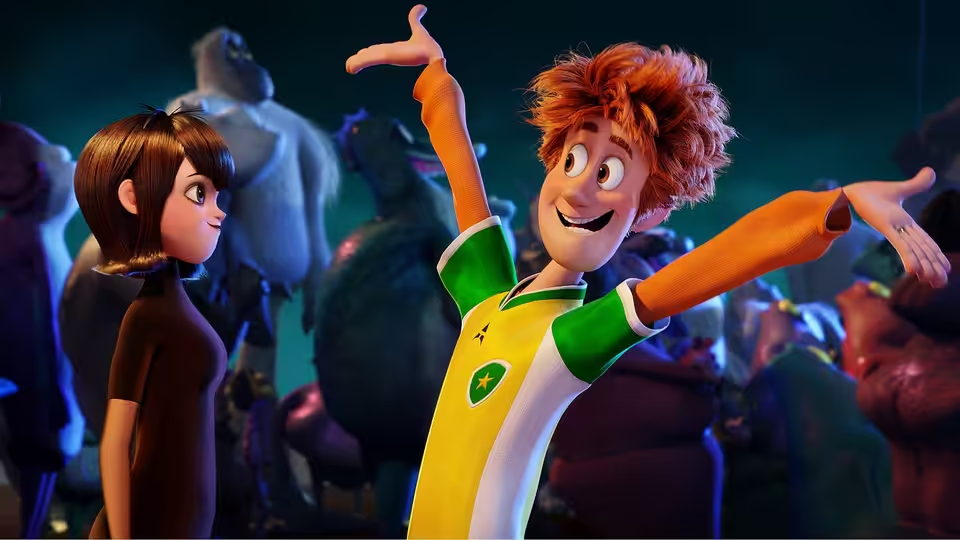
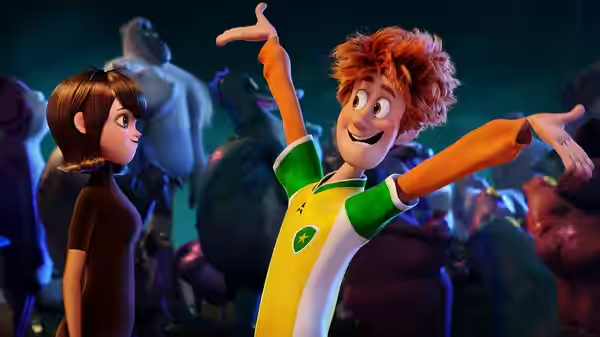
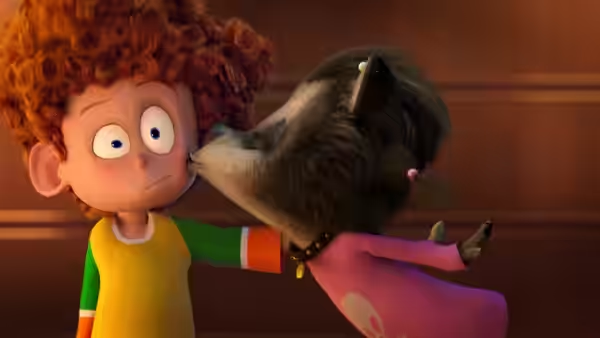
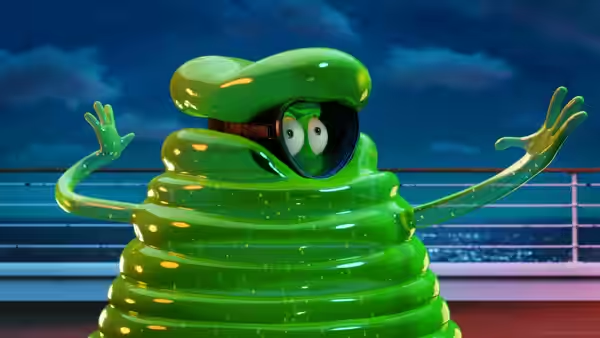
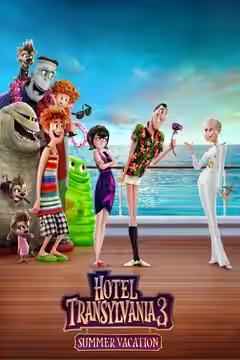
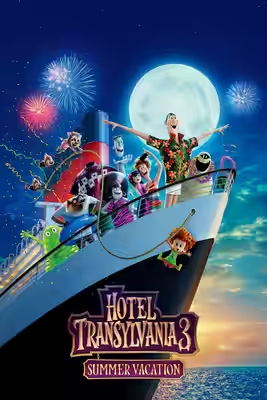
Genndy Tartakovsky’s Hotel Transylvania 3: Summer Vacation is a modest family diversion with some inventive physical comedy and a love story that struggles to hold our attention. Its pleasures are easy to identify: bodies stretch, poses become jokes, and the monsters are allowed to look ridiculous. The trouble is how much time passes between the better routines. It is worth considering for younger viewers who will let a few good visual gags carry a thin story.
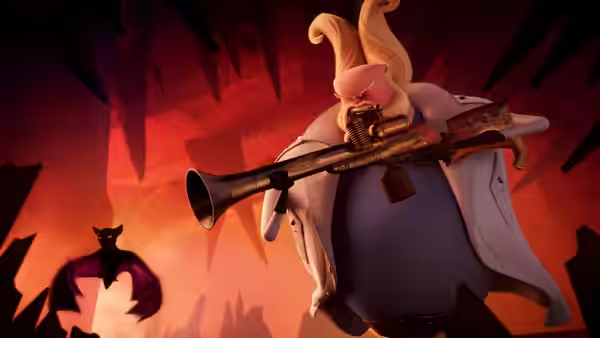
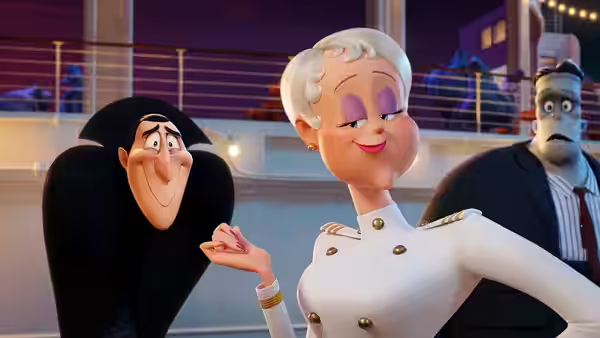
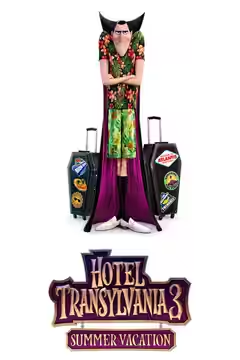
The opening contest between Count Dracula and Professor Abraham Van Helsing makes a strong case for the film. We laughed at the pursuit and escape, because the characters’ extravagant movements make each reversal feel like a joke before anyone needs to speak. Genndy Tartakovsky understands how a body can prepare a laugh, then change shape to deliver it. There is a welcome lack of dignity here, particularly whenever Dracula is the one being made to look foolish.
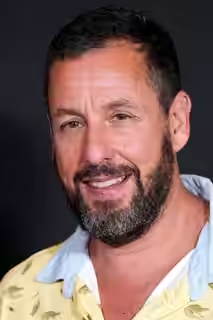
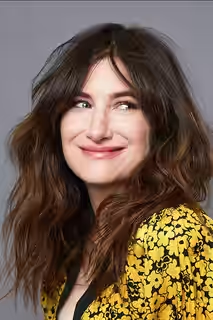
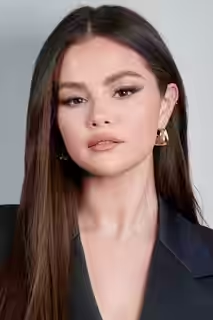
Adam Sandler gives Count Dracula a playful vocal performance that suits this treatment, and the cast generally sounds willing to join in. Kathryn Hahn voices Ericka Van Helsing, the other half of a romance that occupies more space than its writing earns. Selena Gomez’s Mavis Dracula has too little to do, a problem shared by much of the supporting company. A film with this many comic faces can afford to leave some in the background, but this one would benefit from giving them more of the comedy.
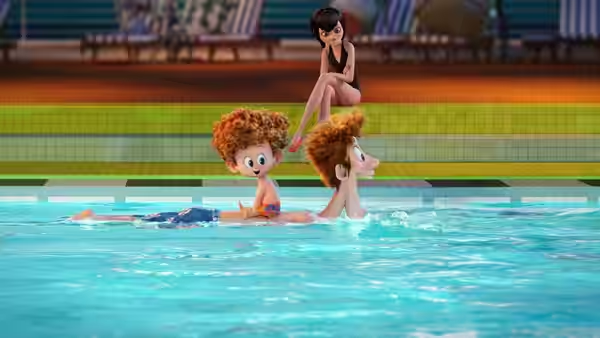
Scott Wills’s production design helps keep the surroundings worth looking at, particularly in the soft sunset colours. The pastels give the eye somewhere to rest when the figures are busy contorting themselves. Joyce Arrastia’s editing is effective within individual comic routines, where anticipation and sudden movement need different amounts of time. Across the full 97 minutes, however, the rhythm becomes patchier, and stretches of story feel like waits for the next piece of physical business.
The music is credited to Mark Mothersbaugh and Tiësto, and the emphasis on dance gives the film another useful outlet for its restless movement. Those passages make sense in an animation so eager to get its characters out of a standing pose. The energy becomes tiring when the jokes are less sharp, though, and the musical bustle cannot make every routine equally funny. A little quiet would have made the louder moments more welcome.
Writers Genndy Tartakovsky and Michael McCullers give the film a kindly message about acceptance, but the courtship is too thin to make that message affecting. The film is so eager to insist on the romance that it gives us little reason to care about the couple. A livelier courtship might have made Dracula’s romantic hopes matter as much as his comic embarrassment. There is sweetness here, though the supporting characters could have supplied more warmth if they had been given something substantial to do.
Family animation can get a long way on this sort of cheerful nonsense, and there is no reason to demand a lesson every few minutes. The moments that trust the audience to enjoy a ridiculous shape are the ones that work. This is a reasonable choice for children who want frantic monsters, provided the adults are willing to accept rather fewer laughs of their own.