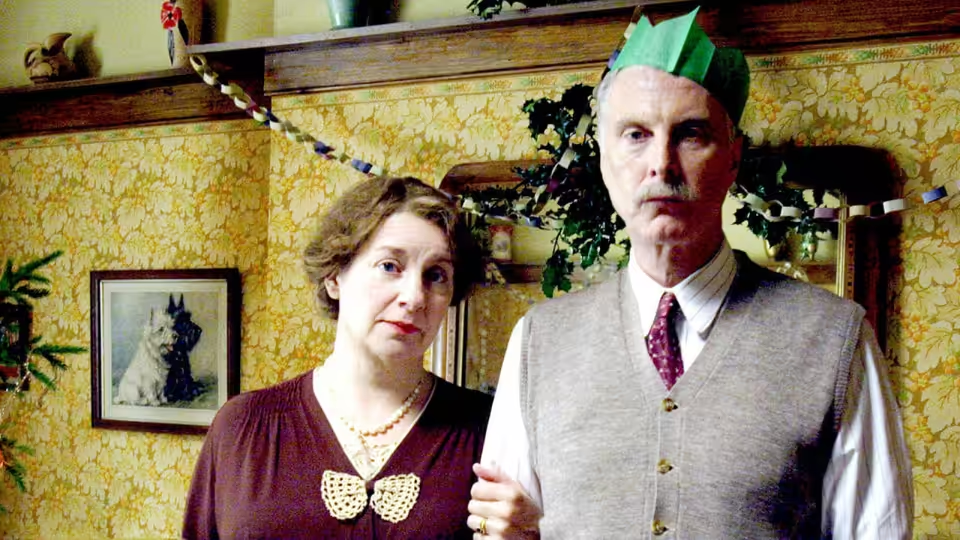
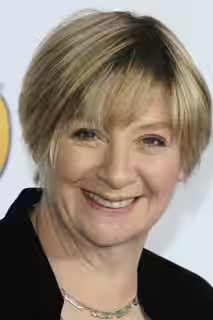
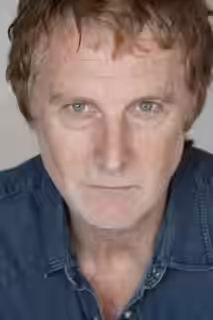
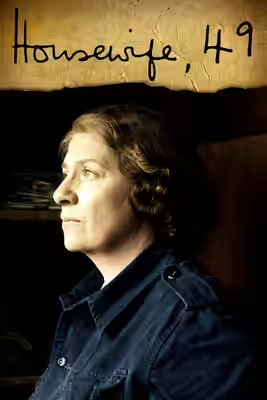
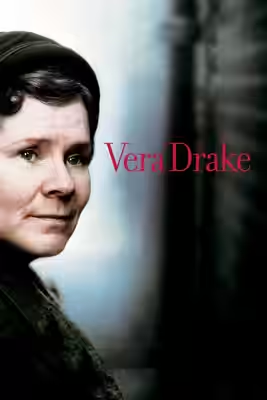
Victoria Wood writes and plays a Barrow housewife who finds her feet in the Women’s Voluntary Service as the war arrives, and she is quietly good. David Threlfall, as the husband who resents every hour she is out, is better still.
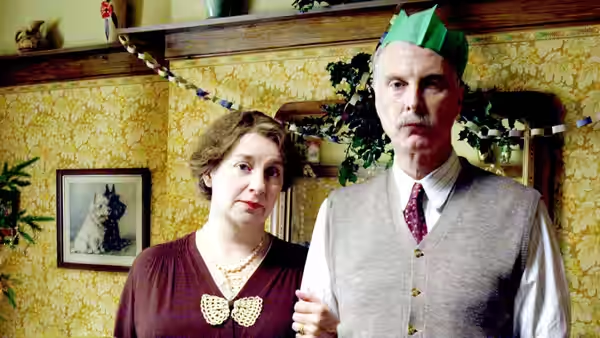
Nella Last (Victoria Wood) is 49, lives in Barrow-in-Furness, and has not been well. Her doctor, Roger Brierley (Jason Watkins), calls it nerves. It is depression: she stands at the sink, goes upstairs, lies down in the afternoon with the curtains drawn. Her husband Will (David Threlfall) comes home, eats what is put in front of him and reads the paper. The sons have grown, Arthur (Ben Crompton) into a job in another town and Cliff (Christopher Harper) into the uniform he will shortly be wearing. Then it is the autumn of 1939 and two things arrive together: the war, and a newspaper appeal from Mass Observation asking ordinary people to write down their days.
The real Nella Last did exactly that, and kept at it for years. Victoria Wood has made an 88-minute television film out of the diaries, writing the script and playing the lead, and it is modest, careful and worth your evening if you have any patience for a story in which the biggest event is a woman putting on her hat and going out. Wood made her name in comedy, and the worry is that she will not be able to stop performing. She stops. Her Nella hardly raises her voice, and her face does the work: a woman who has learned to make herself small so that nobody at home need notice her.
Threlfall’s Will is the better performance. He has almost no lines. He plays a man who treats his wife’s going out as a personal insult and cannot say so, who sits in his chair with the wireless on and disapproves until the house shrinks. There is a scene at the table, early on, where Nella mentions the Women’s Voluntary Service and Will keeps eating. He chews, turns a page, says nothing. We were angrier at him than we expected to be, and then, in the way Threlfall ducks his head, we saw that he was frightened, and that was worse. The performance is made of silences and we have thought about it since.
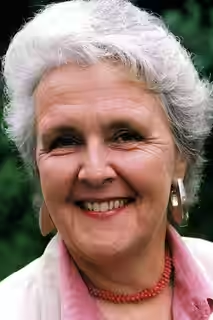
The WVS is where the film lets itself breathe. Stephanie Cole’s Mrs Waite runs the Barrow centre like a small garrison, and the committee politics of Marcia Warren’s Mrs Lord and Sylvestra Le Touzel’s Mrs Lynch, who moved the tea urn and who was not consulted about the raffle, are the funniest thing in it. This is Wood’s territory: women who say ‘I only mention it’ before mentioning it for the fourth time. We laughed a good deal, and the laughter is not a break from the story. Nella finds that she is good at this, at organising and talking and being useful, and she finds it in the middle of a row about blankets.
Gavin Millar directs simply and well. Cinders Forshaw shoots the Last house in brown half-light, every surface polished, and lets daylight into the WVS centre so you can see the difference. John Lunn’s score is mostly piano and strings, kept quiet, though it leans on a moment or two it should have left alone. The weakness is time. Eighty-eight minutes is not long for a war, and the second half moves through the years in captions and quick scenes, so that changes in Nella which should feel earned arrive as announcements. Wood uses the diary as voiceover, which is faithful to the source and occasionally tells us what her face has already said.
Ben Crompton gives Arthur a decency the script does not develop, Christopher Harper’s Cliff is the son whose letters Nella waits for, and Lorraine Ashbourne, Dorothy Atkinson and Wendy Nottingham fill the centre with women who have stood in queues before. What happens to the family as the years go on we will not describe, except that the film is honest about one thing: finding a purpose outside the house does not mend what is wrong inside it.
It is a PG and a quiet one, made for the living room rather than the cinema, and it suits the living room. If you have a mother or grandmother of that generation, watch it with her and then ask what she did in the war. The point of the film is that somebody asked.