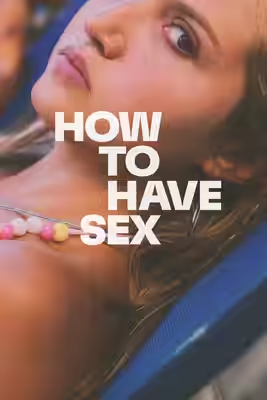
Molly Manning Walker’s first film follows three sixteen-year-olds to Malia and gets the noise right before it gets the silence right. Mia McKenna-Bruce is remarkable. The boys are drawn thinner than the girls, and the ending arrives in a hurry.
Tara (Mia McKenna-Bruce), Skye (Lara Peake) and Em (Enva Lewis) have finished their GCSEs and landed in Malia, on Crete, with a plan. It is the best holiday of their lives, they tell each other at the airport, and they are going to make sure of it. Tara, the small loud one, has a second plan she is less loud about: she is the only one of the three who has not had sex, and she means to fix that before the flight home. Molly Manning Walker wrote and directed the film, her first, and it is good. We recommend it, with a caveat about the boys and the last ten minutes.
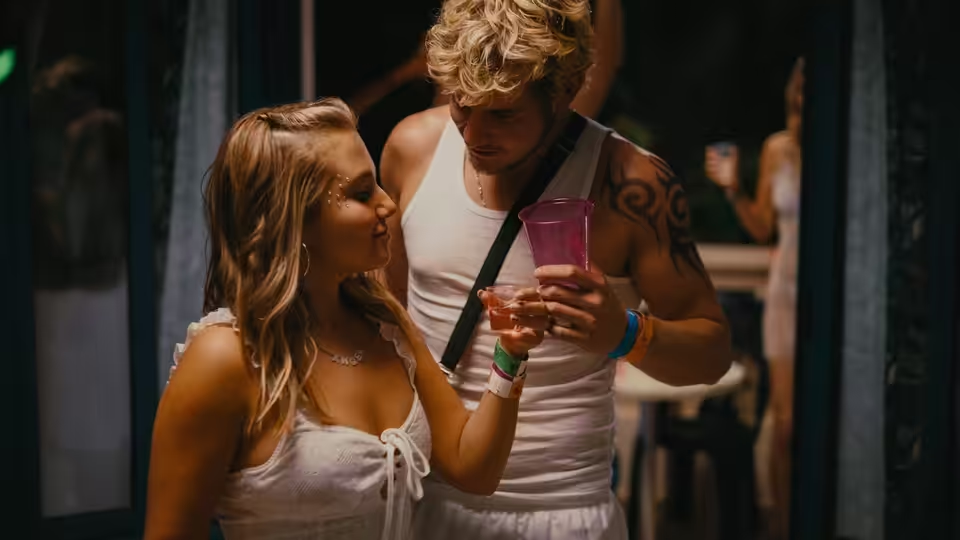
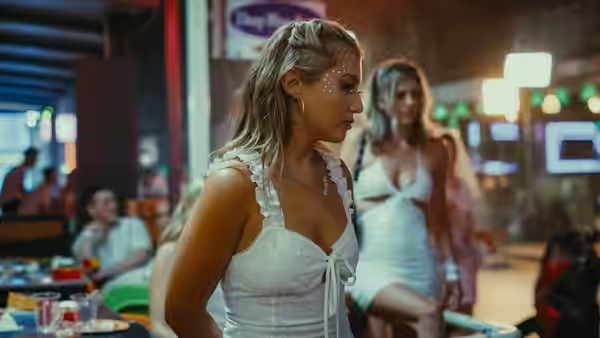
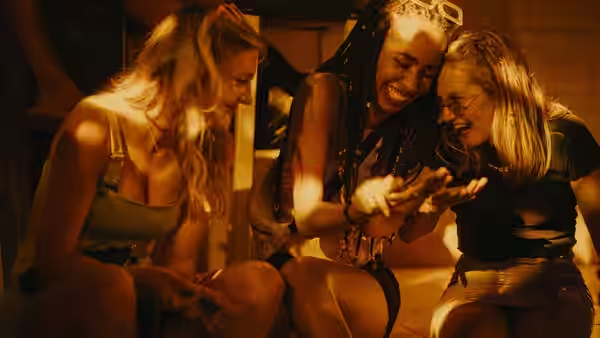
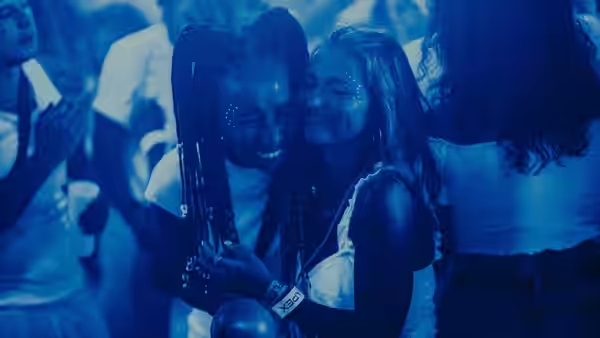
The first half hour is noise, and the noise is right. Nicolas Canniccioni shoots the strip at night in pinks and greens with the camera at shoulder height and close, so the crowd is a wall of arms and the girls have to shout to be heard by each other and by us. Luke Moran-Morris gives them a hotel room that is mostly floor and bed, the sort of room three people can wreck in an evening, and they do. George Buxton dresses them in new going-out clothes, the sort saved for a trip like this and not yet worn. We were tired within twenty minutes, in the way one is tired at a party, and we think that was the idea.
On the next balcony are three older kids: Badger (Shaun Thomas), who is loud and kind and the first to shout across, Paddy (Samuel Bottomley), who is quieter and better-looking and knows it, and Paige (Laura Ambler), who mostly watches. Badger likes Tara straight away and is easy with her. Skye, who has noticed this, steers Tara at Paddy instead. Em, the sensible one, sees all of it and says less than she should.
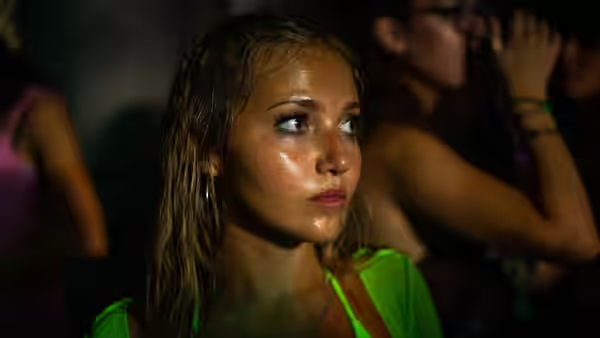
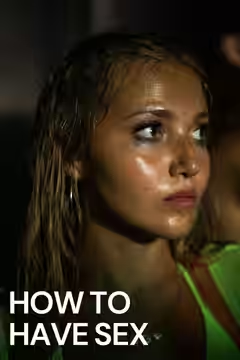
Then, a little past the midpoint, there is a night we will not describe, and the film changes. It does not change the way most films do. The music does not stop, the parties carry on, Skye and Em are as loud as before. What changes is that Canniccioni’s camera stays on Tara while the frame around her keeps moving, and McKenna-Bruce lets the bravado leave her face a piece at a time. We watched the second half with our stomach tight, and what did it was not anything shown. It was a girl walking through a pool party in daylight, asked the same question by everyone she passed, answering it with a face that had stopped matching her voice.
McKenna-Bruce is doing the whole film. She is quick and funny in the early scenes, and she never plays the later ones for sympathy; Tara keeps trying to be the person the holiday wants her to be, and the effort is what hurts. Fin Oates cuts the party scenes in short pieces and the mornings in long ones, so the hangovers feel like the true length of the trip. James Jacob’s score is barely there. Most of what you hear is the strip, the pool speakers and the room next door, and the film is quieter than any of them.
The flaws are in the writing around her. Paddy is a type, the good-looking boy who does not ask, and Bottomley plays him well enough, but Manning Walker gives him no interior to find. Skye is drawn with a thicker line than she needs; every time the film wants pressure on Tara, Skye says something cruel, and the mechanism shows. The last ten minutes arrive in a hurry, as if the film had spent its patience on the middle and had none left for the end. Most critics have let this pass, and we nearly did.
It starts like The Inbetweeners on their holiday and ends nowhere near it, and the trick is that the two halves are shot the same way. Nobody sits down and explains anything. That is the right decision, and rarer than it sounds.
It is a 15, and 91 minutes. If you have a daughter about to go on one of these, watch it first. Then decide whether the conversation is one you have before she goes or after she gets back.