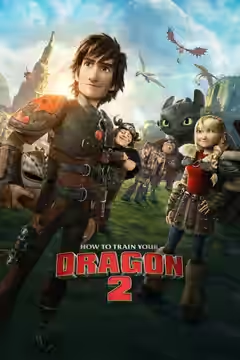
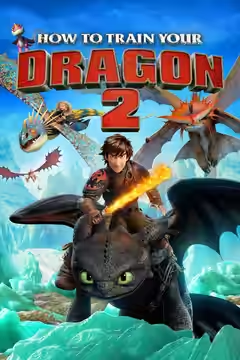
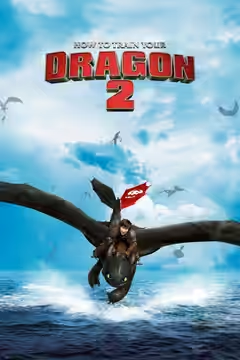
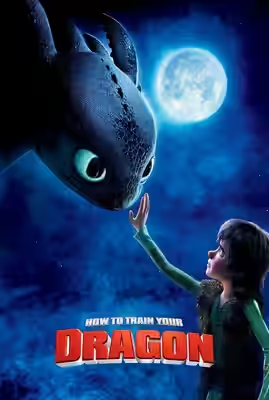
Dean DeBlois takes Hiccup and Toothless five years on and gives them a wider world, a finer score and a thinner villain. The flying is as good as animation gets; the war built around it is standard issue.
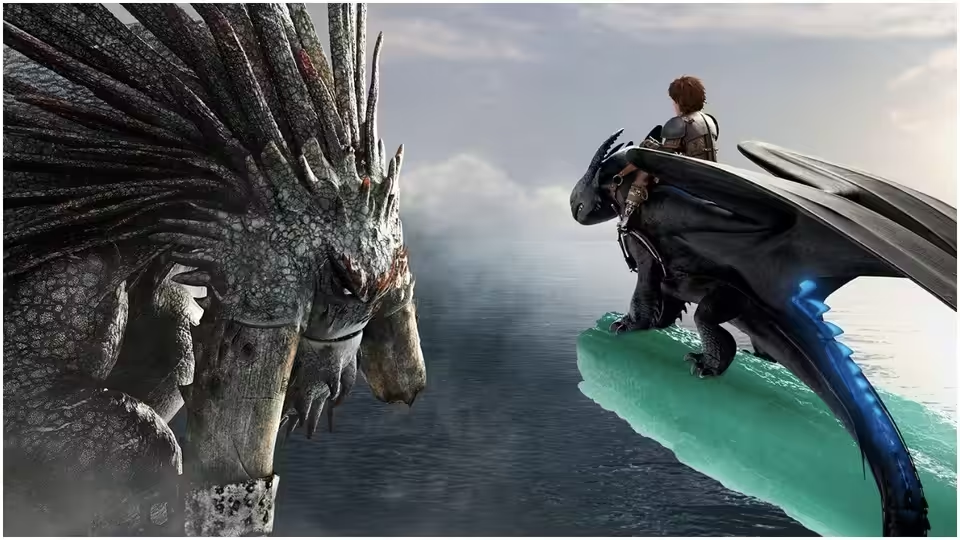
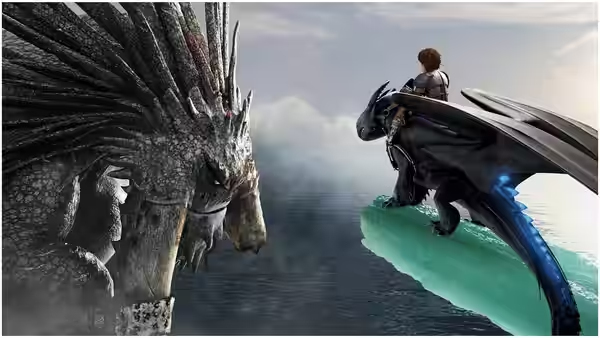
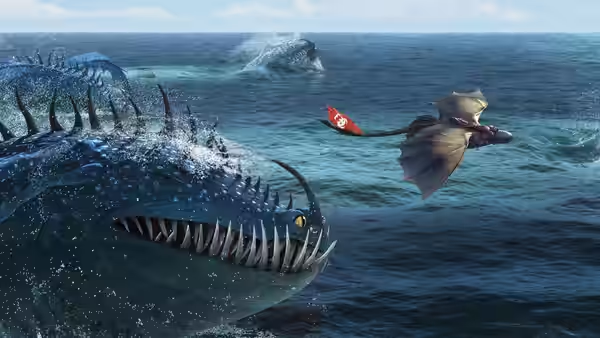
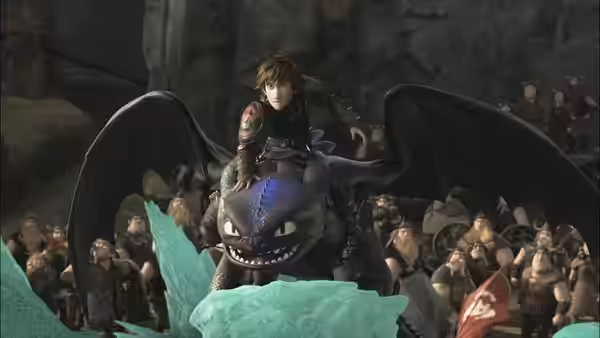
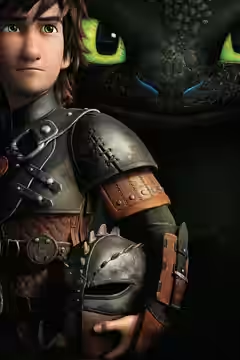
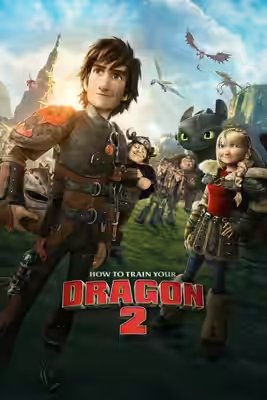
Dean DeBlois, who returns from the first How to Train Your Dragon (2010) as writer and director, has moved the story on five years and widened it in every direction. Berk is now a town built for dragons, with stables and feeding troughs and a racing circuit over the roofs. Hiccup has a wingsuit and a sword that catches fire. There is a mother, a warlord, an armada and a creature the size of a hill. The film is at its best when it forgets most of that and simply puts a boy on a dragon and lets him fall off.
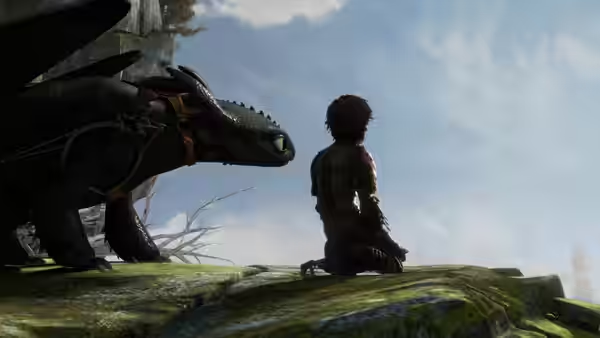
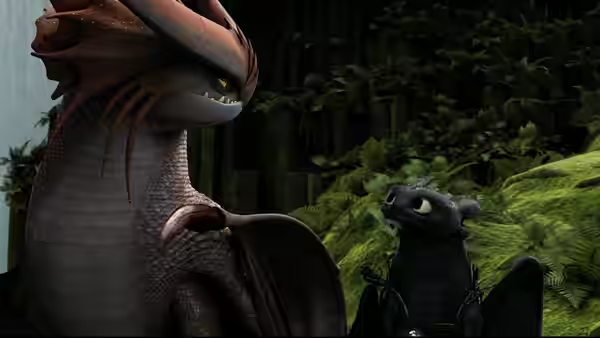
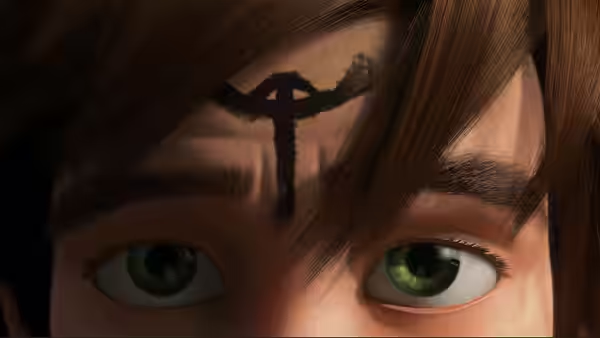
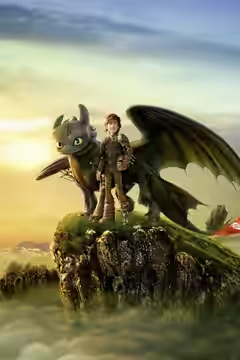
The flying is the reason to see it. Gil Zimmerman, credited with the cinematography, keeps the camera a few feet behind Toothless and holds the shot through turns and dives that a live-action film would cut into six pieces, so a fall of a thousand feet is one movement. Pierre-Olivier Vincent’s designs give the camera somewhere to go: Berk in hard northern sunlight, a sea fort scorched against the ice, and a cavern lit green and blue from below, where dragons roost on the ledges like gulls. Toothless remains the finest piece of animation in the series, a cat’s face on a bat’s body, and when he first sees that cavern his ears go up and his pupils widen and we knew exactly what he was thinking.
John Powell’s score does a great deal of the work, and we mean that as praise. The main theme comes back the moment Hiccup steps off the dragon into open air, and the brass under it has the effect it had in the first film: we sat up. Powell shares the music credit with Alexander Rybak, and the fiddle and pipes run through the quiet scenes as well as the big ones. John K. Carr cuts patiently in the air and briskly on the ground, and only in the final battle, which has three things happening in three places, does he lose us for a minute or two.
The scene we did not expect is the one with no flying in it. The masked rider is Valka (Cate Blanchett), Hiccup’s mother, who has lived twenty years among dragons rather than people, and Blanchett gives her a soft, slightly wild lilt, a woman who has not had a conversation in two decades. When Stoick (Gerard Butler) comes face to face with her, Butler, who has spent two films bellowing, lowers his voice and sings. It moved us more than we thought a cartoon Viking could, because the song is old and halting and the two of them have to find the words together. Jay Baruchel has aged Hiccup’s voice without losing the crack in it, and his scenes with Blanchett have a shyness the rest of the film draws on.
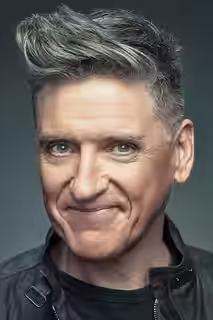
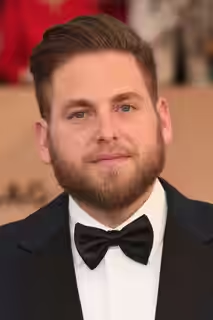
The trouble is the war. Drago (Djimon Hounsou) is a warlord in a cloak of dragon hide, and his plan, as far as the film explains it, is to own every dragon alive. Hounsou gives him a growl and one speech of grievance, and that is the whole man. He is there because a sequel this size wanted a villain, and he is the least interesting thing in every frame he occupies. The young Vikings fare little better. Snotlout (Jonah Hill) and Fishlegs (Christopher Mintz-Plasse) spend the film competing for Ruffnut (Kristen Wiig), who spends it ogling the trapper Eret (Kit Harington), and the joke is run six times when twice would have done. Astrid (America Ferrera), a proper second lead in the first film, is mostly here to carry Hiccup’s plan to other people. Craig Ferguson’s Gobber gets the best line and we will leave it to him.
Against the first film this is bigger and less sure of itself. That one had one boy, one dragon and one lie to a father, and it ran on those for ninety minutes. This one has a plot that needs a map, and its last act takes Toothless somewhere we did not want him to go, in a way we will not describe. Parents should know that the last half hour is darker than the original ever went, and a six-year-old who loved the first film may find it a lot to take.
See it for the flying, for Blanchett, and for a score that would be worth hearing with the picture off. It runs 102 minutes and most of the best of them are in the air. The war can look after itself.