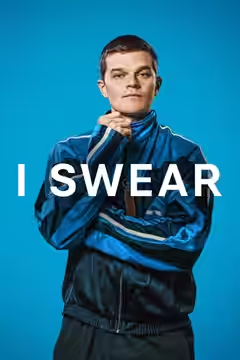
Kirk Jones’s biopic of the Tourette’s campaigner John Davidson is kind, funny and shaped exactly like every film of its type. Robert Aramayo’s performance is the reason to see it, and it is reason enough.
Kirk Jones wrote, directed and produced I Swear, and it is a film with a job to do. John Davidson, who grew up with Tourette’s and became a campaigner for people who have it, is the sort of subject a producer describes as inspiring, and Jones has made the film that word implies: warm, tidy, built to send you out feeling better about people. It is good, in the way that a well-made chair is good. We would happily give it an evening. We would not tell you it surprised us.
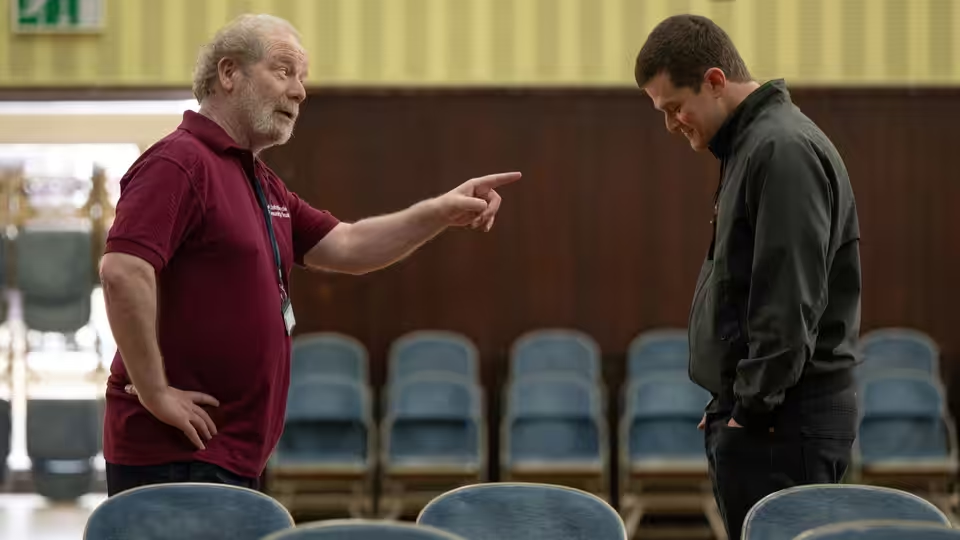
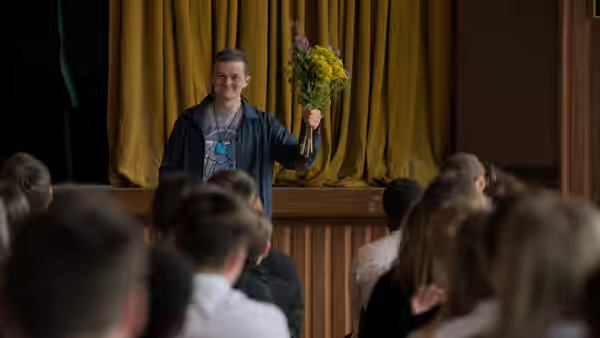
The reason to see it is Robert Aramayo. He takes over from Scott Ellis Watson as John reaches his late teens, and he does the tics, the blinks, the neck jerks, the barked obscenities, without ever letting them become the performance. What he plays instead is the effort around them: the held breath before a room goes quiet, the half-second after a shout when John checks who heard, the tiredness of a man who has been embarrassed so many thousands of times that he has run out of embarrassment and found something drier underneath. He is funny, too, and the film is honest enough to let him be. A man involuntarily shouting the worst possible word at the worst possible moment is a joke, and John knows it before anyone around him does.
Around him Jones has cast well. Maxine Peake plays Dottie as a woman who has decided to be kind and is not going to discuss it, and Peter Mullan gives Tommy the gruffness he has given a dozen men and, underneath it, a patience we did not expect. The performance that got at us, though, was Shirley Henderson’s. Heather is a mother frightened of her own child, and Henderson plays her small and tight, not looking at him, hands busy with something else. We found the kitchen scenes, where she cannot bring herself to touch him, harder to sit through than anything John shouts in public. The film is on John’s side, but it does not make a monster of her, and that restraint is its best decision.
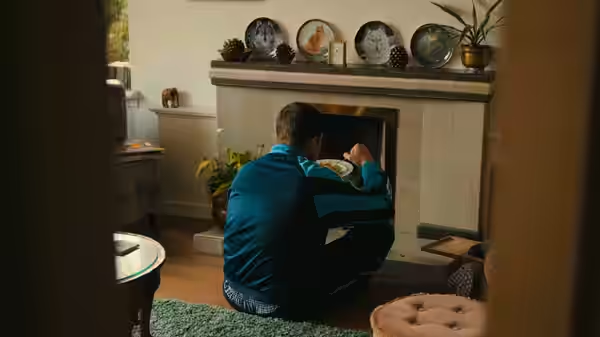
James Blann shoots the town in soft grey daylight and keeps the interiors brown, close and slightly too small for John’s body, so that every twitch seems to knock against a wall. Sabrina Linder’s production design and Denise Coombes’s costumes do the period without winking at it: knitwear, wallpaper, a community hall with a tea urn. Stephen Rennicks’s score is piano and strings and it is used more than we would like; there are scenes where Aramayo is doing the work alone and the music arrives to do it again. Sam Sneade’s cutting is cleanest in the public outbursts, where he holds on the faces of strangers just long enough for us to see them decide what John is.
The trouble is the shape. John tries something, a job, a date, a bus journey, a quiet pint, and the tics wreck it, and we cut to the next attempt. Once this is moving, once it is funny, and by the fifth time we were checking the runtime. The film also tells us what it means; “Education leads to empathy” is said aloud, more than once.
Jones has made gentle films before, Waking Ned among them, and he has not changed his temperament here. He does not do friction. Every awkward stranger softens on schedule, every institution comes round, and a story that in life must have contained a great deal of unresolved unpleasantness is resolved, pleasantly, in 121 minutes. Most critics have been kinder to this than we are, and we understand why: it is hard to hold the manner of the thing against a film this decent about its subject.
It carries a 15 certificate, for the language, which is rather the point. See it for Aramayo, and for Henderson, and go in knowing you will be told how to feel and will feel it anyway.