Sam Riley is quietly excellent as a tennis coach gone to seed on Fuerteventura, and the island is shot to look like the last place on earth. The mystery built around him never earns its length. Good, for a patient evening.
Tom (Sam Riley) teaches tennis at a resort hotel on Fuerteventura. He hits balls back to holidaymakers in the morning, drinks in the hotel bar at night and wakes up on sofas that are not always his own. A British family checks in: Anne (Stacy Martin), her husband Dave (Jack Farthing) and their small son Anton (Dylan Torrell), who needs lessons. Then Dave goes missing, and Tom finds himself closer to the family than a tennis coach ought to be. It is a decent, handsome, slow film with a fine central performance and a plot that does not repay the time it asks for.
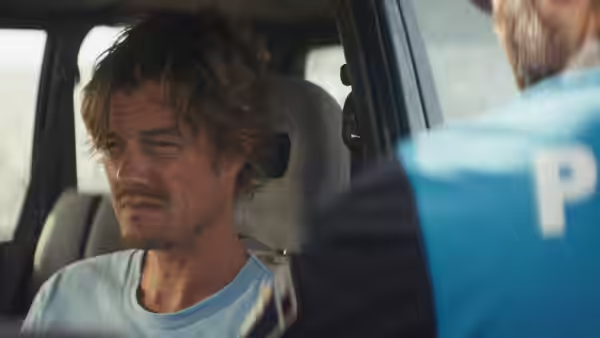
Riley is the reason to see it. He plays Tom as a man who has been drunk for so long that being sober feels like the hangover, with a tan that looks like a medical condition and a smile he puts on for the guests the way he puts on the hotel polo shirt. He does the small things well: the flinch when a guest asks how he ended up here, the patience he shows a child on the court while plainly thinking about something else. The film is in his company for nearly all of its 123 minutes and he carries it without once asking to be liked.
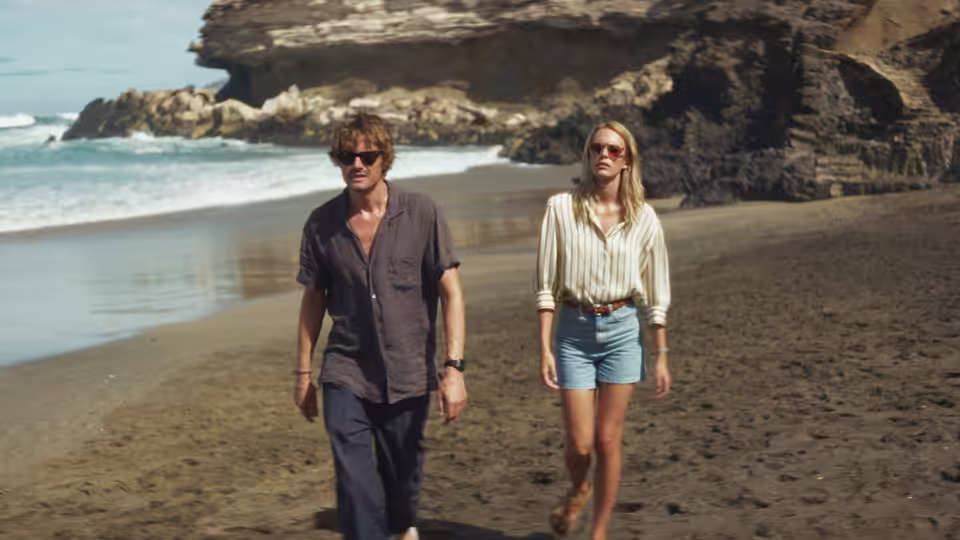
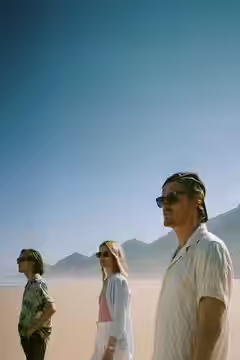
Juan Sarmiento G. shoots the island wide and flat. The hotels sit on the black ground like boxes left on a beach, the sky is white more often than blue, and the dunes go on past the edge of the frame. Cora Pratz’s production design makes the resort a place of lanyards, laminated menus and plastic sun loungers, the kind of hotel you have stayed in and would not book again. Dascha Dauenhauer’s score is a low electronic pulse with the odd dry drum, and it does most of the work of suggesting something is wrong before anything is. The look and the sound never let the film down.
Martin plays Anne as a woman keeping a great many thoughts to herself, which is right for the part and occasionally hard to watch; there are scenes where we wanted her to want something out loud. Farthing’s Dave is a loud, friendly man who drinks too much and stands too close, and Farthing makes him likeable enough that his absence matters. Torrell, as the boy, is good on the court and better off it. The film’s quiet question about whether Tom and Anne have met before, and what that might make Anton, is handled with more tact than most films would manage.
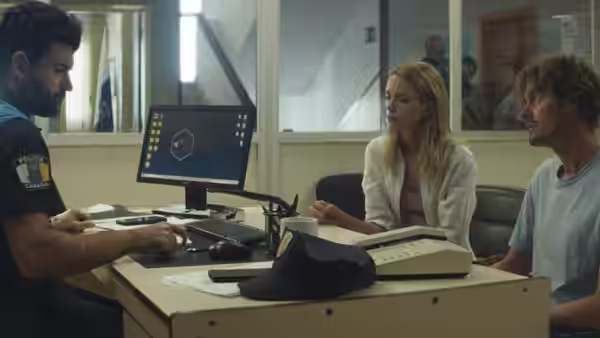
The trouble is pace. Matthew Newman and Antje Zynga are both credited as editors, and the middle hour still has Tom driving, drinking, waiting and being questioned by Bruna Cusí’s María, who asks the right questions and gets none of the answers, while the matter of Dave’s disappearance moves about an inch. We were bored somewhere around the second night in the bar, and then annoyed with ourselves, because the film is plainly asking us to feel Tom’s boredom with him, and we did, and it still did not make the scenes any shorter. When the answers come they come quietly, and we will say only that they are not what the film cares about.
Gerster’s first feature, A Coffee in Berlin, followed a young man drifting through a day while the city failed to notice him, and Tom is that man a decade and more on, somewhere hotter. The script, by Gerster with Lawrie Doran and Blaž Kutin, is better on what Tom’s life is like than on what happens in it. Most critics have been warmer than we are, and we see why: a film this patient and this well shot is not common. But if you call something a thriller, people will come for the thrill, and this one keeps it in a drawer.
Watch it on a quiet evening with nothing planned afterwards. It is a film about waiting, and it will want you to do some.