Sasha Gordon’s small, quick romantic comedy is built entirely around Cristin Milioti, and she is worth building around. It is slight, and the Rome stretch goes soft in the way these things do, but it knows what it is and gets out in 85 minutes.
Romantic comedies usually end with the proposal. It Had to Be You starts with one, more or less, and spends its 85 minutes watching a woman fail to answer it. Sonia Friedman (Cristin Milioti) writes jingles for adverts, and when Chris (Dan Soder) asks her to marry him she does the thing nobody in the genre is supposed to do: she says she will think about it. Sasha Gordon, who wrote, directed and scored the film, has made something modest, brisk and likeable, and we enjoyed it more than its size would lead you to expect. It is a good evening if the form is yours. It is not much more than that.
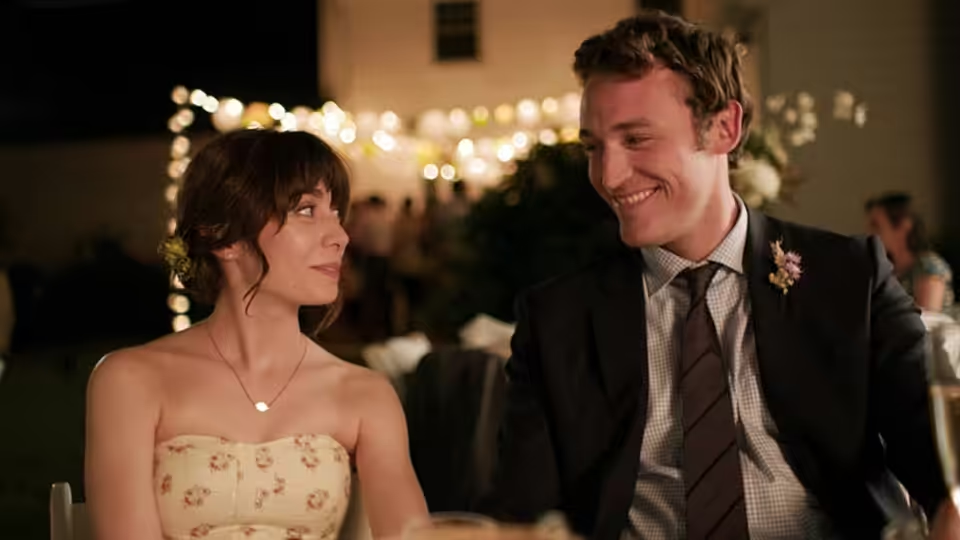
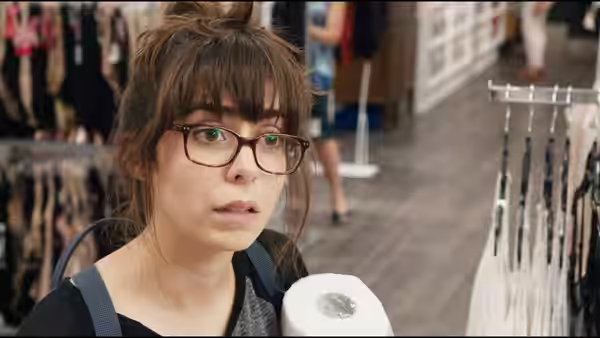
Milioti is the whole film, and she knows it. Sonia is anxious, talkative and funny without quite meaning to be, and Milioti plays her at a pitch that would be wearing if she were any less exact. She has a way of finishing a sentence a beat after she has realised it was a mistake. Watch the proposal scene itself: her face does four things while her mouth does nothing, and it is funnier for the silence than any line could have made it. Most critics have singled her out and they are right to.
Soder plays Chris as the sort of man these films usually set up as the obstacle: kind, steady, a little dull. Gordon’s script, from a story she wrote with Levi Abrino, does something more interesting and lets him be right. Somewhere around the middle we found ourselves firmly on his side and slightly cross with Sonia, which we had not expected, and which we suspect is exactly what Gordon wanted. Halley Feiffer, as Nora, gets the best of the supporting lines and delivers them as if she has said them before to worse friends. Kyle Mooney appears as Gary the Midwife in one of Sonia’s daydreams and is as odd as the billing suggests.
The daydreams are the film’s structural gamble. Sonia keeps slipping into the lives she might have had, and Gordon stages them as short sketches that cut into the story and then hand it back. Some are sharp. Some are a single idea asked to fill a scene. Amanda Laws’s editing gets us out before most of them outstay their welcome, and the film never feels padded, which is more than many comedies with far more room can say.
The craft is small-scale and honest about it. Bobby Webster shoots New York in flat, ordinary daylight, apartments and pavements with nothing tidied up for the camera. Kendall Fleisher’s production design gives Sonia a flat that looks lived in rather than dressed, and Amanda Bujak puts Milioti in clothes that look bought rather than chosen, which is right for a woman who has not decided who she is. Gordon’s own music is the film’s best joke. Sonia’s jingles are catchy and dreadful in equal measure, and we hummed one of them on the way to the kettle, which is both a compliment and a complaint.
Then the film goes to Rome, and slackens. Fabrizzio (Danny Deferrari) is charming in the way men in the second half of romantic comedies are charming, which is to say he is a device with good hair, and the city is photographed as a postcard. For a stretch the film becomes the very thing it had been gently making fun of. Several critics have noticed the same thing and we cannot disagree; the ideas Gordon had in New York do not survive the flight.
Set against the genre, this belongs with the small, talky New York comedies rather than the studio ones, and it is better than most of those at knowing when to stop. It has one real performance, one good running joke and a soft last third. Watch it with someone you have not yet proposed to, and do not discuss it afterwards.