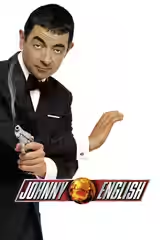
Rowan Atkinson is as exact as he has ever been, and two scenes, a chair and a rooftop, earn their place. The film around him is slow, mild and uninterested in its own cast, and settles for being a vehicle.
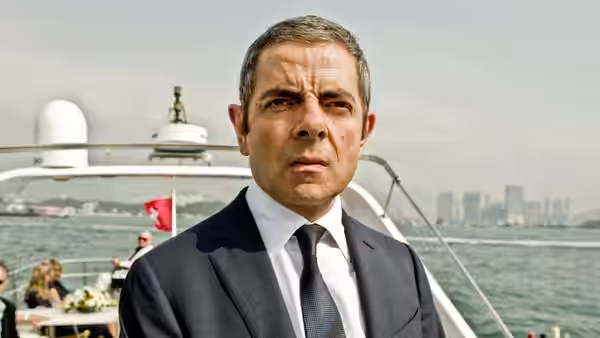
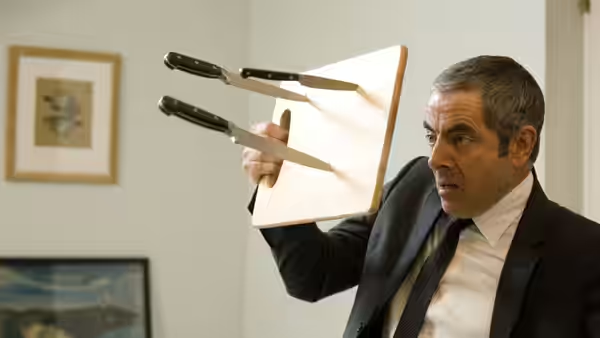
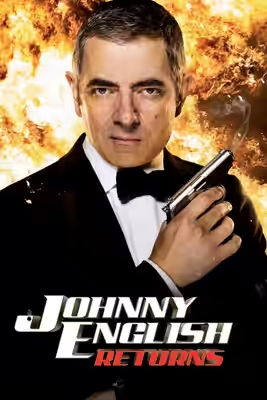
Eight years after the first Johnny English, Rowan Atkinson puts the suit back on, and the question for anyone considering the sequel is whether that is enough. Oliver Parker directs from a screenplay by Hamish McColl, with William Davies also credited as writer, and the plan is plain: a Bond picture for children, with Atkinson’s body doing the work the gadgets usually do. The plan is sound. Atkinson is as precise as he has ever been. The film around him is mild, slow in the middle and short of ideas, and it seems content with that.
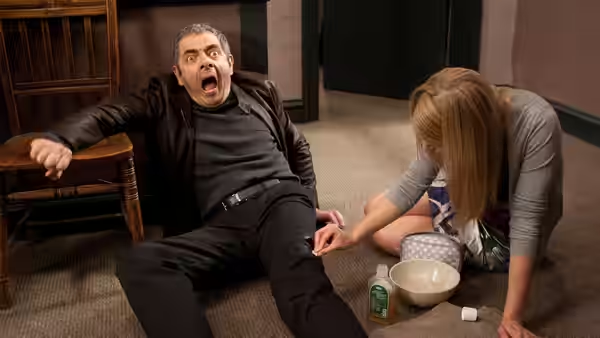
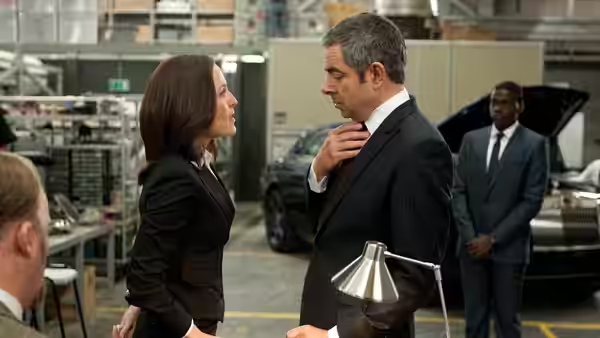
The best scene is also the cheapest. English is summoned to see Pamela (Gillian Anderson), the head of MI7, and sits in a chair whose height he cannot control. He sinks, he rises, he tries to look like a man receiving a briefing. There are no effects and no stunt, only a lever, Atkinson’s face and his refusal to admit that anything is happening. We laughed out loud, more than once, and felt a little foolish about it afterwards, because we knew exactly what was being done to us and it worked anyway.
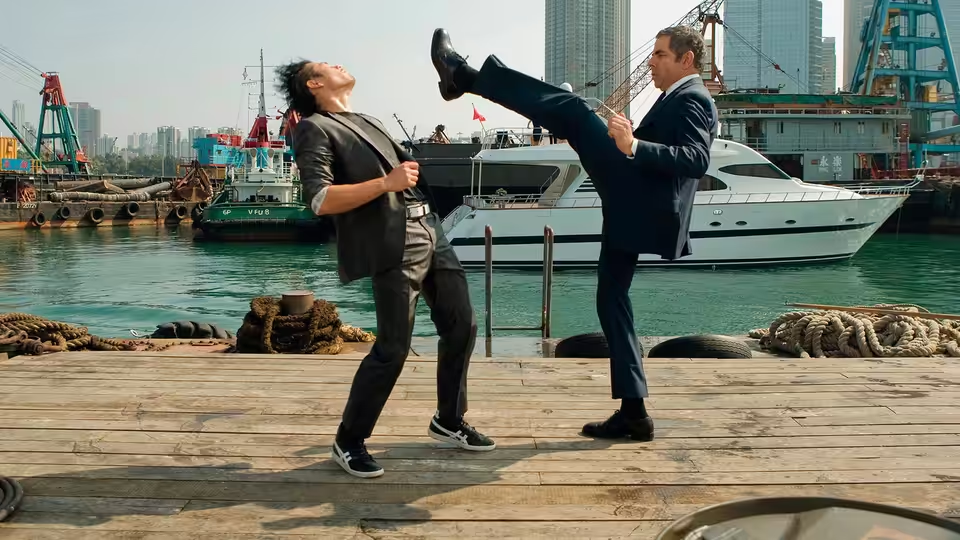
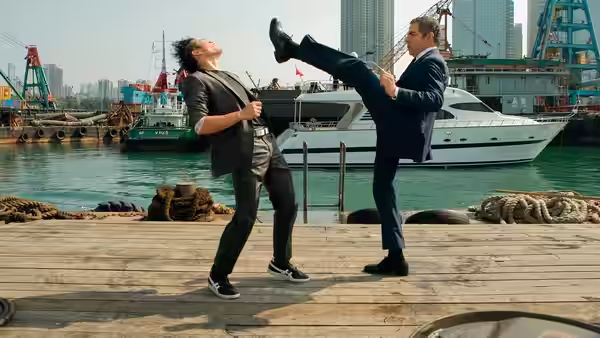
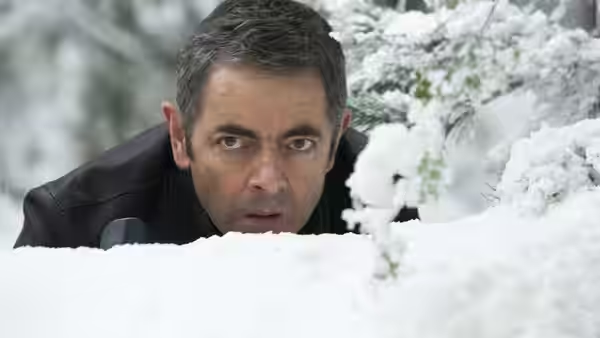
The rooftop chase in Hong Kong is the other reason to be here. The man English is after goes over walls and across gaps, and English, having looked at the drop, takes the stairs and the lift and arrives ahead of him with his breath intact. Guy Bensley cuts between the two so that the joke lands on the cut, and Ilan Eshkeri’s score gives the runner the full brass and gives English nothing at all. It is a good gag because it is about character: this is a man who is wrong about most things and right about saving his breath.
Between those scenes the film sits down. McColl’s script moves English from Tibet to London to Hong Kong and onward by caption, and the plot, about a group called Vortex and a threat to the Chinese premier, is a line of places with a gag waiting at each one. The middle forty minutes are the problem. We were bored, and then irritated about it, because the cast on hand is far better than what they are asked to do. Rosamund Pike plays Kate, a behavioural psychologist who warms to English for reasons the script never finds time to supply. Dominic West’s Ambrose is smooth and smug and nothing more. Anderson gets the driest lines and delivers them as if she knows the consensus, and Daniel Kaluuya, as the junior agent Tucker, is quick and likeable and has one good scene for every three he spends standing at the back.
The craft is clean to the point of blandness. Danny Cohen lights everything evenly and brightly, so that Hong Kong looks like a brochure and MI7 looks like an advert, which is, after all, where this character began. Jim Clay’s production design gives the service a glass headquarters with a sponsor’s name on the wall, a joke made in the first reel that then simply becomes the office. Eshkeri’s Bond pastiche is well done and does not pretend to be anything else. The PG certificate keeps the film away from anything rude, and the gags that remain are the kind a parent will have seen before and a child will not, which is the audience Parker has settled on.
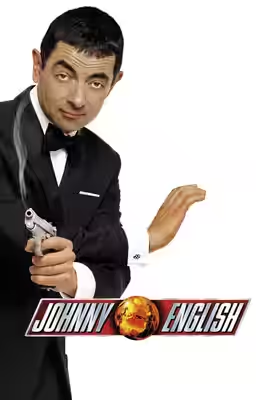
Against Atkinson’s own standard it sits in the middle. The 2003 film was broader and funnier, and the Mr Bean pictures trusted his face to carry whole scenes without a line. Here Parker gives him the face and then keeps cutting away to a plot. Most critics landed on the fence and so have we, with the same reservation: the things that work all belong to one man, and the film never builds anything around him that works on its own.
It runs 101 minutes and earns perhaps a third of them. For a Sunday afternoon with children who have not yet met Rowan Atkinson, that is a fair exchange, and they will remember the chair. For anyone else, keep the remote close, because the good bits do not announce themselves and the rest is quite happy to be skipped.