Sam Esmail’s apocalypse fits inside one expensive house, and for an hour it is tense, funny and handsomely made. Then it starts telling us what it means, and it means less than it thinks; Roberts is the reason to stay.
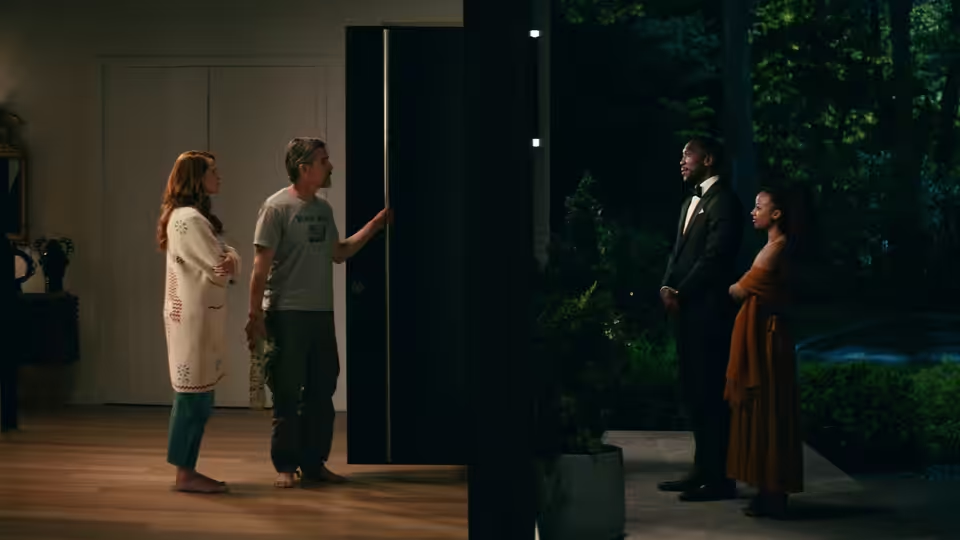
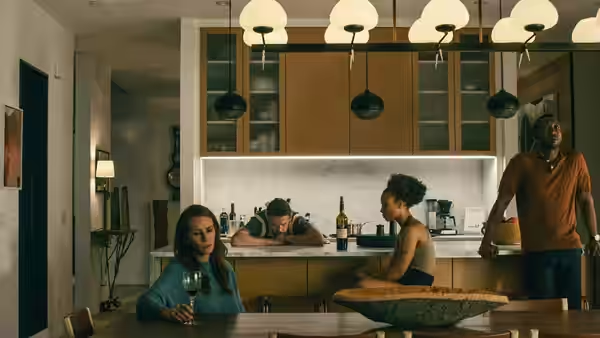
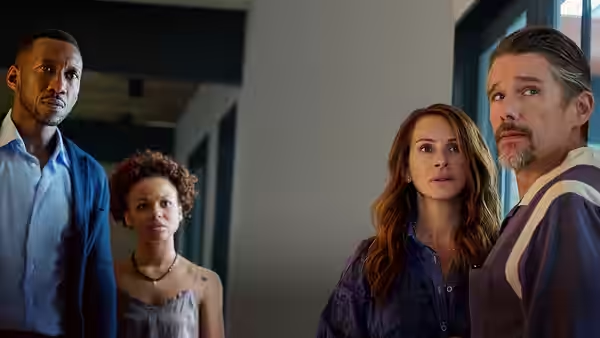
Sam Esmail takes Rumaan Alam’s novel and keeps its shape: one family rents a house on Long Island for a few days, the phones stop working, and the people who own the house turn up in the middle of the night asking to be let in. Amanda Sandford (Julia Roberts) booked it on impulse because, as she says in the opening scene, she hates people. Her husband Clay (Ethan Hawke) is agreeable and useless, and their children Rose (Farrah Mackenzie) and Archie (Charlie Evans) want a screen. G.H. Scott (Mahershala Ali) and his daughter Ruth (Myha’la) arrive in evening dress with a story about a blackout in the city. For an hour this is a good, mean, well-acted chamber piece. When the world outside the house gets bigger, the film gets smaller.
Roberts is the reason to stay. Amanda says the unkind thing first and defends it second, and Roberts plays her without once asking us to forgive her. Ali gives G.H. the patience of a man who has spent his life waiting to be believed, and the scene on the porch where he proves he owns the house to a woman who does not want to hear it is the best written thing in the film. Hawke plays Clay as a man who cannot read a paper map and knows it. Myha’la’s Ruth gets the sharpest lines and has to aim most of them at Amanda.
Tod Campbell’s camera will not sit still. It climbs over the roof, spins through a ceiling into the room below, and follows the car from directly above like a drone that has lost interest in the road. For the first hour this works: the house is filmed as a place watched from outside, and the people in it look small. By the second hour it is a habit, and we began to notice the moves rather than what they were showing us. Anastasia White’s house is glass, concrete and pale wood with a pool the colour of a phone screen. Catherine Marie Thomas keeps the Scotts in black tie and the Sandfords in holiday clothes, so we never forget who dressed for the evening.
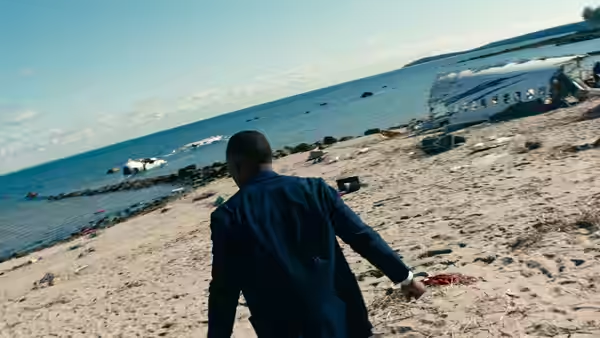
The tanker got us. A red hull appears on the horizon while the family sits on the beach, it grows, and nobody moves until it is far too late, and we felt it in the stomach because Lisa Lassek holds the wide shot instead of cutting to faces. It is the one sequence where the size of what is happening lands without anyone explaining it. The deer are the opposite. They gather in ranks on the lawn and stare, and the effect is closer to a screensaver than a threat. Mac Quayle’s score, strings over a low electronic hum with something like a siren threaded through, does more of the work than the animals do.
The trouble is the writing. Esmail, who also wrote the screenplay, has each character say aloud, at some point, what they stand for. G.H. gets a speech about how societies come apart. Ruth gets one about trust. Amanda gets one about hating people, again. The film wants to talk about race and money and what we owe strangers, and it does talk about them, at length, in place of dramatising them. Rose’s determination to see the last episode of Friends is the best running joke, and it is also the point of the film, and it says more than any of the speeches. Kevin Bacon appears late as a neighbour named Danny, does ten minutes of pure suspicion, and we missed him when he had gone.
Esmail made Mr. Robot for television, and this feels like a miniseries folded into 140 minutes: episodes rather than acts, a cliffhanger every twenty minutes, a habit of ending scenes on a look. Most critics have liked it more than we did, and they are right about the cast and the first hour. But the film explains more than the novel did, and every explanation makes the mystery a little more ordinary. By the last half hour we had stopped being frightened and started waiting to be told, and being told was not worth the wait.
See it for Roberts, for the tanker and for the porch. It was plainly built for a sofa, where the camera’s somersaults are less tiring and the speeches easier to talk over. It runs 140 minutes and carries a 15.