Maïlys Vallade and Liane-cho Han make early childhood feel strange, absorbing and worth taking seriously. The animation rewards close attention, though the toddler’s viewpoint can be difficult to follow; we recommend it with that reservation.
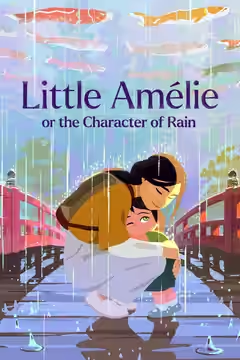
Little Amélie or the Character of Rain is a tender, absorbing animation, worth seeing even when its toddler’s thinking becomes difficult to follow. Directors Maïlys Vallade and Liane-cho Han want early childhood to feel unfamiliar again, and they take their small protagonist seriously. Amélie’s discoveries are allowed to matter without being reduced to lessons an adult has prepared for her. We are asked to spend time with someone who has little experience to help explain what she sees.
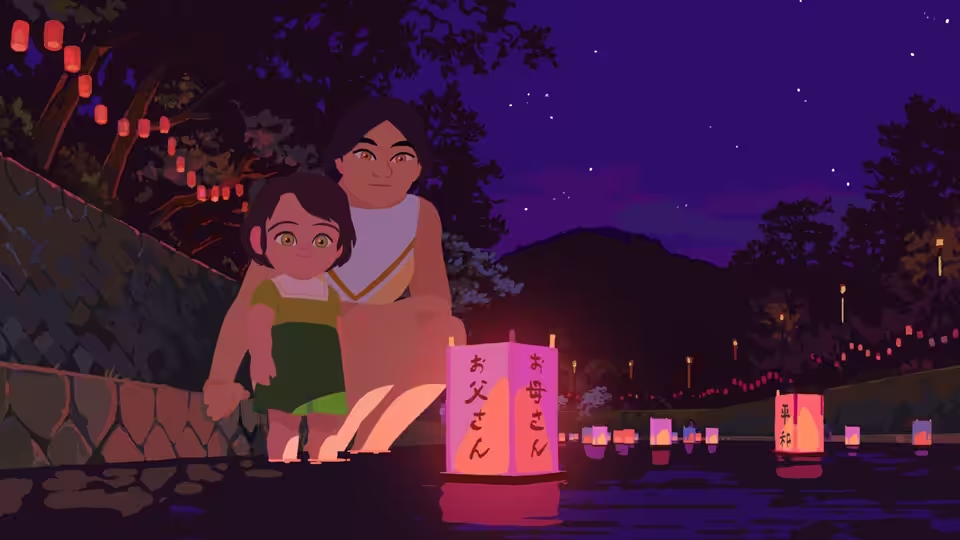
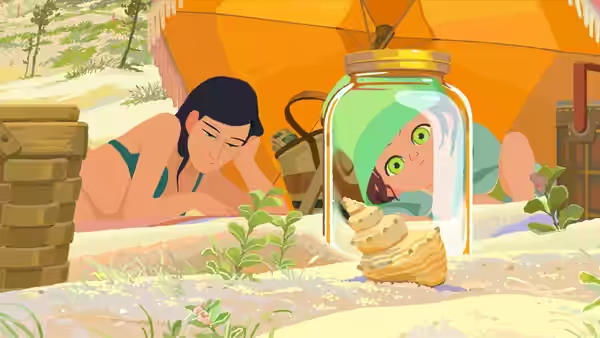
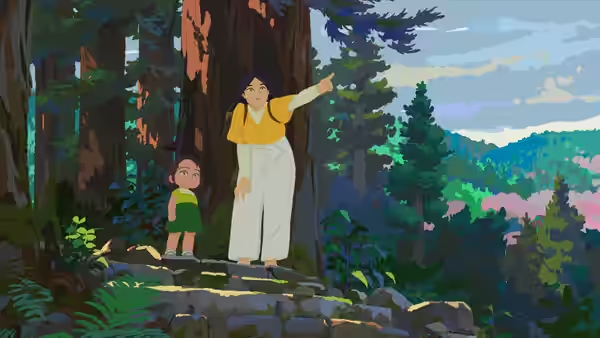
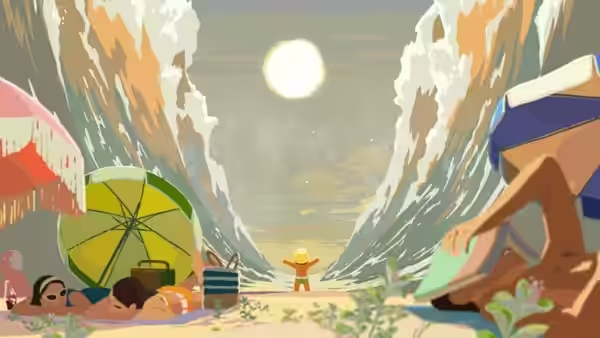
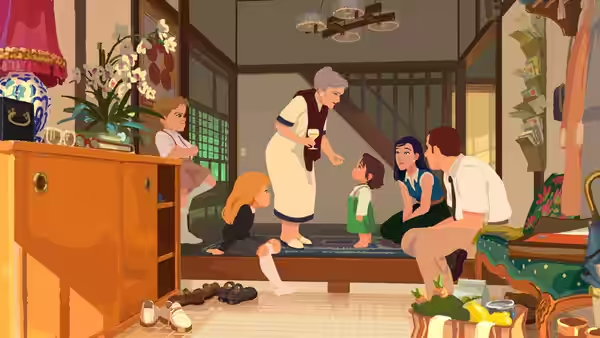
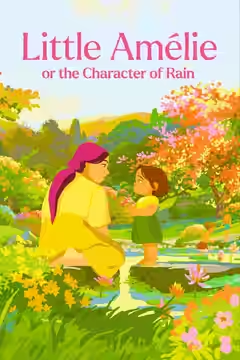
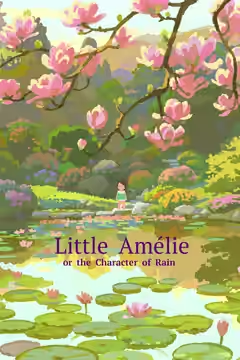
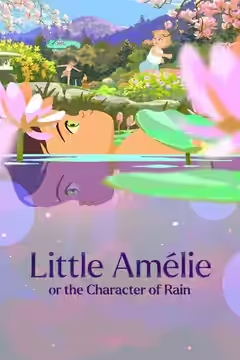
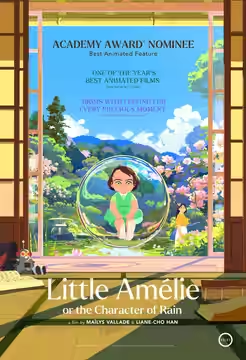
The watercolour-like images make that invitation appealing. Soft colour and relatively spare detail suggest a world still taking shape, while expressive character drawings give us something firmer to read. There is pleasure in simply looking, but the pictures also help us understand why an ordinary experience might occupy all of a small child’s attention. The animation gives those responses enough space to register before we dismiss them as trivial.
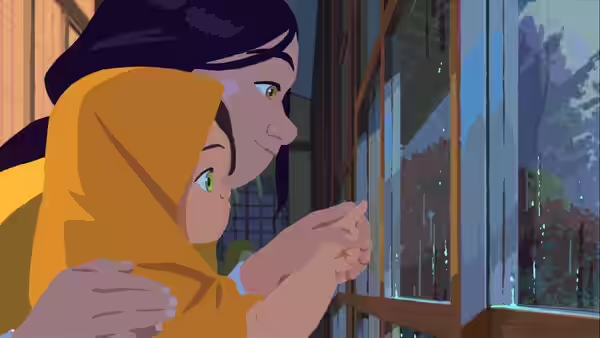
Loïse Charpentier voices Amélie, and Victoria Grobois voices Nishio-San, whose bond with the child gives the film its most engaging relationship. We were moved by their closeness. The expressive faces make their affection clear even when Amélie’s understanding of the world is harder to grasp, so we have something to care about beyond each new discovery. These scenes give the film a warmth that its more puzzling passages need.
Screenwriters Eddine Noel, Aude Py, Maïlys Vallade and Liane-cho Han adapt Amélie Nothomb’s book with room for grief and wartime history alongside the pleasures of discovery. Those subjects could overwhelm a story told from such a young child’s perspective. The film generally handles them with care, allowing us to recognise more than Amélie can understand without treating her feelings as inadequate. Its sadness matters because the affection has been given time to establish itself, particularly in her relationship with Nishio-San.
Ludovic Versace’s editing keeps the 77-minute film compact without making its discoveries feel hurried. That is a useful judgement of scale for a story whose central character cannot yet organise everything into a tidy account. Mari Fukuhara’s music suits the tenderness, although the drawings do much of the emotional work themselves. The most affecting passages give us time to look at a face, and they need little help in telling us what to feel.
The difficulty comes when the writing assumes that sharing Amélie’s uncertainty will be as interesting as sharing her discoveries. We were less persuaded in those stretches, where her unusual thinking becomes difficult to grasp and the story loses its pull. A child’s confusion can be engaging, but we still need enough information to follow what matters to her. Here, some of the connection between one experience and the next remains hazy, and the attractive drawing cannot quite compensate.
As family animation, its willingness to take childhood sadness seriously is welcome. The PG certificate should not be mistaken for a promise that every child will find it comfortable, particularly when grief and wartime history enter the picture. We would choose it for a quiet evening, with adults prepared to talk about more than the drawings. Leave time for questions that may not have quick answers.