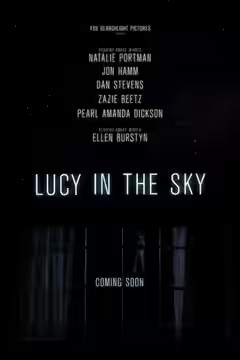
Natalie Portman gives a tight, careful performance as an astronaut who cannot fit back into her life, and Noah Hawley buries it under a picture frame that keeps changing shape. The idea is sound; the film spends two hours getting in its way.
Noah Hawley made his name in television, on Fargo and Legion, bending familiar material until it looked new. Lucy in the Sky is his first film for the cinema and it tries the same trick with an astronaut. Lucy Cola (Natalie Portman) spends a stretch in orbit, comes home, and finds that the house, the husband and the supermarket have shrunk while she was away. The story is loosely drawn from a real case, with the names changed and most of the detail with them. It is a decent idea, and not, over 125 minutes, a decent film; the reasons are visible inside the first ten.
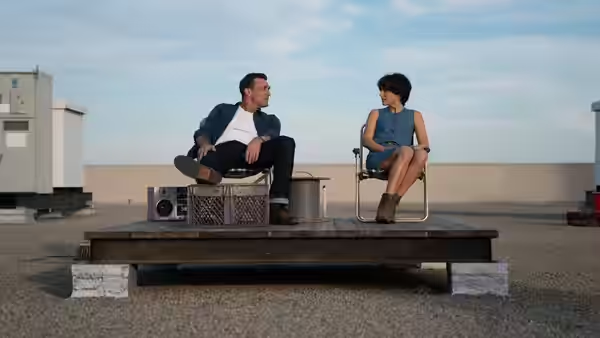
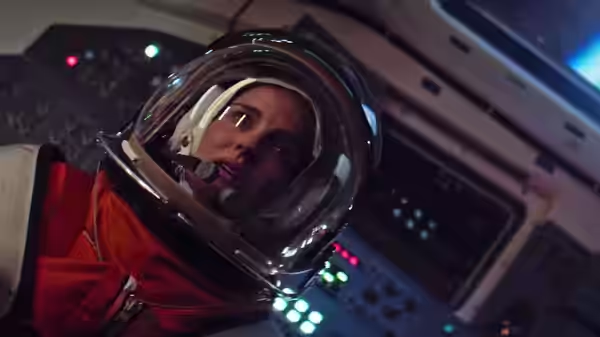
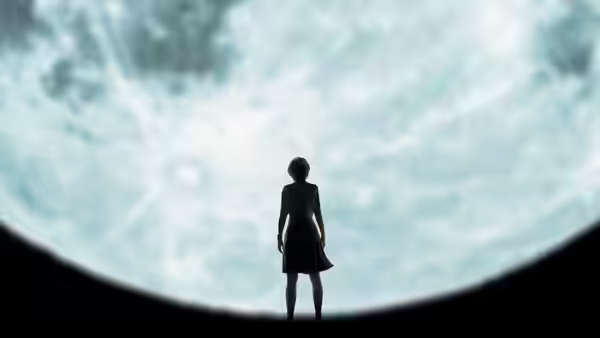
The opening is the best of it. Polly Morgan shoots the spacewalk in a wide, quiet frame, Lucy hanging off the station with the curve of the Earth beneath her, and for those few minutes we felt what the film wants us to feel, a pull towards staying up there. Then she lands, and the picture narrows to a tall box, as if the world had put its walls back up. That is a fair thing to say once. Hawley says it for two hours. The frame widens and narrows in kitchens and car parks, and well before the halfway mark it has stopped meaning anything and started to look like a nervous habit. Regis Kimble cuts across the changes cleanly; the trouble is how many there are.
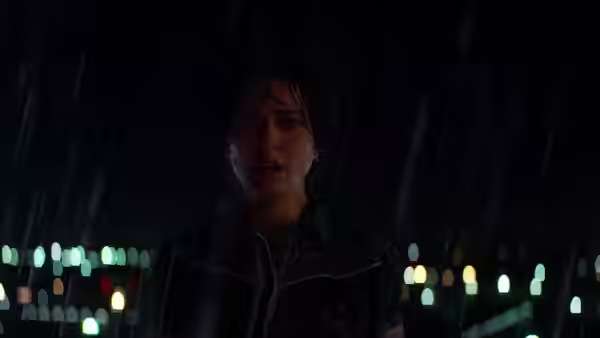
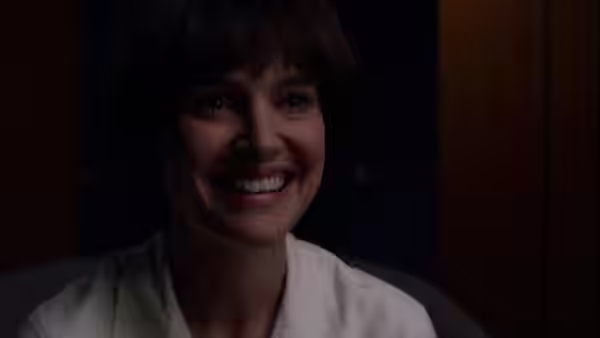
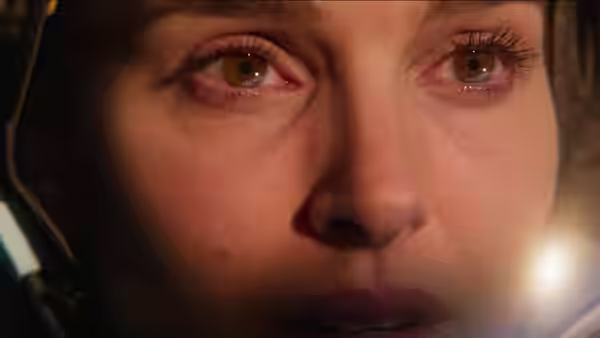
Portman is good, and better than the film gives her room to be. She plays Lucy with a cropped bob, a Texan drawl and a jaw set so tight you expect to hear it, a woman who has organised every part of herself and cannot understand why the organisation is not holding. Her best scenes have no dialogue: lying awake, watching her family eat, sitting through a debrief. Hawley, Brian C. Brown and Elliott DiGuiseppi have written her several speeches about how small everything looks from up there, and each time she gives one we wished they had trusted her face instead.
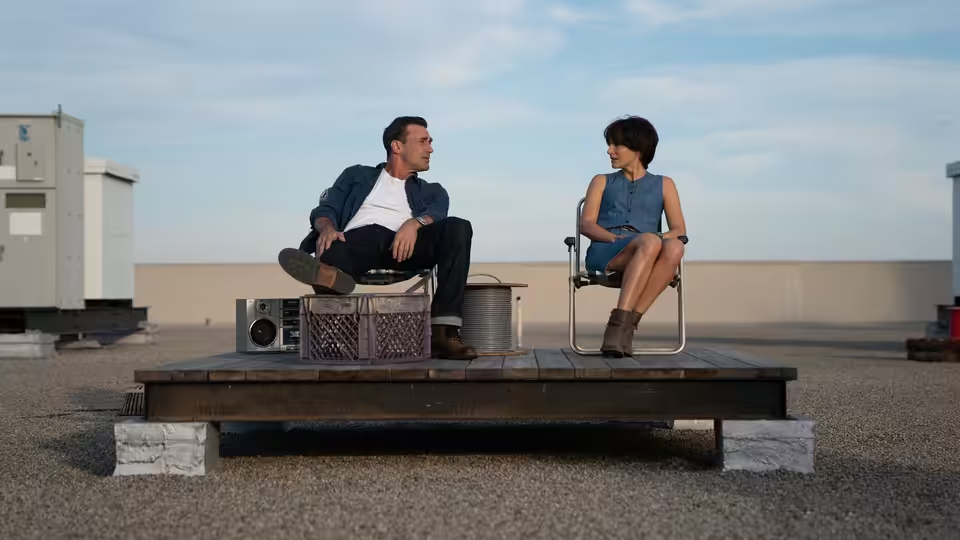
The people around her are sketched rather than written. Jon Hamm plays Mark Goodwin, the astronaut she takes up with, as a man who has been up more often than she has and copes by drink and charm; Hamm is easy company and the film uses him as furniture. Dan Stevens, as her husband Drew, plays mildness so thoroughly that the film seems to hold it against him. Ellen Burstyn, as Nana Holbrook, swears at everyone and gets most of the laughs. Zazie Beetz, as the younger astronaut Erin Eccles, and Colman Domingo, as Frank Paxton, who decides who flies next, each get about two scenes. Nick Offerman and Tig Notaro appear and are gone.
What sinks it is that the film never settles on what is wrong with Lucy. The script offers the vertigo of having seen the Earth whole, a dull marriage, a rival for the next seat, a family history it drops, and treats each as the explanation. Jeff Russo’s score hums and pulses underneath as if it has been told a thriller is coming and is trying to keep warm. Stefania Cella’s production design gets the beige of the suburb and the strip lighting of the NASA corridors right, and Louise Frogley dresses everyone in polo shirts and khakis, so the cast looks like a company barbecue; that flatness is deliberate, and for once the film does not underline it. Then the last act turns into something we will not describe, and by then we were bored, and then embarrassed for everyone involved, because the question the film began with, how a person comes down from that, had been swapped for plot.
On television Hawley has held an odd tone for ten hours and trusted the audience to keep up. Here he trusts nobody: every image is explained by a line and every line by an image.
Most critics landed about where we have. See it if you will watch Portman in anything; she has done real work here. At home the widening and narrowing frame becomes a widening and narrowing letterbox on the television, which is less dramatic and something of a relief.