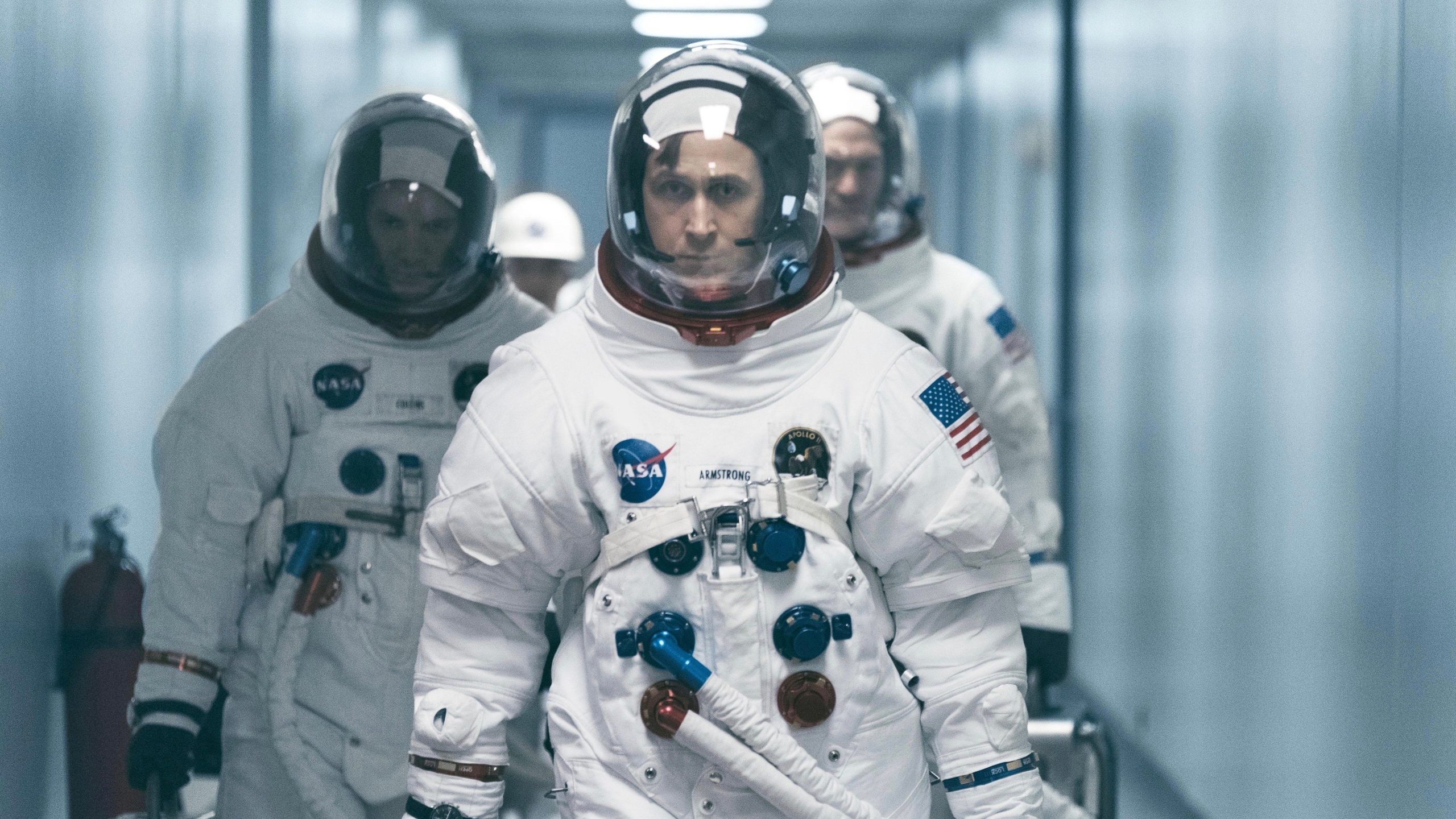
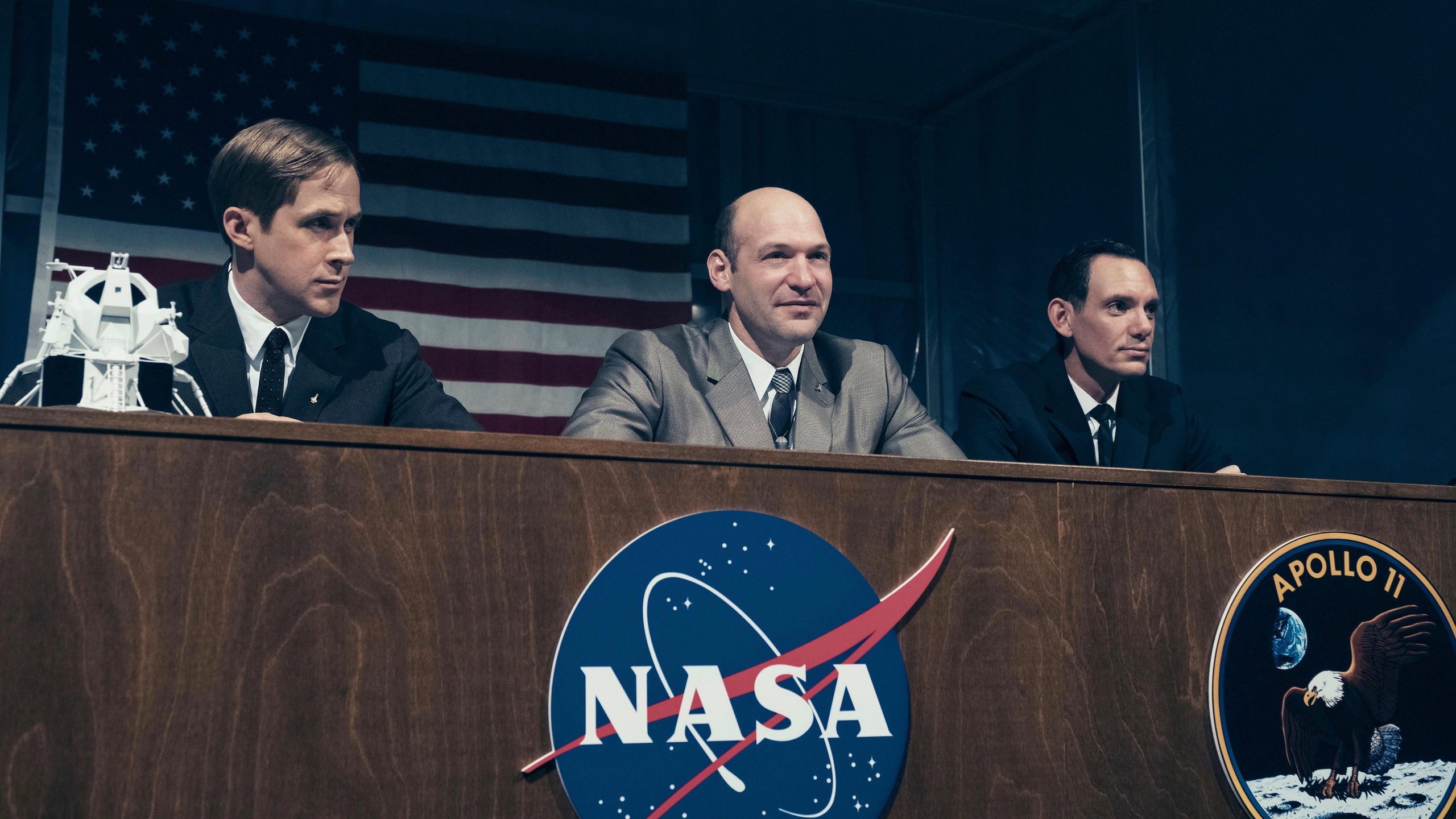
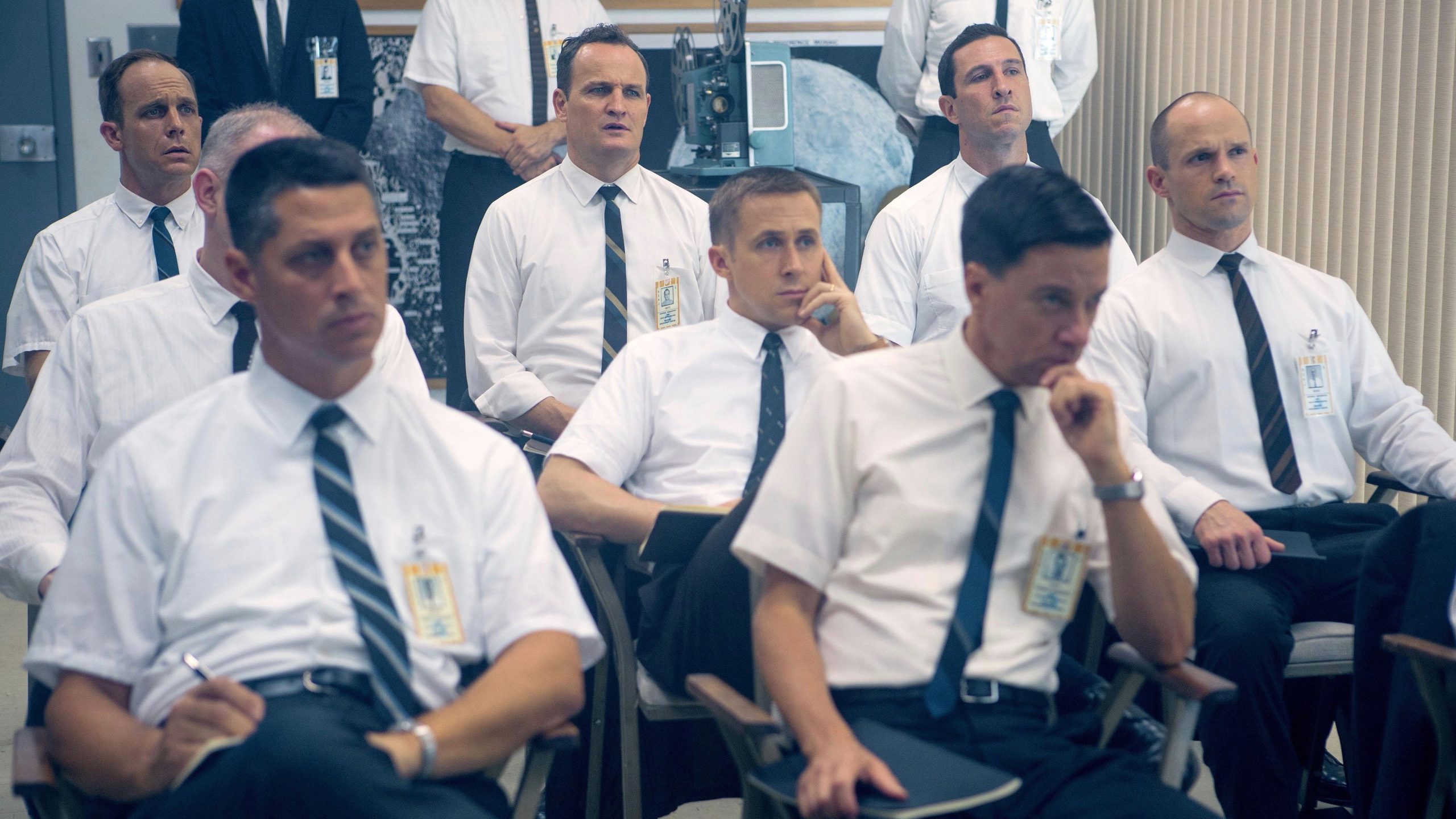
First Man is a gripping account of spaceflight, led by Ryan Gosling and Claire Foy, that makes the risks painfully immediate. Its insistence on explaining Neil Armstrong through grief is the one substantial frustration.
Damien Chazelle approaches First Man with a useful suspicion of how reassuring a familiar achievement can become. Neil Armstrong’s story is easy to reduce to courage, competence and a destination; this film spends its time on the danger of the work and the difficulty of living alongside someone committed to it. We recommend it, with a reservation about how insistently it explains its central man through grief. The flights are gruelling, and the domestic scenes make clear how much his work asks of the family.
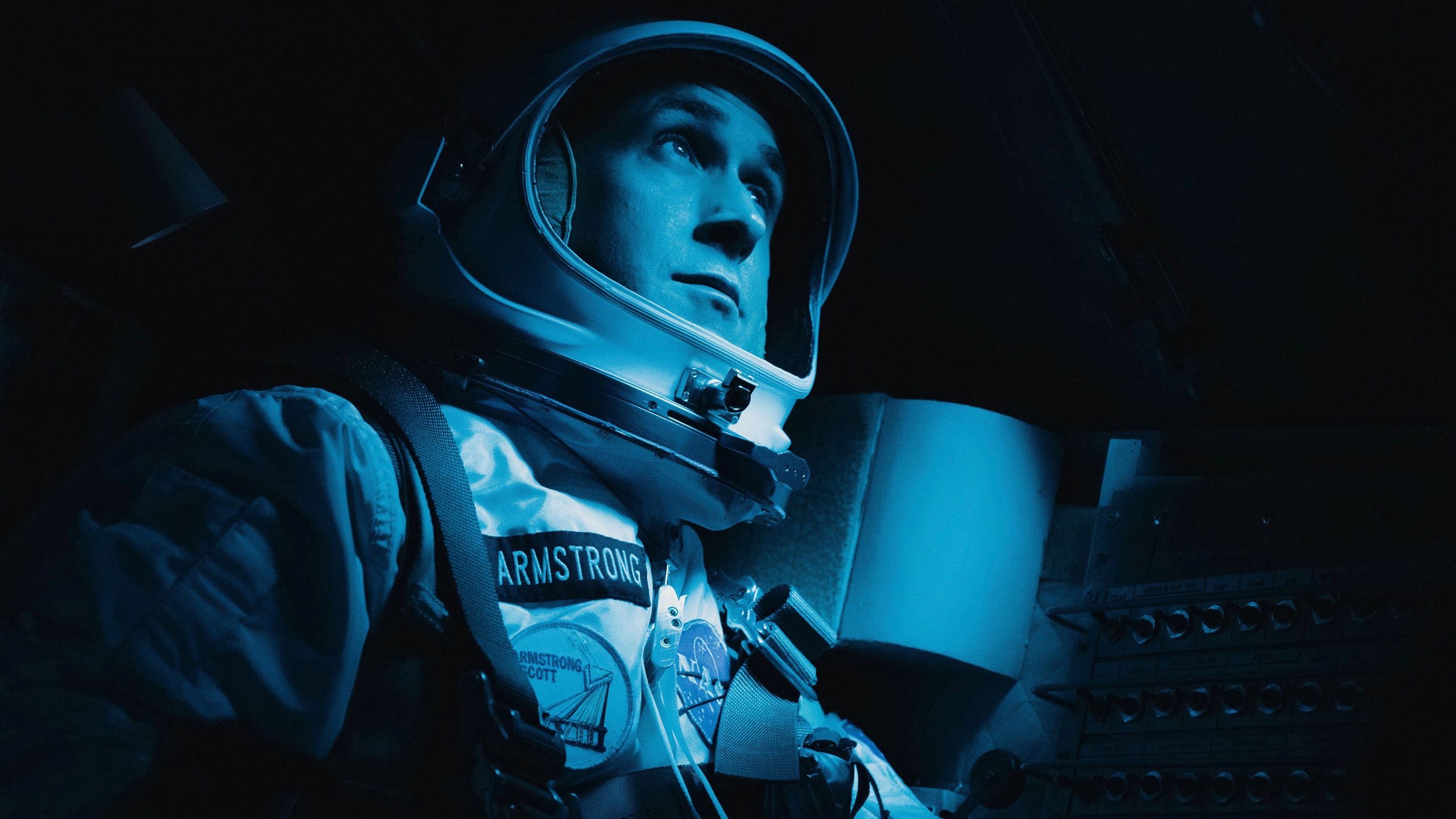
The near-disastrous test flight frightened us, because the confined space leaves so little room between a pilot and the machinery on which his life depends. Linus Sandgren’s cinematography makes us feel boxed in, denying us a comfortable distance from the danger. Tom Cross gives the flight sequences an urgent, unsettled rhythm while preserving the sense of people trying to do precise work. The tension comes from having to concentrate when everything around them feels threatening. Familiarity with the history offers surprisingly little comfort.
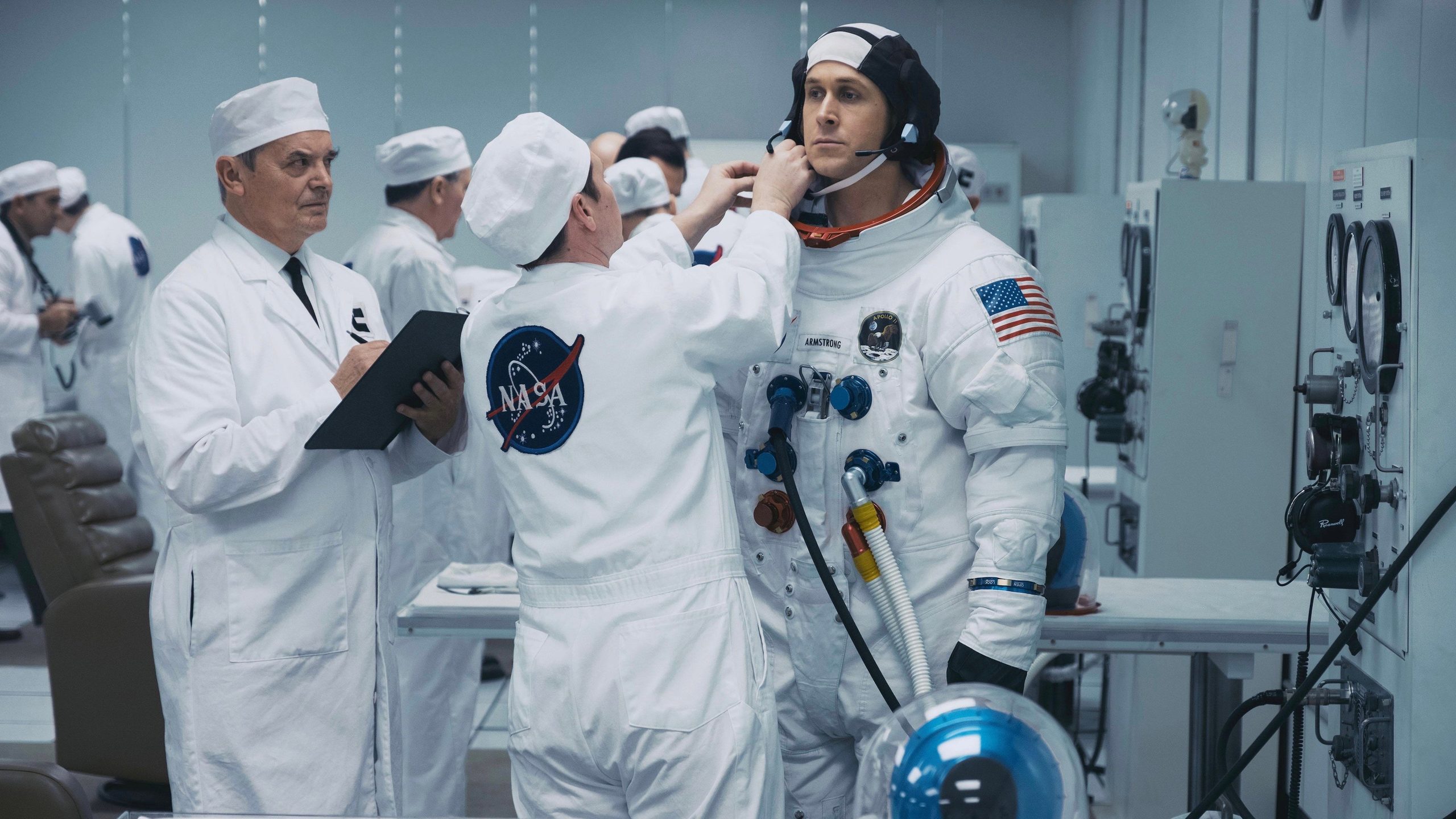
Nathan Crowley’s production design helps by making the spacecraft feel like working spaces with barely enough room for the people operating them. The cramped machinery earns our attention because it is what the men must trust. Sound makes that trust harder: spaceflight is punishing to listen to, and we never forget the effort involved in keeping these machines under control. Justin Hurwitz’s music supplies some of the tenderness that the central performance keeps contained. It is effective, though it sometimes presses an emotional point that the performances have already made.
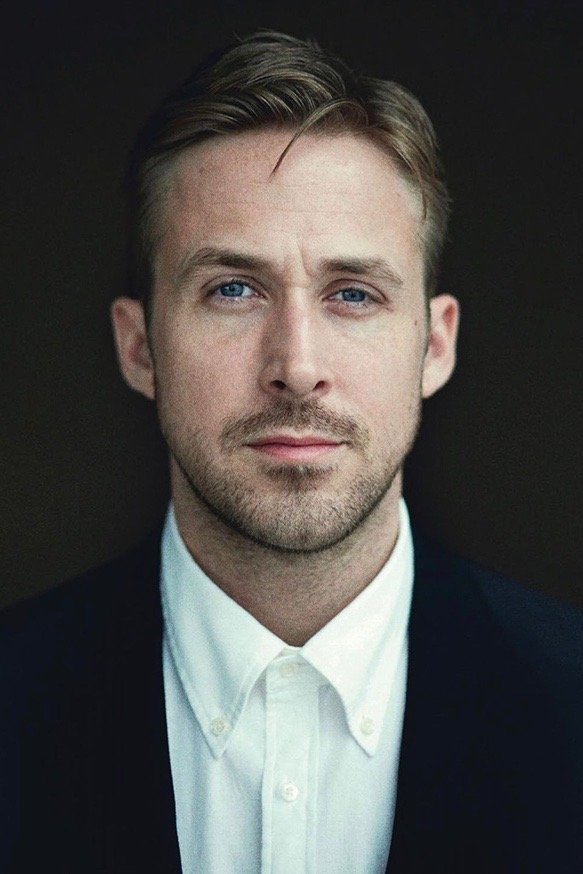
Ryan Gosling gives Neil Armstrong a reserve that can be mistaken for a lack of feeling, and makes that mistake part of the performance. His concentration is convincing; we understand why this man might be trusted with dangerous work. With Janet Shearon, that same restraint becomes frustrating, because professional steadiness offers limited comfort to a grieving wife. The performance gives us enough to sense the effort of keeping emotion contained. A few of the quieter stretches still feel blank.
Claire Foy is essential here, bringing force and impatience to a part that could easily have been confined to worrying at home. She makes Janet Shearon’s need for a response seem reasonable even when the film is absorbed in what her husband has to do. Her impatience stops these scenes becoming a series of respectful looks at a troubled man. The supporting characters receive less room to develop, leaving the marriage to carry most of the film’s personal stakes.
The difficulty lies in Josh Singer’s screenplay, which returns to grief so often that it begins to narrow our understanding of its subject. The film gives too little attention to what else might drive this man towards such difficult work. Ryan Gosling can suggest private thought, but he cannot supply all the curiosity and contradictions that the writing leaves unexplored. At 141 minutes, the quieter passages can feel repetitive, despite Tom Cross’s control of the flight sequences.
As a space drama, First Man is unusually alert to how uncomfortable the work must be, and how much patience it demands before courage gets a chance. It also resists turning the people involved into a collection of speeches about national greatness. That restraint is welcome, even when the private drama leans too heavily on the same explanation. Save it for an evening when being frightened by machinery sounds more appealing than being cheered up.