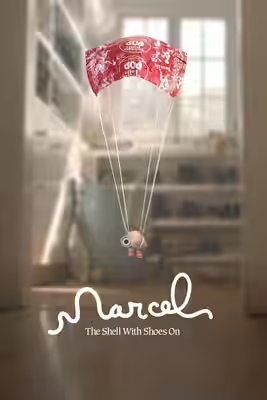
Jenny Slate and Dean Fleischer Camp stretch their one-inch shell to feature length, and he mostly survives it. Funny, gentle and thinner than it should be when it turns to fame, the film is carried home by Isabella Rossellini as the grandmother.
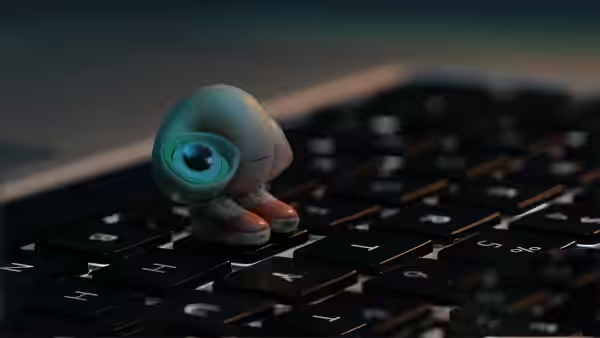
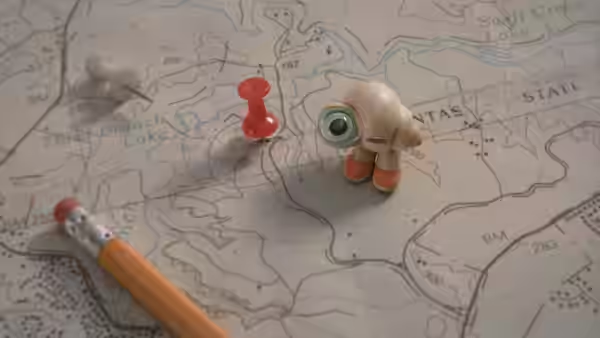
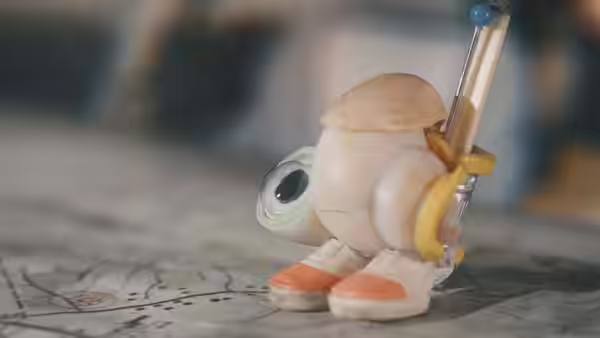
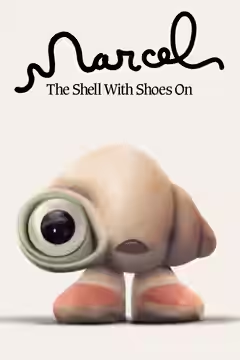
Marcel (voiced by Jenny Slate) is a shell about an inch high, with one eye, a pair of pink shoes and a great deal to say. He lives in a rented house with his grandmother Connie (Isabella Rossellini), the two of them all that remains of a community of shells that vanished the night the couple who lived there had a row and one of them packed in a hurry. Into the house comes Dean (Dean Fleischer Camp), a documentary maker with a broken relationship of his own, who finds Marcel, points a camera at him and starts asking questions. Marcel began a dozen years ago in a series of brief online films by Slate and Camp, and this is their attempt to make him last 90 minutes. He does, mostly. The film is funnier than a talking shell has any right to be, it sags when it turns to the subject of fame, and Rossellini carries the second half. We recommend it, with the caveat that you should know your own tolerance for whimsy before you start.
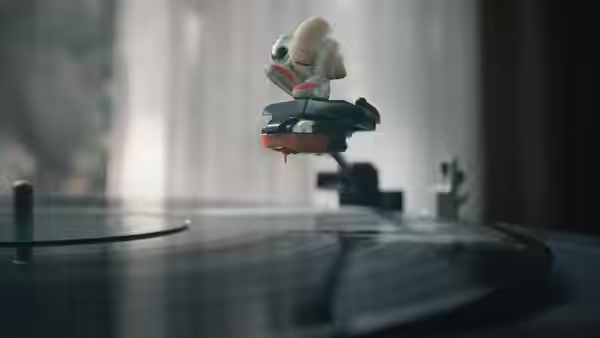
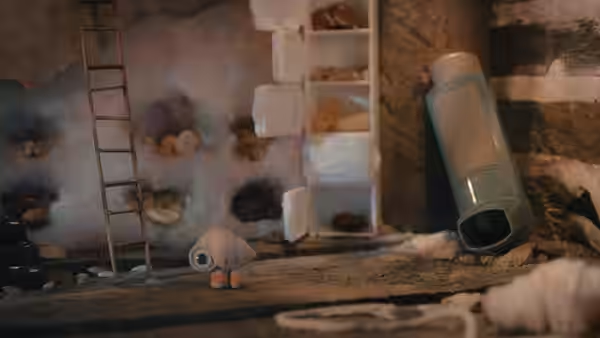
The comedy is a comedy of scale, and Liz Toonkel’s production design is where most of the laughs live. Marcel gets about the house inside a tennis ball. He climbs the walls with honey on his shoes. He harvests fruit by tying a rope to a tree in the garden and setting a stand mixer going in the kitchen. None of it is explained and all of it is shown with a straight face, which is the right decision. Slate’s voice does the rest: small, hoarse, precise, and never pitched for cuteness. When Marcel says something wise he sounds faintly embarrassed about it.
Bianca Cline and Eric Adkins shoot it like a documentary made by one man in a house he does not own. The camera is handheld, the light comes through the windows, the focus hunts and sometimes misses, and Marcel sits in the frame looking like something you might find on a windowsill and not think about twice. Nick Paley and Camp cut around Dean’s off-camera questions, and the film’s best running joke is Marcel’s patience with his interviewer wearing thin. Richard Vreeland’s score is soft piano and not much else, and it stays out of the way, which is more than most scores for family films manage.
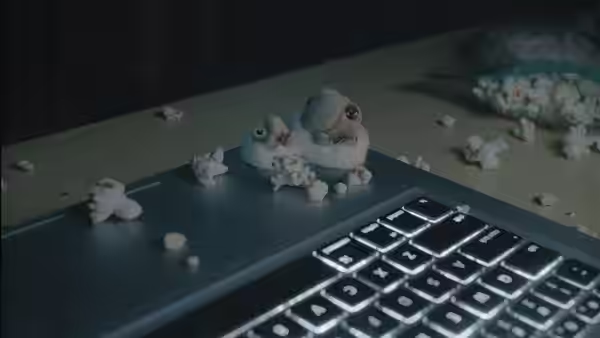
Dean puts his footage online and Marcel becomes famous, and this is the weakest stretch. People arrive outside the house to film themselves, and the film has a good line about the difference between an audience and a community. It also has about fifteen minutes of Marcel and Dean discussing this, and the discussion is slighter than the film thinks it is. Slate, Camp and Paley wrote the screenplay, and you can feel them being more interested in this material than we were. The film is not long, and this is still the part where we checked the time.
Then Rossellini takes over. Connie is old, a little vague, and given to gardening with a crew of insects she has trained to help, and Rossellini plays her with an accent, a slowness and an unbothered good humour that make every scene she is in the best scene in the film. There is a moment in the garden, Connie talking about what she has lost while she gets on with the work in front of her, and we were moved more than we had expected a film about a shell to manage. It was the ordinariness that did it. She is not asking for our sympathy, and Rossellini never raises her voice.
Some critics have found it twee, and we understand the complaint without sharing it. The film is sweet, but it admits to hurt early, and it does not pretend the missing shells will turn up on their own. What it does do, now and then, is hand out its wisdom in small portable pieces, like fortunes from a cracker, and once or twice we wished Marcel would just be funny. The second half takes a turn we will not describe. The film earns the sentiment it reaches for.
Set against the stop-motion tradition it belongs to, it has more in common with Aardman’s Creature Comforts, small creatures being interviewed about ordinary life, than with anything from the big studios, and it is better for that. Watch it at home on a quiet evening, with the phone in another room. Marcel would approve, and by the end so did we.