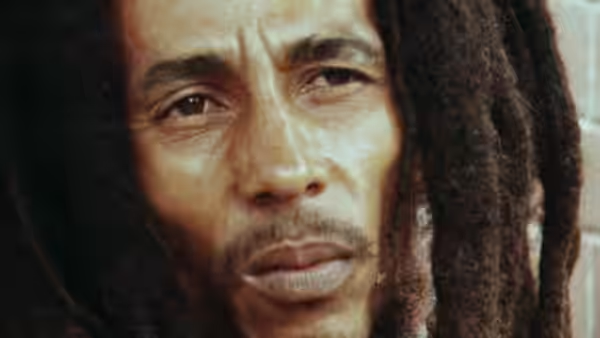
Kevin Macdonald’s Marley is a rewarding music documentary with performances worth waiting for. Its 144 minutes leave room for a wealth of testimony, though the admiration can become tiring and the music deserves longer stretches.
Kevin Macdonald’s Marley is a good music documentary that could have been a shorter, better one. At 144 minutes, it gives considerable space to the people around Bob Marley and to the archive footage in which he appears. The patience often pays off: a speaker has time to become a person rather than a quick endorsement between songs. There are also stretches when Macdonald seems unwilling to let a contribution go simply because it adds little to what we already understand.
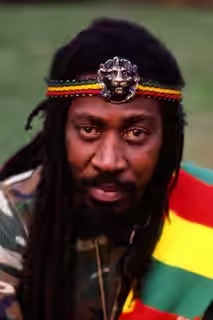
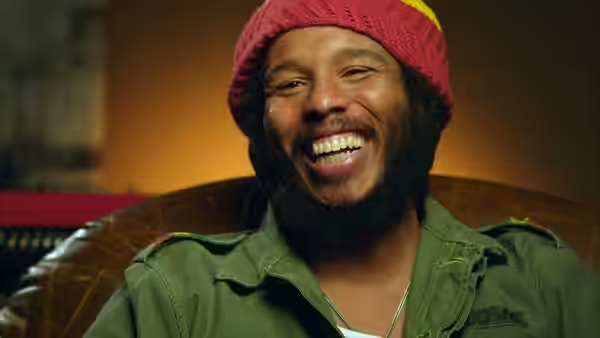
Rita Marley is the most valuable presence because her account makes room for things that do not fit comfortably into a tribute. Her contribution complicates the affection without requiring us to dismiss it, and Macdonald is wise to include it. Ziggy Marley, Bunny Wailer, Jimmy Cliff, Cedella Marley and Chris Blackwell add further perspectives. Hearing from so many people is rewarding, although their accumulated presence can make the case for Marley’s importance feel settled before it has been properly examined.
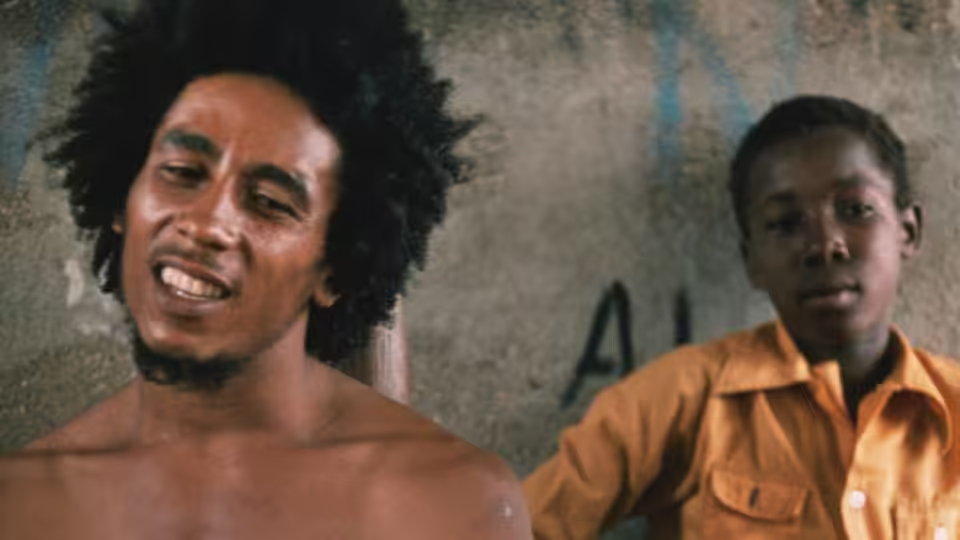
The archive performances provide a more immediate reason to care. We were moved by the urgency of Bob Marley’s singing, which makes the admiration expressed elsewhere feel earned. Those passages also remind us how much a performance can tell us without somebody explaining its significance. Macdonald gives us enough to feel that force, then too often returns to the business of telling the life when we would happily listen for longer.
Mike Eley and Alwin H. Küchler’s cinematography is unobtrusive, and that suits a film asking us to attend to people rather than admire its own technique. The photography gives the testimony its due without trying to compete with the performances for attention. Faces hold our interest even when the accounts begin to cover familiar ground. This is patient visual work, though it cannot by itself make every recollection equally useful.
Dan Glendenning’s editing has the harder task of keeping all that material moving. Individual passages have energy, especially when the archival images take over, but the film as a whole becomes wearing through accumulation. The repeated return to testimony also gives the music less uninterrupted space than it needs. A firmer cut could have preserved the range of voices without giving quite so much room to accounts that leave much the same impression.
Macdonald is less satisfying on the work of making the music. The testimony supplies plenty of reasons for valuing Marley, but we wanted a clearer sense of how particular musical choices produced that effect. For a documentary with this much time available, that seems a fair request. The familiar music-biography format encourages the problem, using songs to illustrate whatever the testimony has just told us, then moving along before we have heard enough.
Our recommendation is for anyone prepared to spend time listening to these people, rather than anyone chiefly hoping for a concert film. The performances justify the attention, and the less comfortable testimony gives the portrait some needed weight. Allow for the length, and do not expect every question about the man to be answered. We would still have preferred Macdonald to let a few more songs finish.