Mask is a warm, affecting drama carried by Cher and Eric Stoltz, who make its mother and son worth spending time with. Peter Bogdanovich sometimes presses for tears after the performances have already earned them.
Mask is a good, humane drama, strongest when it allows its people to be more interesting than its lesson. Peter Bogdanovich has a boy who wants to belong and a mother whose importance to him cannot be reduced to encouragement. At sixteen, Rocky Dennis has already been told he cannot be like everyone else; deciding to be better sounds bracing until we consider what that asks of him. The film takes that pressure seriously. We recommend it, with some patience for its occasional insistence on being moving.
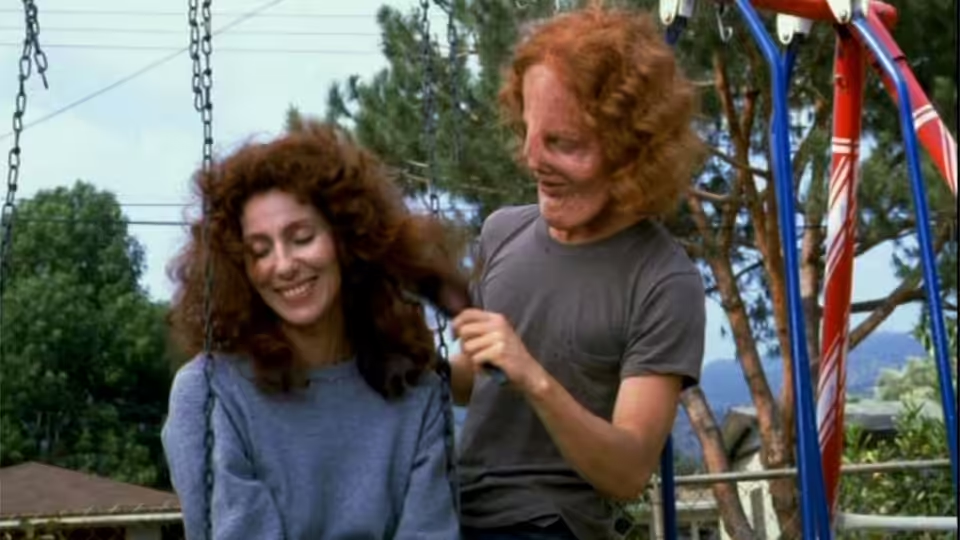
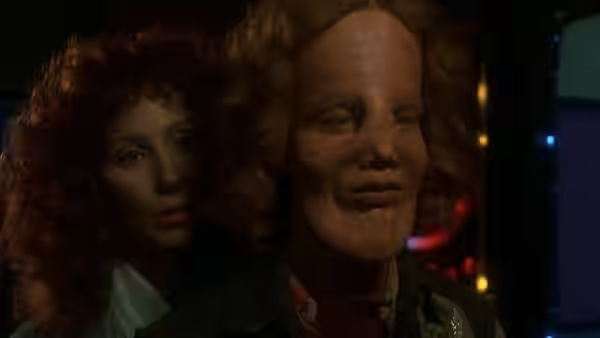
Eric Stoltz gives Rocky Dennis enough life that we do not spend the film waiting for him to demonstrate a virtue. His performance has a welcome lightness, keeping our sympathy from becoming the only possible response to him. We were moved by his first day at school, because Eric Stoltz makes the wish to be accepted feel so ordinary and the effort so unfair. The scene works without requiring us to congratulate ourselves for caring about him.
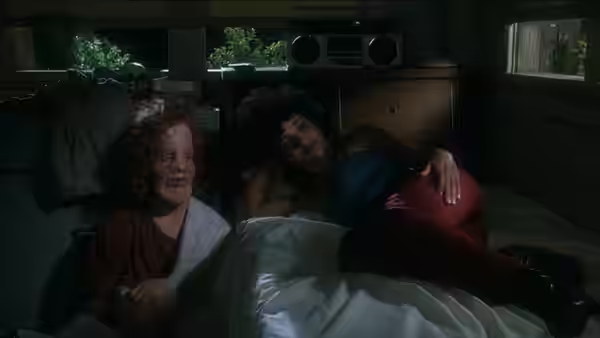
Cher is just as important, and the relationship between Rusty Dennis and her son is the reason to stay. She makes motherhood feel like work being done by an individual, with a temperament of her own. She can be affectionate without becoming easy company, and the relationship is more convincing for it. Anna Hamilton Phelan’s writing is most persuasive when it allows both people feelings that do not conveniently match. The affection matters because neither performance suggests that loving the other person is simple.
László Kovács’s cinematography is well judged in its attention to the actors. We never feel the images competing with Cher or Eric Stoltz, which is the right balance for a drama whose interest rests so heavily on them. That restraint suits Peter Bogdanovich’s handling of the central relationship. When these two have our attention, there is little need for the film to keep pointing out the importance of what they are doing.
Barbara Ford’s editing gives the relationship sufficient time to become convincing. The pacing is patient, though at 120 minutes the film has room to make the same emotional appeal more often than it needs to. Dennis Ricotta’s music is less helpful when it adds further encouragement to feel. The actors have already done enough. We would happily lose some of that encouragement and spend the time simply watching them.
The weakness is familiar from dramas about young people being treated as different: the wish to defend a character can leave too little room for them to be unremarkable. Mask occasionally seems anxious that we might miss its decency. Its sentimentality is not ruinous, but it does make some of the emotion feel prepared for us. Peter Bogdanovich is better when he trusts the interest of the mother and son. Their relationship has enough difficulty and affection to hold our attention without additional persuasion.
This is worth an evening for the two central performances and for the care with which the film takes Rocky Dennis seriously. Cher and Eric Stoltz make the demands of loving someone feel particular to these people. We would not choose it for an unsentimental night. Go for the mother and son, and allow for the occasional nudge.