Tina Fey’s script comes round for a third time, now with songs, and Reneé Rapp’s Regina George is worth the ticket. The rest is the 2004 film with smartphones and a chorus, and the songs are the least memorable thing in it.
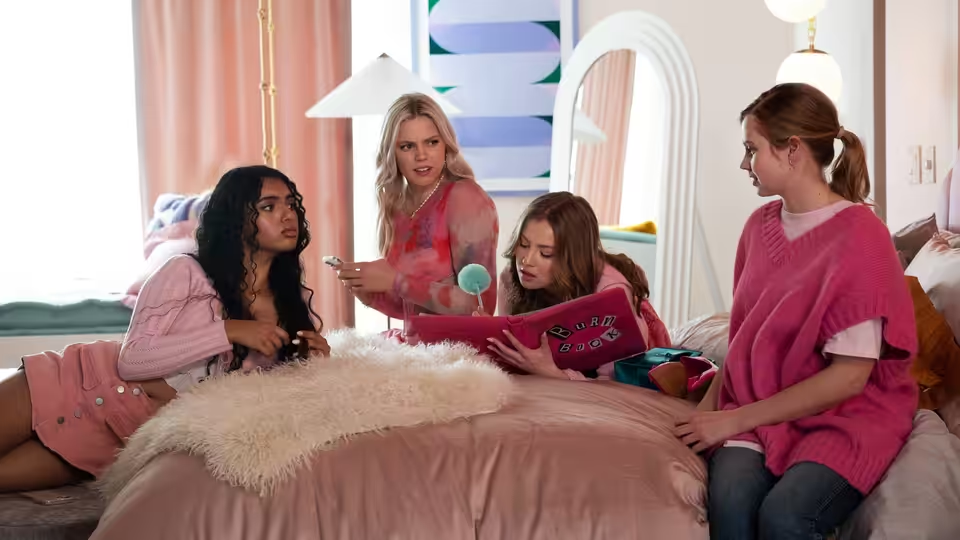
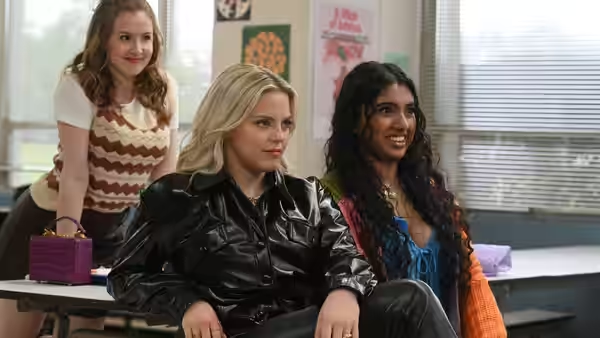
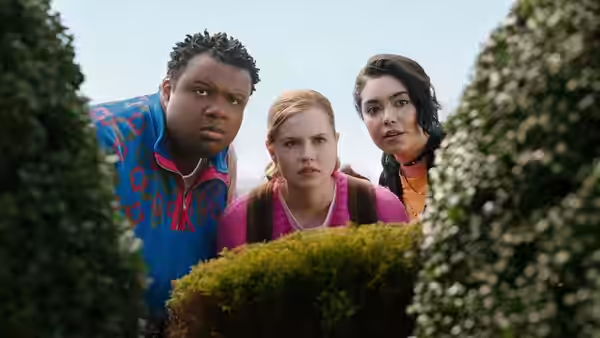
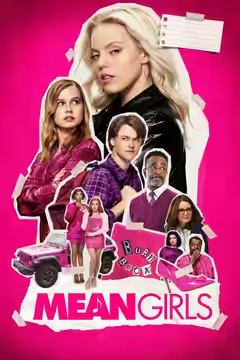
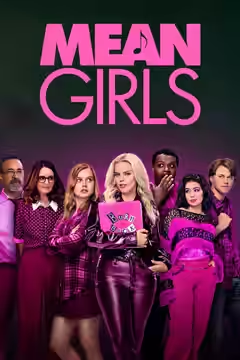
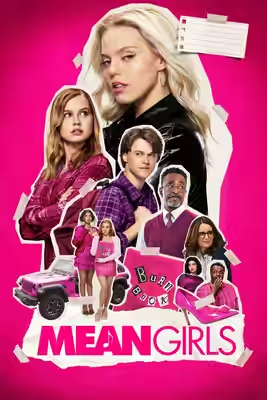
Tina Fey wrote Mean Girls as a film in 2004, wrote it again as a stage musical, and has now written it a third time as a film of the musical. Arturo Perez Jr. and Samantha Jayne direct, and the shape has not moved. Cady Heron (Angourie Rice), raised in Kenya by her mother (Jenna Fischer), starts at an American high school, is adopted by the outsiders Janis (Auliʻi Cravalho) and Damian (Jaquel Spivey), and is sent by them to spy on the Plastics: Regina George (Reneé Rapp), Gretchen (Bebe Wood) and Karen (Avantika). Most of the jokes are the ones you remember. The difference is that every so often the lights drop and somebody sings.
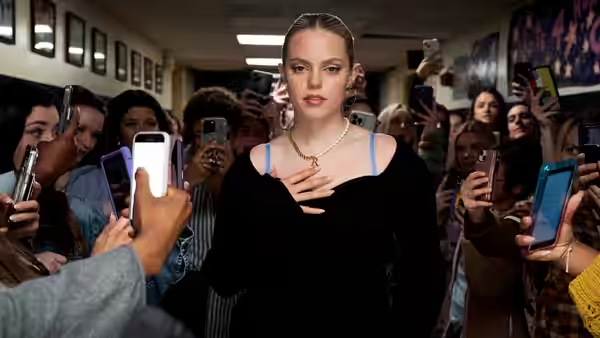
Rapp is the reason to go. She plays Regina slowly, barely raising her voice for the first half hour and letting everyone else fill the silence, so that when she finally turns on someone it lands like a door slamming. Her big number is the one stretch of the film that made us sit up. Bill Kirstein drops the cafeteria into darkness and lights her red, Andrew Marcus cuts to the crowd only to show them flinching, and Rapp sings as if she has been waiting the whole film for permission. For four minutes it is the musical the trailer promised.
Rice has the harder job and less to do it with. Her Cady is pleasant and small-voiced, and Fey’s script keeps asking her to stand at the edge of her own story while other people explain it. Cravalho and Spivey, narrating, have the most energy in the cast; Cravalho gets the best of the songs and Spivey the best of the lines. Avantika’s Karen is dimmer than the one you remember and funnier for it. Wood plays Gretchen for pity rather than laughs, which is a choice, and a fair one. Fey and Tim Meadows return as Ms. Norbury and Mr. Duvall with roughly the material they had before, and Lindsay Lohan, who was Cady in 2004, appears for one scene as a quizmaster.
The songs are the problem, which for a musical is the wrong place to have one. Jeff Richmond’s music is brisk and tidy and we left unable to hum a bar of it. Perez and Jayne stage several numbers through phone screens, with portrait-shaped inserts and captions, and this is the film’s one idea about the present day. It is a thin one. The phones change how we are shown things and never what anyone does; the Burn Book is still a scrapbook, the rumours still travel by mouth. Tom Broecker’s costumes are pink on Wednesdays, as required. Kelly McGehee’s school is a corridor, a cafeteria and a gym, and the camera does not find much in any of them.
Then there are the old jokes. We laughed at the lines we already knew, and then felt slightly cheated, because the laugh belonged to another film and this one had only borrowed it. Fey has trimmed the sharper insults so that nobody says anything you could not repeat in a staff room, and the 12A is honestly earned. The 2004 film worked because the cruelty was exact; you believed these girls could hurt each other. Here they mostly threaten to, in song, and then apologise.
At 113 minutes it runs about twenty longer than it needs to, and the last act, which we will not describe, stretches a school assembly into what feels like a term. The reviews so far are split more or less down the middle, and we can see both halves of the argument. Nobody involved is lazy. Rapp is working, Cravalho is working, the choreography is busy. What is missing is a reason for the film to exist beyond the fact that the stage show did.
See it for Rapp, and if you can, see it with someone who has never seen the original, so that at least one of you laughs at the right moments.