Alexander Payne makes a school election painfully funny by giving the supervising adult the least defensible motives. Reese Witherspoon and Matthew Broderick are exact, combative leads; only the occasional drift into caricature makes the film’s malice feel too easy.
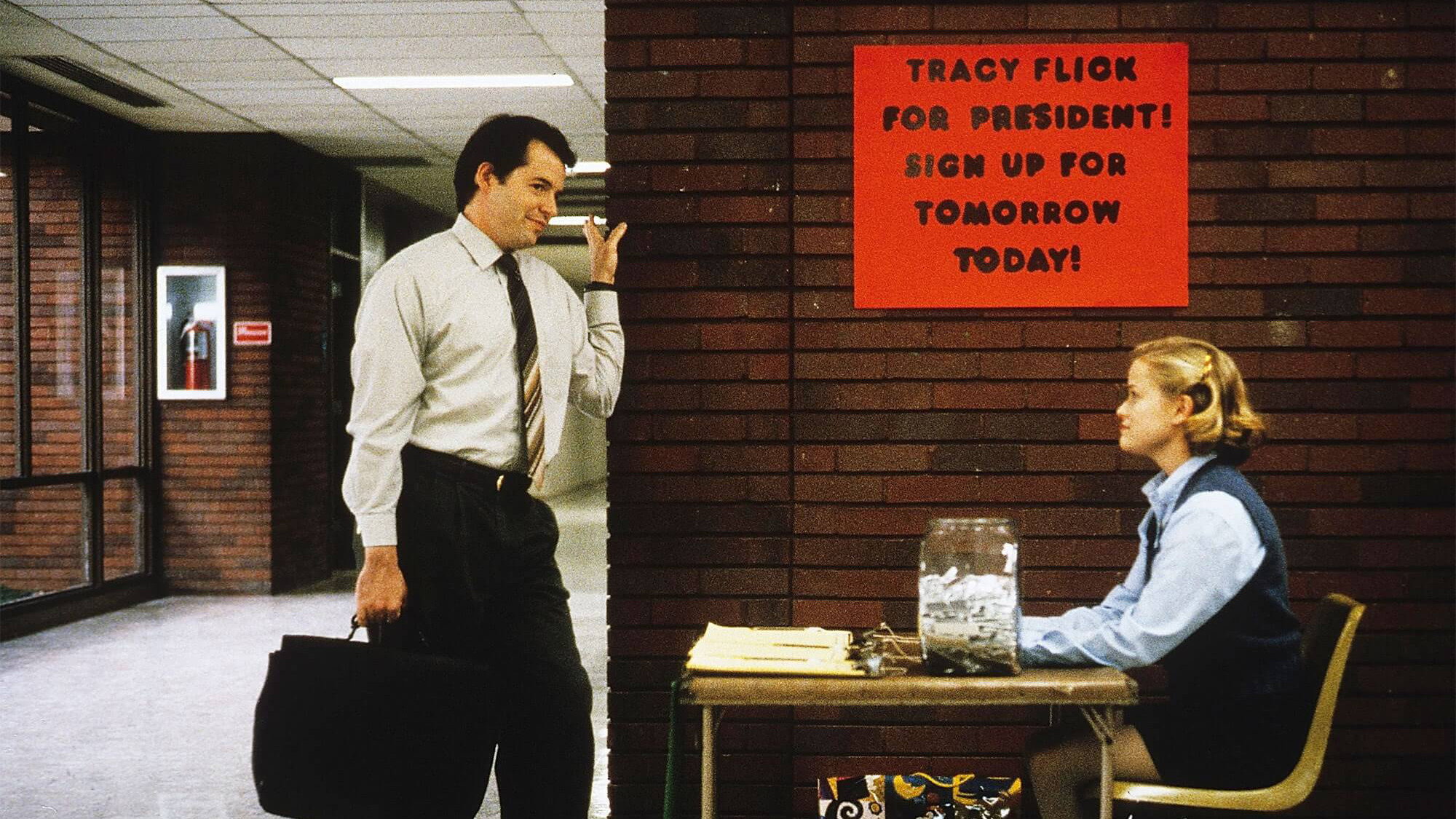
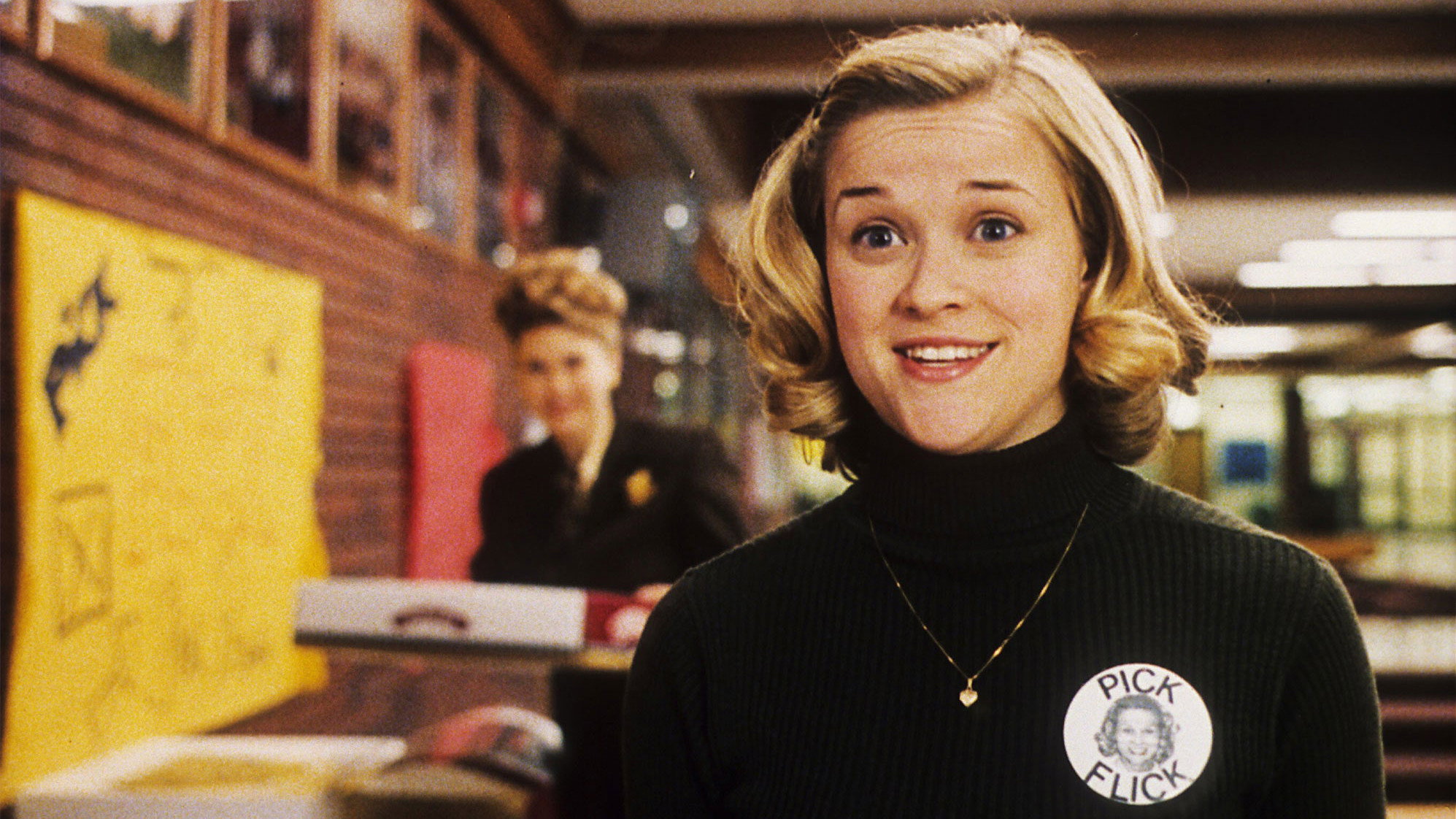
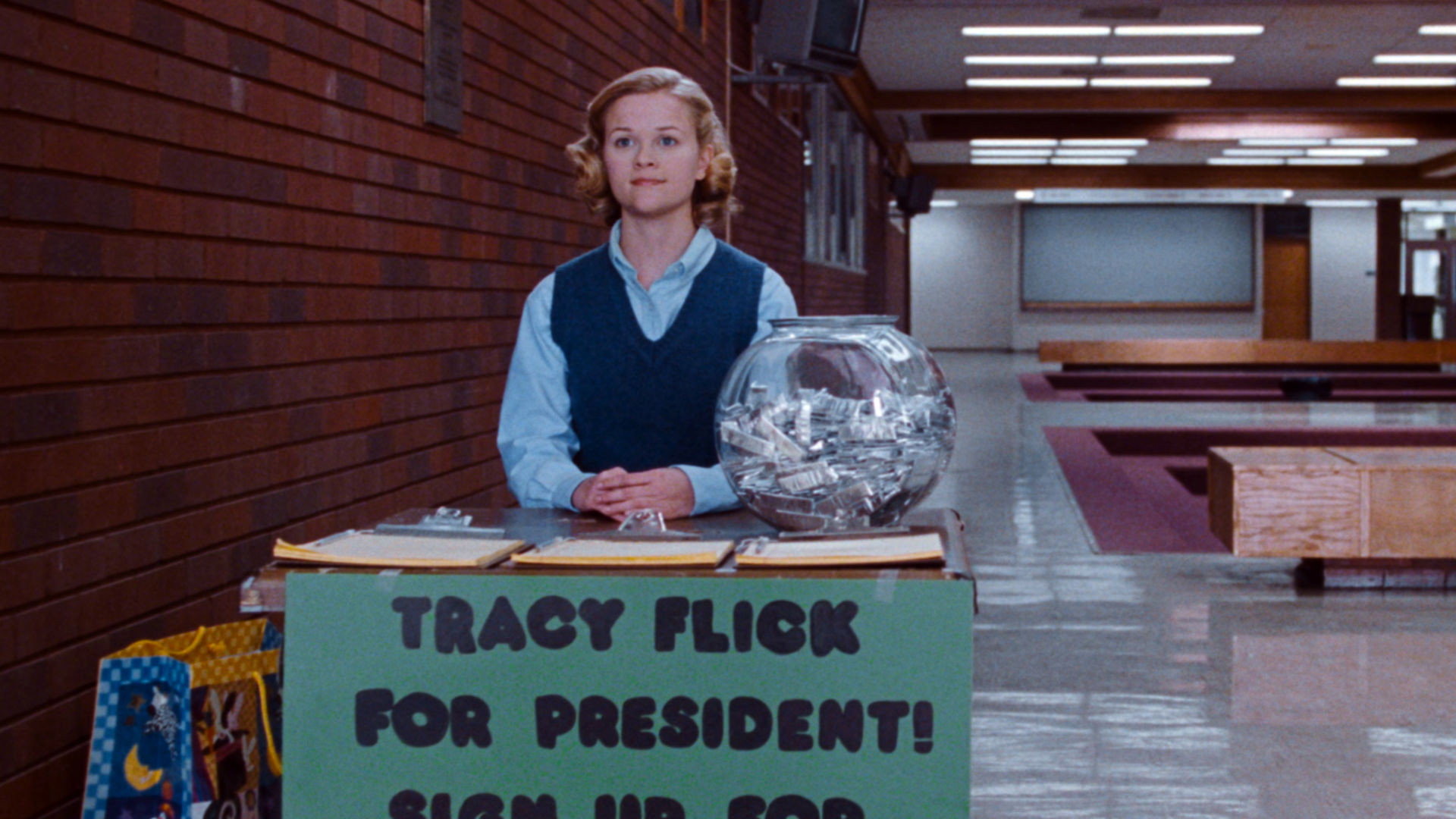
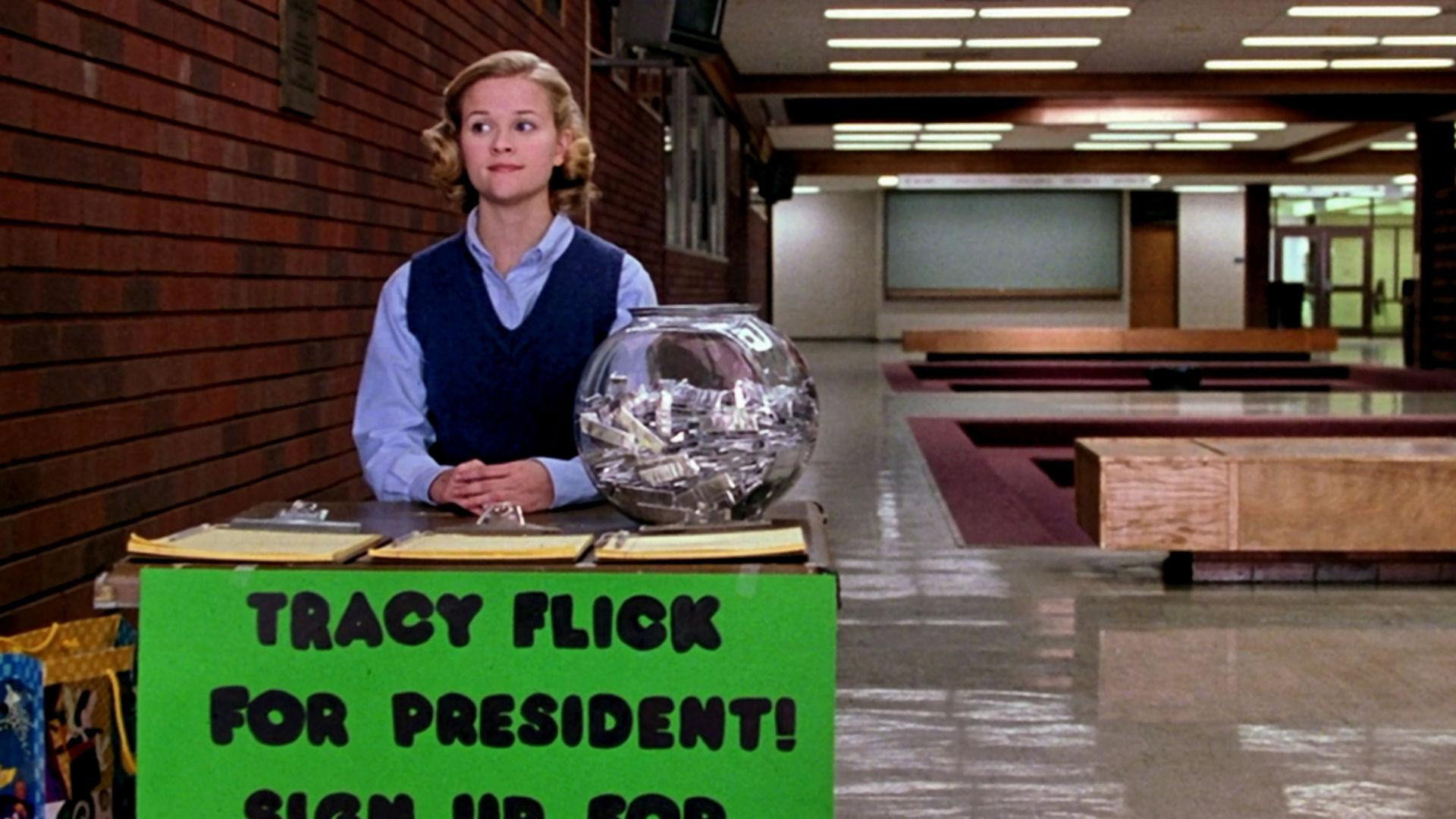
Alexander Payne’s Election is a sharply funny school comedy in which the adult’s authority deserves more scrutiny than the pupil’s ambition. Matthew Broderick plays Jim McAllister, a teacher determined to obstruct the electoral progress of Reese Witherspoon’s Tracy Flick. Payne takes their conflict seriously enough to make the contest matter, without asking us to think the school is deciding the fate of civilisation. We recommend it warmly, with a warning that its appetite for ridicule sometimes gets ahead of its interest in people.
Payne and Jim Taylor adapt Tom Perrotta’s novel with a fine ear for people describing their least respectable impulses in respectable language. The voiceovers let the characters offer their own explanations, and the pleasure lies in hearing how carefully each account has been arranged. This is where the school-election premise earns its political reach: nobody needs to deliver a lecture about democracy when a teacher is already confusing personal preference with professional duty. The writing is particularly alert to how envy can disguise itself as concern.
Broderick makes Jim’s disapproval sound reasonable, at least until we notice how much attention he is paying to this one pupil. We laughed at Jim, then caught ourselves agreeing with him. That was uncomfortable: the teacher’s conviction that Tracy needs stopping briefly recruits us into a grievance he has no business pursuing. Broderick is exact about the small distance between feeling overlooked and believing oneself entitled to intervene, and Payne lets the performance expose Jim without making every moment an accusation.
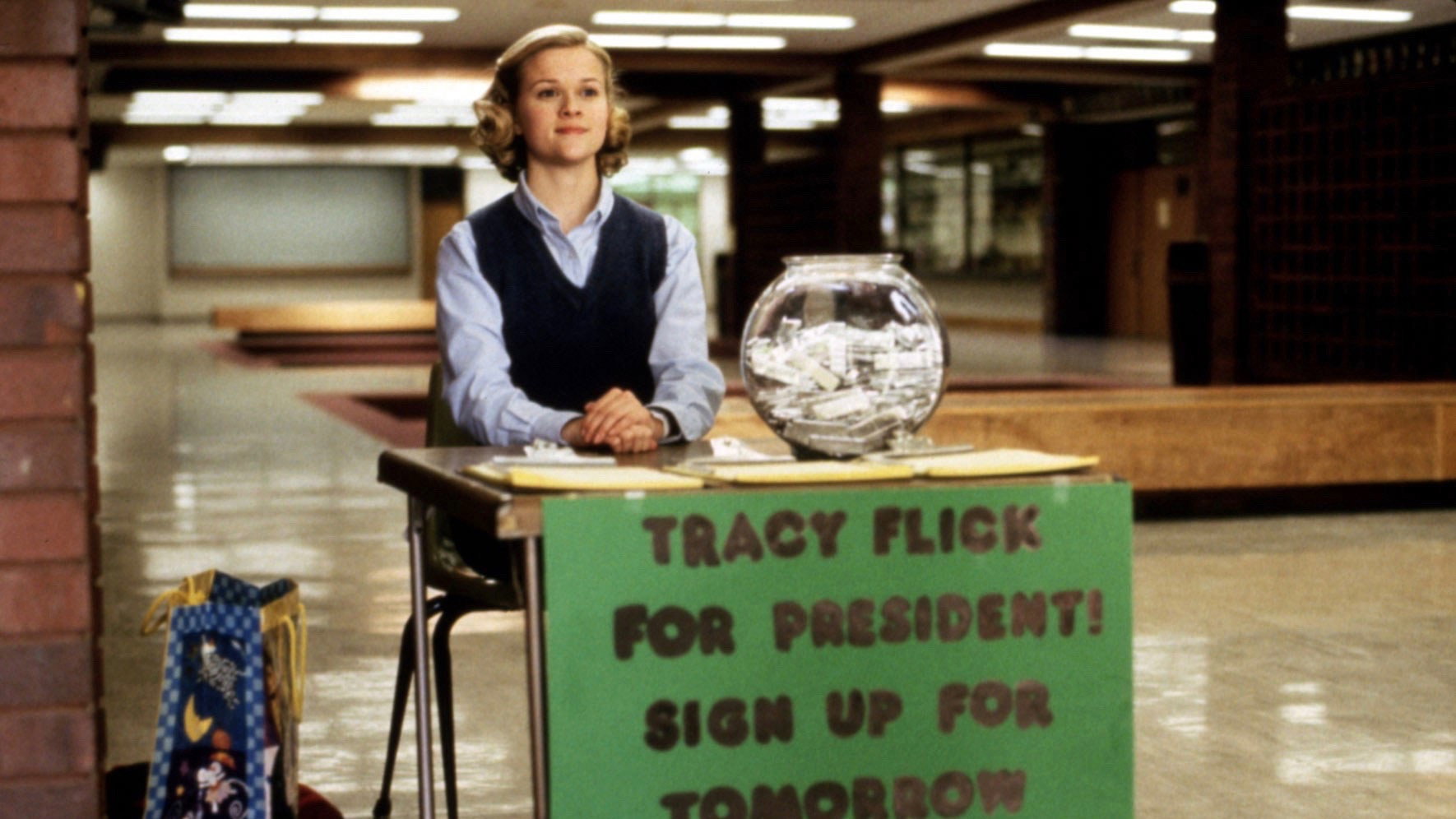
Witherspoon is just as important, because Tracy has to be exasperating without justifying Jim’s behaviour. She makes the girl’s ambition feel practised and habitual, something that continues even when nobody is prepared to applaud it. The performance is funny because she never signals that Tracy knows how funny she looks. There are moments when the exaggeration threatens to reduce her to an overachiever to be mocked, but Witherspoon’s commitment makes it difficult to dismiss the effort beneath the behaviour.
James Glennon’s photography keeps the school looking ordinary, so Jim’s self-importance has little visual encouragement. Jane Ann Stewart’s production design is similarly unshowy; the place feels like somewhere people have work to do. Those modest surroundings make the time spent on grievances seem still more wasteful. Payne keeps our attention on the people competing there, rather than trying to make every part of the school a joke.
Kevin Tent’s editing is less discreet, and rightly so: the freeze frames interrupt the flow and invite us to inspect the characters. Alongside the competing voiceovers, they make the telling of the story part of the joke. Rolfe Kent’s musical cues help give the little election more urgency than it sensibly warrants, and their comic insistence generally works. The pace becomes less sure towards the end, when the film has already taught us how to read these people and still has business to complete.
Against the school comedy’s usual preoccupation with popularity, Election finds a more troubling subject in the grown-up who claims to know which children deserve success. Its sourness occasionally limits what it can see in them, but the central performances keep it from becoming a demonstration of how awful everybody is. At 103 minutes, it gives an ordinary contest ample room to become an indecent obsession. See it with someone willing to admit that Tracy might annoy them too.