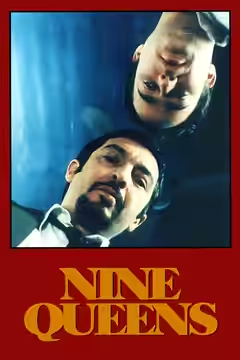
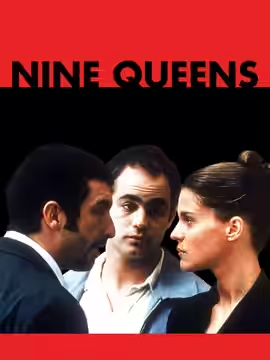
We recommend Fabián Bielinsky’s clever, funny con-man thriller, with one reservation: its plotting occasionally strains belief. Ricardo Darín and Gastón Pauls make the dishonesty so entertaining that we were happy to forgive it.
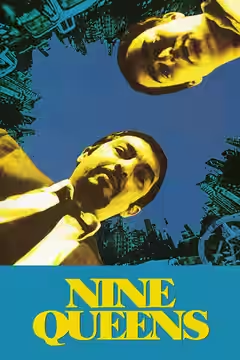
Fabián Bielinsky’s Nine Queens understands the chief pleasure of a con film: watching someone persuade another person to make a bad decision. The swindles grow more complicated, but our interest stays with the people doing the persuading. We recommend it for its humour, tension and performances, with a reservation about how much its plotting expects us to swallow. The confidence of the cast carries us through some unlikely business.
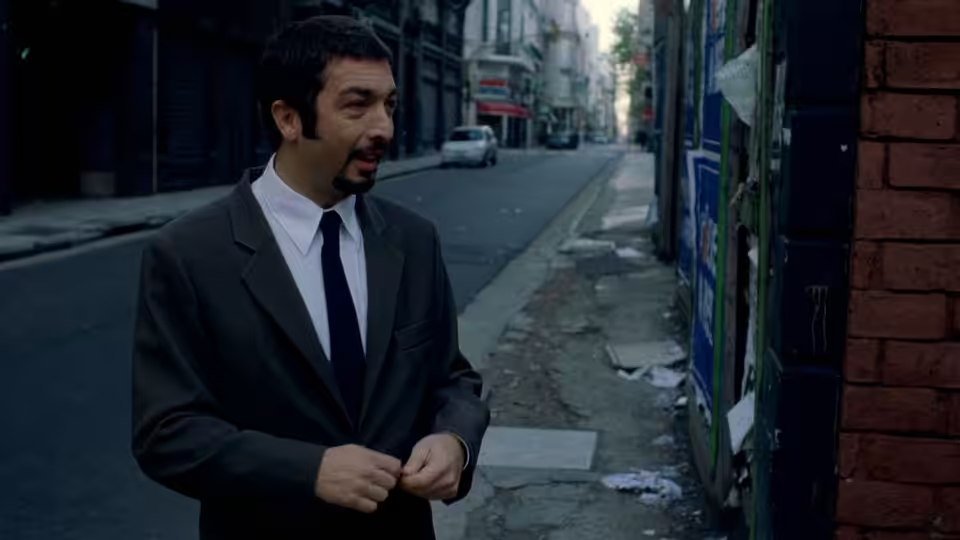
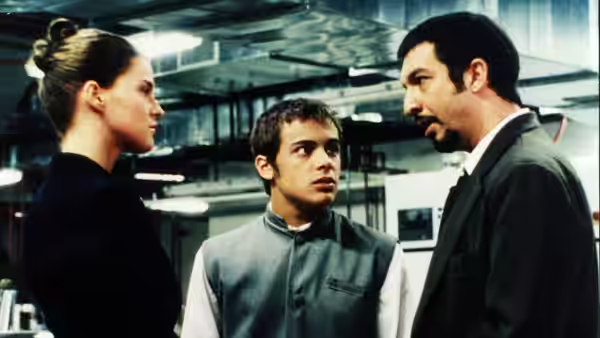
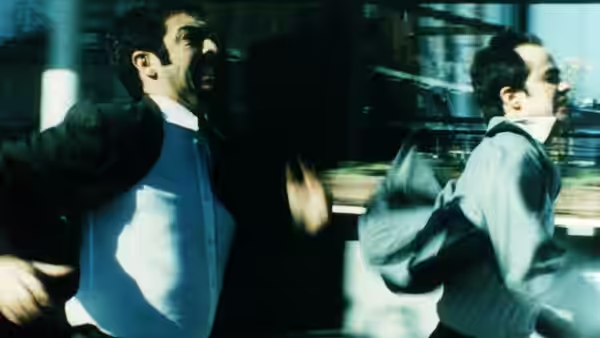
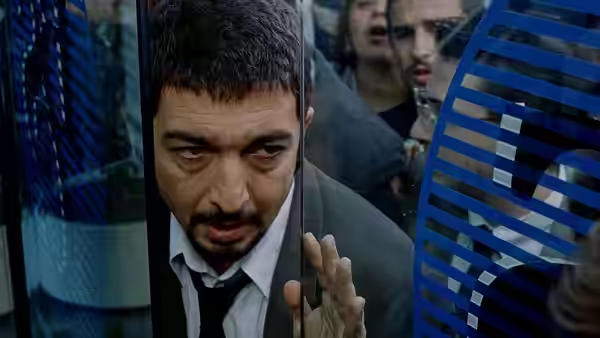
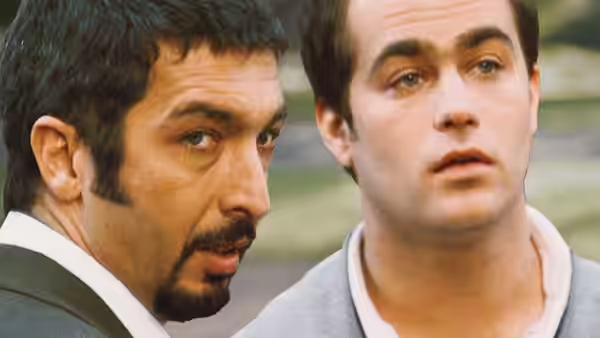
Ricardo Darín’s Marcos is the main reason to surrender our better judgement. His charm makes dishonesty seem sociable, and the performance lets us enjoy that charm while keeping the greed apparent. Gastón Pauls, as Juan, is an alert partner; their exchanges have the ease that keeps a carefully plotted thriller from sounding rehearsed. We laughed at the small swindles, then felt slightly grubby about enjoying them. Marcos’s readiness to treat another person as a source of cash becomes so agreeable that we briefly stop objecting.
Leticia Brédice gives Valéria enough force to compete with both of them. Whenever attention turns her way, the film becomes less dependent on the next ingenious piece of fraud, and we would have welcomed more of her. A story full of liars can make everyone seem interchangeable, particularly once we start inspecting each person for evidence of a trick. We would gladly watch her even if there were no puzzle to solve.
Marcelo Camorino’s brisk photography suits the quick thinking, and Buenos Aires never feels like a sightseeing obligation. The city gives the fraud somewhere credible to happen, with a suggestion that these men’s habits are hardly exceptional. Daniela Passalaqua’s production design helps that impression without making the surroundings the attraction. The setting allows the actors to get on with the business of being persuasive, and makes the dishonesty seem quite at home.
Sergio Zóttola’s editing keeps the accumulating deceptions readable, an important service in a film that keeps changing what we think we know. Each fresh complication needs to register before we are asked to deal with another, and the cutting generally gives it time. César Lerner’s music makes less impression than the performances, but it suits the intrigue without demanding much attention. Across 114 minutes, there is usually a performance worth watching even when the plotting starts to labour.
The weakness is the familiar one with elaborate con stories: people sometimes seem to behave as the next trick requires. Fabián Bielinsky’s screenplay piles deception onto deception, and a few connections feel too convenient to withstand much thought. We do not need documentary plausibility, but we do need to believe that a person might make the decision on which the next complication depends. Occasionally, the determination to surprise makes that harder.
That did not spoil our evening. Too many con films grow pleased with their ability to fool us and forget to make the intervening minutes enjoyable. This one keeps its sense of humour and gives the performers enough freedom to make the crookedness feel human. See it with someone who enjoys a good swindle and will forgive a little overcomplication.