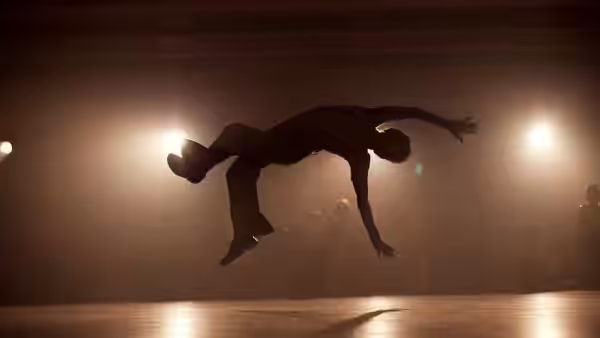
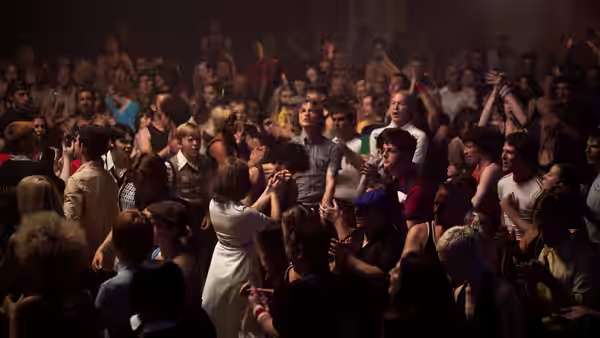
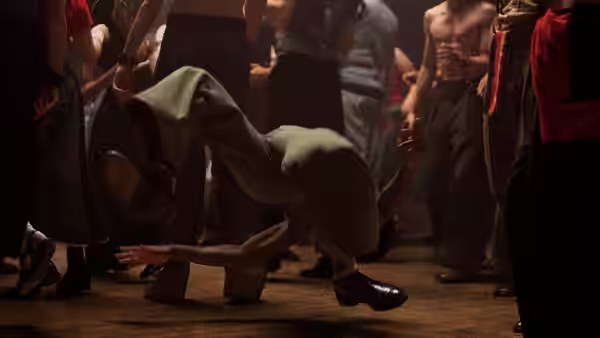
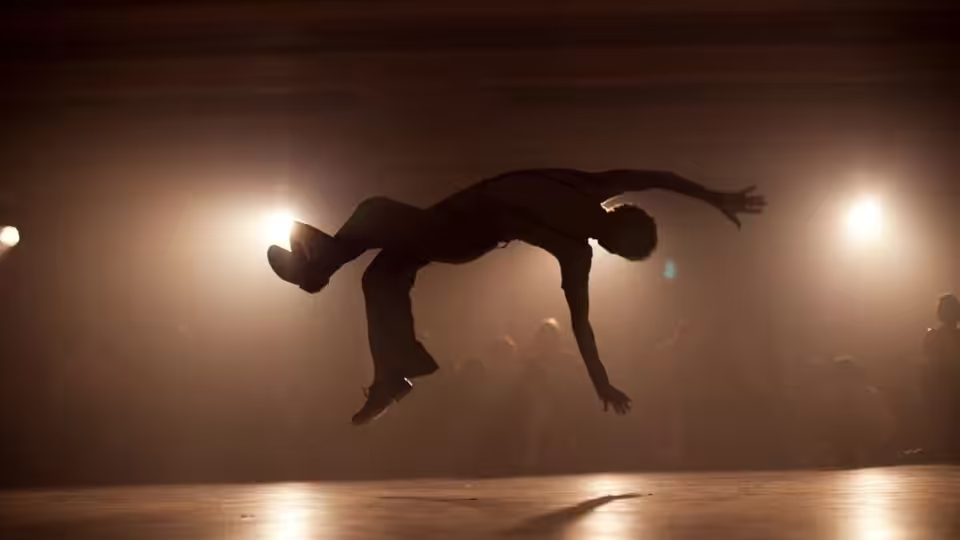
A dancer arches backward in midair beneath spotlights on a dim dance floor
Film review

Northern Soul

2014 · Directed by Elaine Constantine · 1h 42m · Medierådet 15

In a sentenceWe would happily watch these dancers for longer, preferably without quite so much plot

In 1970s Lancashire, John Clark (Elliot J. Langridge) and Matt (Josh Whitehouse) find a shared enthusiasm for Northern Soul. Vintage American R&B, dancing and crowded venues offer the two friends a community and a focus for their working-class ambitions. Angela (Antonia Thomas) also figures in their lives, alongside John’s Dad (Christian McKay) and John’s Mum (Lisa Stansfield). The boys want somewhere to belong and something beyond the lives they already know. Their friendship develops through their discovery of the music and the people who gather to dance to it.

Fi1m review

Elaine Constantine’s Northern Soul gets the pleasure of finding music and finding friends right. Its characters need more attention, but the dancing, soundtrack and central performances make this uneven drama worth an evening.

Elaine Constantine’s Northern Soul is worth seeing for the music, the dancing and the conviction of its two leads, though the writing gives them less to work with. It takes seriously the excitement of finding other people who care about the same records. Set in 1970s Lancashire, it makes the appeal of the scene understandable without requiring us to arrive with a collector’s knowledge. The vintage American R&B does much of that work, and the film gives it room.

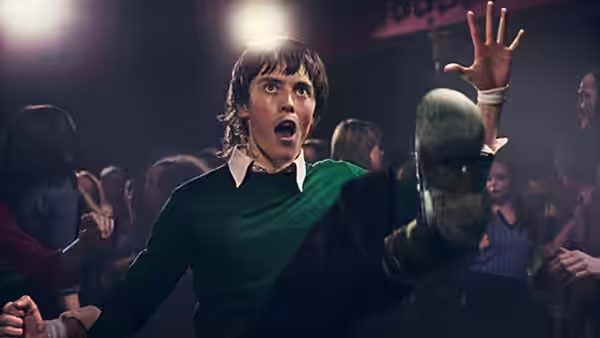
Elliot J. Langridge gives John Clark a gradual, convincing development, allowing his growing involvement in the scene to register without overplaying each change. There is enough patience in the performance to make his enthusiasm feel discovered rather than supplied by the screenplay. Josh Whitehouse brings a welcome liveliness to Matt, and their friendship holds our attention even when individual scenes feel slight. Both actors understand how much importance young people can place on a shared taste, and neither makes that seem foolish.

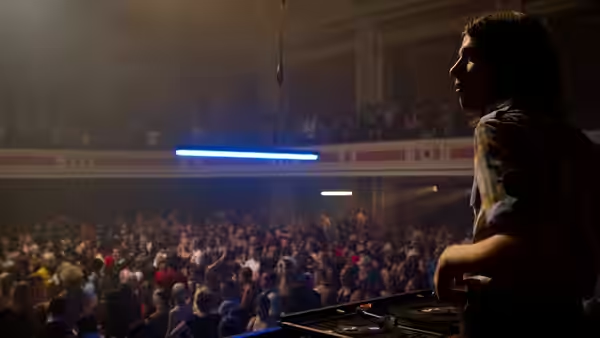
We felt a rush of happiness watching the dancing, because the dancers make the excitement of those records so easy to share. Stephen Haren’s high-tempo editing keeps these passages lively without making them feel like an interruption to the drama. For a while, watching people find somewhere they want to be is quite enough of a story. The cramped, sweaty spaces matter as much as the music to the film’s convincing account of the scene.

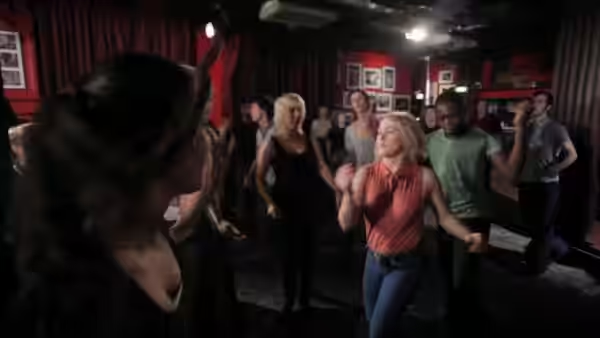
Robin Brown’s production design helps those surroundings feel inhabited, with the crowded dance spaces particularly effective. The costumes by Yvonne Duckett and Adam Howe contribute to the persuasive period detail without demanding attention at the expense of the people wearing them. Such care matters in a film about belonging: the places and clothes have to look like things people would choose for themselves. The setting remains convincing even when the writing starts to make the characters’ problems feel arranged.

Antonia Thomas’s Angela gets too little room in a screenplay chiefly interested in the two boys. That focus would be less troublesome if their experiences made the people around them more distinct. Instead, the women are underwritten, and the film leaves too much of their interest to the performers. The narrow attention becomes noticeable whenever the drama asks us to care about someone beyond the central friendship, without having spent enough time establishing why we should.

Elaine Constantine is also less assured when the screenplay presses towards melodrama, introducing a strain that the performances cannot entirely disguise. A coming-of-age story needs its growing pains to feel specific to these people, and the more contrived passages could belong to plenty of other films. At 102 minutes, there is room for stronger character development without sacrificing the music. The trouble is how that time is used, with complications receiving attention that the supporting characters could have used more profitably.

Those weaknesses matter, but they do not undo the pleasure of watching a musical community take shape. We would have welcomed a less insistent plot and more time among the dancers, whose enthusiasm needs little explanation. The central performances give the film enough warmth to survive its less convincing stretches. Give it an evening if discovering a record has ever seemed more important than getting a sensible night’s sleep.

Critical consensus AI synthesised

66
Positive
6
Mixed
4
Negative
2
Los Angeles Times
1 October 2015 · Katie Walsh
85*

Walsh finds the film an exciting, edifying portrait of Northern Soul culture and calls it the best DJ movie of the year. She especially praises its lived-in period detail, energetic direction, and fantastic soundtrack.

Read the full review →
IndieWire
13 September 2015 · B+ · Christopher Schobert
83

Schobert finds the film a wildly entertaining, successful whole, despite a late dip into contrived melodrama. He praises its invigorating music, high-tempo editing, and Josh Whitehouse’s memorable performance.

Read the full review →
Variety
22 September 2015 · festival review · Dennis Harvey
72*

Harvey finds the film an enjoyable, if modest and unmemorable, throwback. He praises its convincing atmosphere, performances, and soundtrack of vintage American R&B.

Read the full review →
Empire
7 October 2014 · Owen Williams
70*

Williams finds the plot underpowered but praises the soundtrack, performances and affectionate portrayal of 1970s Lancashire. He singles out the music’s ability to capture the excitement of the Northern Soul scene.

Read the full review →
The Guardian
16 October 2014 · Mike McCahill
70*

McCahill finds the film an expansive, convincing portrait of the Northern Soul scene, though its protagonist’s journey feels anecdotal. He especially praises the music and the film’s sweaty, cramped recreation of that corner of history.

Read the full review →
Time Out
14 October 2014 · ★★★ · Tom Huddleston
60

The review gives the film three out of five stars, indicating a moderate verdict. The available page text does not reveal what Huddleston specifically praises or criticizes.

Read the full review →

Straight answers AI written, from our review

Is Northern Soul worth watching?
Northern Soul is worth watching for its dancing, vintage American R&B and convincing central performances; we score it 72 out of 100. We recommend it to anyone who recognises the excitement of finding friends through music, though the contrived melodrama and underwritten supporting characters make it an uneven evening.
How long is Northern Soul, and what is it rated?
Northern Soul runs 1h 42m and is rated 15 by the Medierådet in Denmark. It is a music and drama film.
Where can I watch Northern Soul in Denmark?
Northern Soul is not on any streaming or rental service in Denmark at the moment. Availability is checked daily.
How violent or frightening is Northern Soul, and is it suitable for children?
Northern Soul carries a UK 15 certificate, making it a choice for older teenagers and adults rather than younger children. That rating signals age-restricted material, but it does not by itself establish how violent or frightening the film is, so we cannot offer a more specific assurance for sensitive viewers.
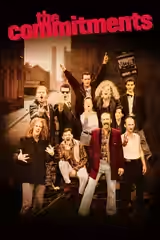
How does Northern Soul compare to The Commitments?
Northern Soul is the more uneven drama, while The Commitments earns our stronger recommendation for its humour, warmth and musical performances, despite a little excess polish. Both understand musical obsession, but the Lancashire film centres on friendship and dancing, while the Dublin soul-band comedy offers arguments, jokes and unruly company.
What should I watch after Northern Soul?
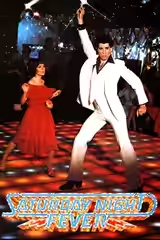
After Northern Soul, try The Commitments (1991, Fi1m 82): Dublin soul hopefuls supply arguments, jokes and musical obsession in generous measure. Then Saturday Night Fever (1977, Fi1m 78): Dancing provides escape from ordinary work, without pretending the working week disappears.

Cast

If you liked this, try…

  1. Quadrophenia (1979) · not on Fi1m yetFor another close look at music, belonging and young British frustration.

  2. The Commitments (1991, Fi1m 82)Dublin soul hopefuls supply arguments, jokes and musical obsession in generous measure.

  3. Girlhood (2014) · not on Fi1m yetA French account of teenage belonging, with shared music making the friendships tangible.

  4. Swing Girls (2004) · not on Fi1m yetJapanese schoolgirls discover jazz, with a lighter touch and infectious collective enthusiasm.

  5. Saturday Night Fever (1977, Fi1m 78)Dancing provides escape from ordinary work, without pretending the working week disappears.