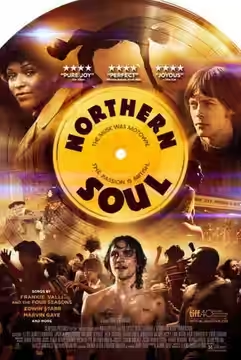
Elaine Constantine’s Northern Soul gets the pleasure of finding music and finding friends right. Its characters need more attention, but the dancing, soundtrack and central performances make this uneven drama worth an evening.
Elaine Constantine’s Northern Soul is worth seeing for the music, the dancing and the conviction of its two leads, though the writing gives them less to work with. It takes seriously the excitement of finding other people who care about the same records. Set in 1970s Lancashire, it makes the appeal of the scene understandable without requiring us to arrive with a collector’s knowledge. The vintage American R&B does much of that work, and the film gives it room.
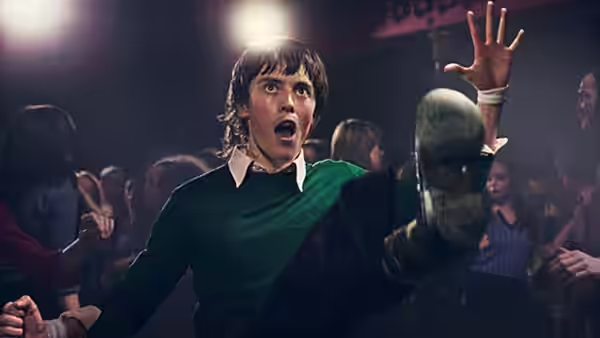
Elliot J. Langridge gives John Clark a gradual, convincing development, allowing his growing involvement in the scene to register without overplaying each change. There is enough patience in the performance to make his enthusiasm feel discovered rather than supplied by the screenplay. Josh Whitehouse brings a welcome liveliness to Matt, and their friendship holds our attention even when individual scenes feel slight. Both actors understand how much importance young people can place on a shared taste, and neither makes that seem foolish.
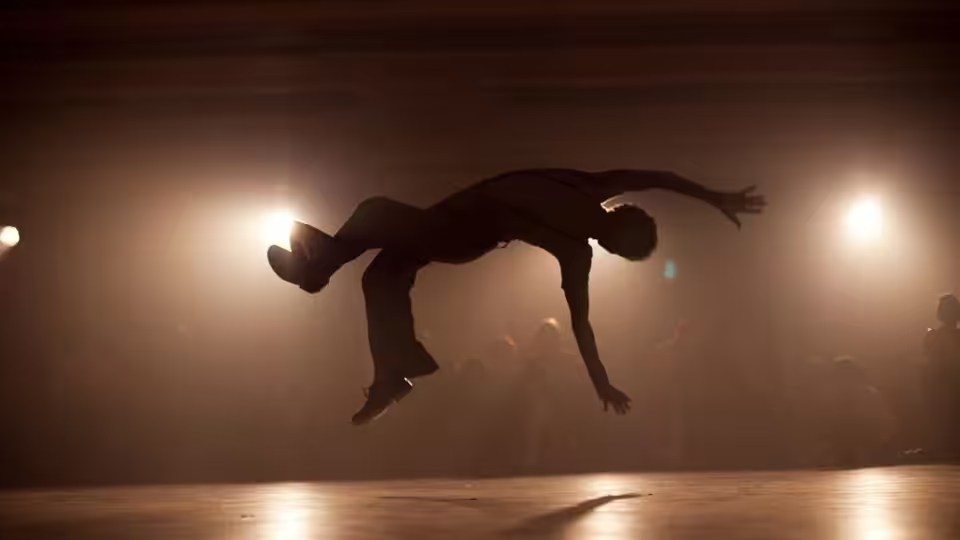
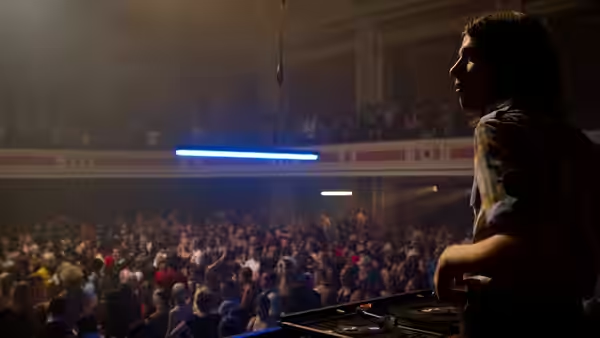
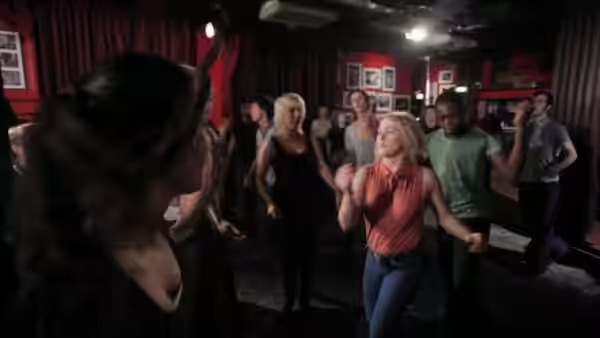
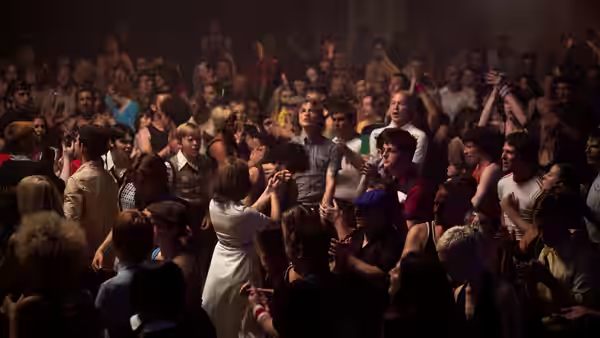
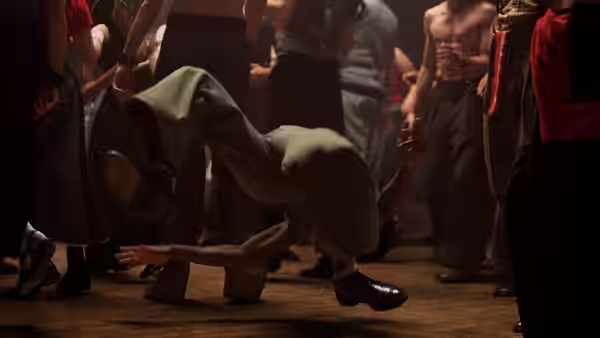
We felt a rush of happiness watching the dancing, because the dancers make the excitement of those records so easy to share. Stephen Haren’s high-tempo editing keeps these passages lively without making them feel like an interruption to the drama. For a while, watching people find somewhere they want to be is quite enough of a story. The cramped, sweaty spaces matter as much as the music to the film’s convincing account of the scene.
Robin Brown’s production design helps those surroundings feel inhabited, with the crowded dance spaces particularly effective. The costumes by Yvonne Duckett and Adam Howe contribute to the persuasive period detail without demanding attention at the expense of the people wearing them. Such care matters in a film about belonging: the places and clothes have to look like things people would choose for themselves. The setting remains convincing even when the writing starts to make the characters’ problems feel arranged.
Antonia Thomas’s Angela gets too little room in a screenplay chiefly interested in the two boys. That focus would be less troublesome if their experiences made the people around them more distinct. Instead, the women are underwritten, and the film leaves too much of their interest to the performers. The narrow attention becomes noticeable whenever the drama asks us to care about someone beyond the central friendship, without having spent enough time establishing why we should.
Elaine Constantine is also less assured when the screenplay presses towards melodrama, introducing a strain that the performances cannot entirely disguise. A coming-of-age story needs its growing pains to feel specific to these people, and the more contrived passages could belong to plenty of other films. At 102 minutes, there is room for stronger character development without sacrificing the music. The trouble is how that time is used, with complications receiving attention that the supporting characters could have used more profitably.
Those weaknesses matter, but they do not undo the pleasure of watching a musical community take shape. We would have welcomed a less insistent plot and more time among the dancers, whose enthusiasm needs little explanation. The central performances give the film enough warmth to survive its less convincing stretches. Give it an evening if discovering a record has ever seemed more important than getting a sensible night’s sleep.