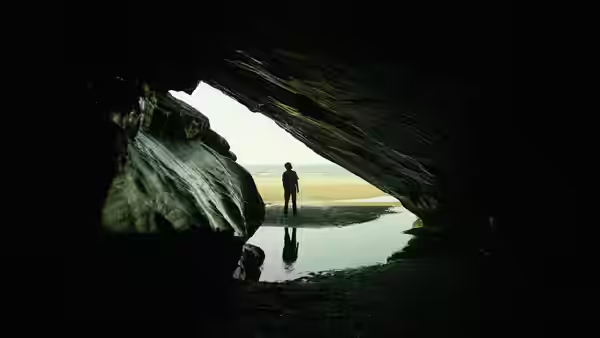
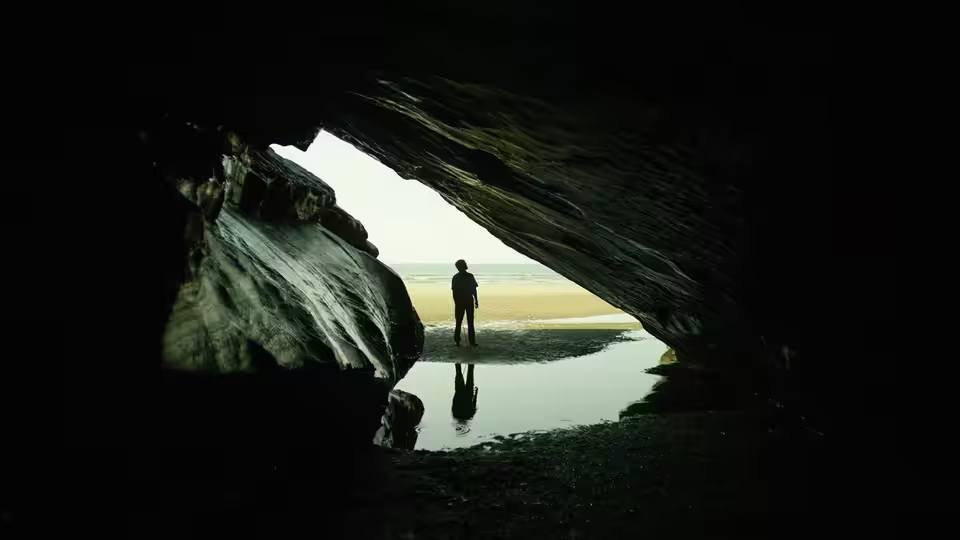
A solitary figure stands at the mouth of a dark cave, facing the shore
Film review

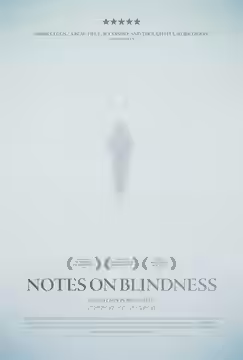
Notes on Blindness

2016 · Directed by James Spinney, Pete Middleton · 1h 30m

In a sentenceNinety minutes of a man describing the dark, and the rain scene alone is worth the ticket

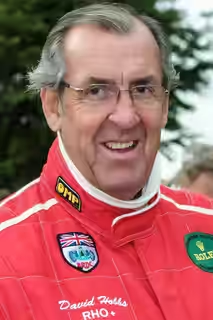
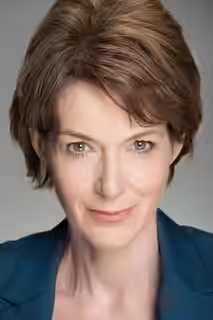
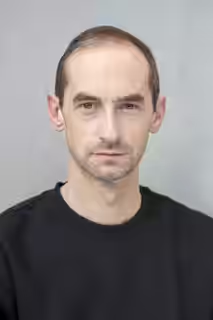
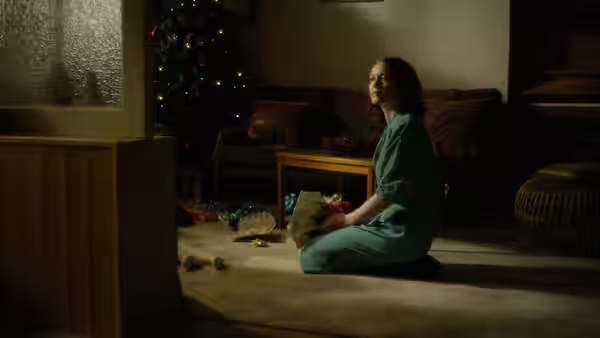
Birmingham, 1983. John Hull (Daniel Renton Skinner), a university theologian, is losing the last of his sight in the same months that his wife Marilyn (Simone Kirby) is expecting their son Thomas. Unable to read or write, he begins talking into a cassette recorder: the walk to work, the sound of a room he cannot see, the faces of his family beginning to slip from memory. The film takes those real tapes, with the voices of John and Marilyn Hull themselves, and has the actors mouth every word. We see the Hulls’ house with its boxes of cassettes, a librarian (Victoria Wicks) reading to him, John feeling his way through his first blind Christmas, and his parents Madge (Eileen Davies) and Jack (David Hobbs) far away in Australia.

Fi1m review

Pete Middleton and James Spinney set John Hull’s cassette diaries of going blind to actors who mouth every word, and the result is tender, strange and precise. It is cushioned a little too comfortably by its music, but the rain alone is worth the evening.

John Hull was a theologian at the University of Birmingham who went completely blind in 1983 and, because he could no longer write, started talking into a cassette recorder. He kept it up for three years. Pete Middleton and James Spinney have taken those tapes, with Hull’s own voice and his wife Marilyn’s, and built a 90-minute film in which actors mouth the words exactly as they were spoken. It sounds like a stunt. It is the best decision in the film, and the film is one we recommend, with a caveat about how softly it has been upholstered.

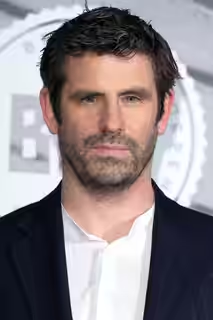
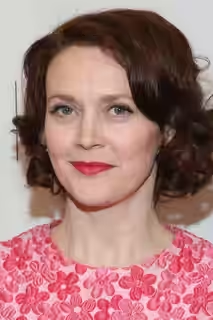
Daniel Renton Skinner plays Hull, and the job is harder than it looks. He has to match a dead man’s breathing, his pauses, the small laugh Hull gives when he catches himself being pompous, and he has to do it while his eyes stay still. He manages it so well that within ten minutes we had stopped checking his lips. Simone Kirby’s Marilyn is tired, patient and sharper than her husband expects, and in the few recorded conversations between them you can hear a marriage being renegotiated in real time. Eileen Davies and David Hobbs, as Hull’s parents in Australia, have less to do and do it carefully.

Gerry Floyd shoots the whole thing in a shallow focus that leaves most of the frame unreadable. A lamp, a hand, the edge of a desk; the rest is brown dark. Damien Creagh’s house is full of the right 1983 things, the hulking recorder, the boxed cassettes labelled in Marilyn’s hand, the study that fills up with sound equipment as the books stop being any use. Saffron Cook and Julia Drummond-Haig put Hull in the corduroy and cardigans of a man who has stopped being able to check his own clothes. Julian Quantrill cuts slowly and is not afraid of a black screen with tape hiss running under it, which is where some of the best moments live.

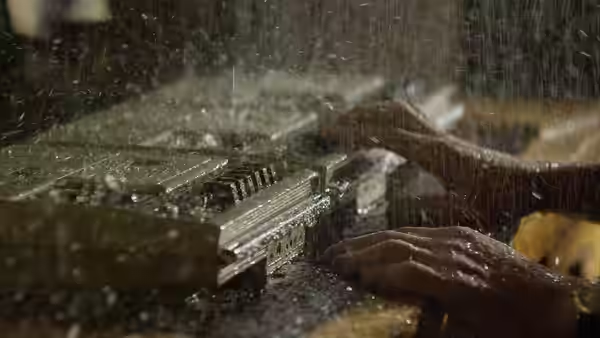
Then there is the rain. Hull describes standing at a door while a shower falls on the garden, and how the sound of it on the path, the lawn, the fence and the roof gives him back the shape of a world he had lost. Middleton and Spinney let the rain do it on screen, moving the camera across each surface as his voice names it. It moved us more than we were prepared for, and we have thought about it every wet afternoon since. There is a quieter passage, earlier, in which Hull admits he can no longer picture his daughter’s face, and Skinner plays it without moving at all. That one we found hard to watch.

The caveat is the music. James Ewers, Spinney and Noah Wood have written a score of soft piano and strings, and it is nearly always there, lying under passages that would have been stronger with nothing but the hiss of the tape. Hull is describing deprivation, and the film keeps handing us a blanket. A handful of dream sequences, and a visit to a faith healer (Jamie Bradley), are also illustrated more fully than they need to be, when the voice had already done the work. Most critics have waved this through; one or two have called it a betrayal of the subject. We would not go that far, but we noticed it, and we noticed it most in the moments the film most wanted us to feel something.

The method has a precedent. Clio Barnard’s The Arbor (2010) had actors lip-synching to interviews about the playwright Andrea Dunbar, and used the gap between voice and body to unsettle. Middleton and Spinney use the same device to comfort, which is a legitimate choice and a less interesting one. Derek Jarman’s Blue (1993) gave a film about losing sight a single blue frame for 79 minutes and trusted the audience with it. Notes on Blindness trusts us about two-thirds as far.

Hull died in 2015, before the film came out. What he left is a record of a clever man thinking his way through a catastrophe without self-pity, and the film serves it well. Watch it at home with the lights off and the sound turned up, and resist the urge to look at your phone, which is a smaller version of exactly the test Hull was set.
Critical consensus AI synthesised

72
Positive
6
Mixed
3
Negative
1
The Guardian
3 July 2016 · ★★★★★ · Mark Kermode
100

Kermode finds the film extraordinary, educational and inspirational. He praises how its inventive sound and imagery convey John Hull’s changing experience of blindness.

Read the full review →
Los Angeles Times
24 November 2016 · Katie Walsh
85*

Walsh finds the film an achingly poignant and powerful portrait of adapting to blindness. She especially praises the Hulls’ taped voices for their honesty and searching curiosity.

Read the full review →
Radio Times
★★★★ · Leslie Felperin
80

Felperin finds the film richly evocative and thought-provoking, an unusual blend of documentary, drama and essay. She singles out its distinctive use of actors lip-synching to real audio recordings.

Read the full review →
Time Out
26 June 2016 · ★★★★ · Dave Calhoun
80

The review presents the documentary as moving and creatively made. It singles out the audiotapes recorded as an academic’s eyesight failed.

Read the full review →
The Hollywood Reporter
18 November 2016 · THR Staff
75*

The review finds the documentary deeply sensitive and says it reveals blindness as a richer experience than many might assume. It praises the way Hull’s audio diaries and carefully staged reenactments draw viewers into his reflections.

Read the full review →
Screen Daily
22 January 2016 · Wendy Ide
64*

The accessible page does not reveal the critic’s verdict. It also conceals what the review singles out for praise or complaint.

Read the full review →

Straight answers AI written, from our review

Is Notes on Blindness worth watching?
Notes on Blindness is worth watching, and we scored it 80. Actors mouth the real cassette diaries John Hull recorded as he went blind in 1983, and the passage in which rain gives him back the shape of his garden moved us more than we expected. The soft piano score cushions too much, so watch it with the lights off and the sound up.
How long is Notes on Blindness, and what is it rated?
Notes on Blindness runs 1h 30m. It is a drama and documentary film.
Where can I watch Notes on Blindness in Greece?
Notes on Blindness is not on any streaming or rental service in Greece at the moment. It is available in 2 other countries; change your country at the top of the page to see where. Availability is checked daily.
How does Notes on Blindness compare to The Arbor?
Notes on Blindness and The Arbor use the same device, actors lip-synching to recorded voices, to opposite ends. Clio Barnard uses the gap between voice and body to unsettle, telling a far darker family history; Middleton and Spinney use it to comfort, which is tender but less interesting. The Arbor is the bracing one, Notes on Blindness the gentler and more consoling.
What should I watch after Notes on Blindness?
After Notes on Blindness, try The Arbor (2010, Fi1m 83): Clio Barnard uses the same lip-synch method to far darker ends; a bracing companion. Then The Diving Bell and the Butterfly (2007, Fi1m 87): A paralysed man’s memoir filmed from inside one eye; fierce, funny, French; and Stories We Tell (2012, Fi1m 77): Sarah Polley reconstructs her own family history with staged footage and real voices.

Cast

Awards

IFFR audience award, 2016

Won
IFFR audience award

If you liked this, try…

  1. The Arbor (2010, Fi1m 83)Clio Barnard uses the same lip-synch method to far darker ends; a bracing companion.

  2. Blue (1993) · not reviewed yetDerek Jarman’s last film, a single blue frame and his voice; blindness without pictures.

  3. The Diving Bell and the Butterfly (2007, Fi1m 87)A paralysed man’s memoir filmed from inside one eye; fierce, funny, French.

  4. Land of Silence and Darkness (1971) · not reviewed yetHerzog follows a deaf-blind woman visiting others like her; patient and unsentimental.

  5. Stories We Tell (2012, Fi1m 77)Sarah Polley reconstructs her own family history with staged footage and real voices.