The Arbor makes a difficult family history gripping through recorded voices and lip-synched performances. Clio Barnard’s staging sometimes distracts from the testimony, but we warmly recommend the film for the attention it gives to conflicting memories.
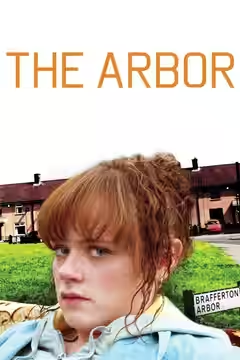
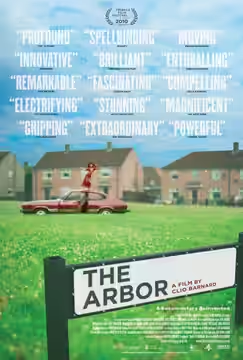
The Arbor is a demanding, moving film whose unusual method mostly earns the attention it asks for. Clio Barnard uses actors to lip-sync recorded testimony about Andrea Dunbar and her family, placing those performances alongside archive footage and estate settings. The obvious risk is that we spend the evening checking mouths against voices. For much of the film, the people speaking give us too much to think about for that to remain our chief concern.
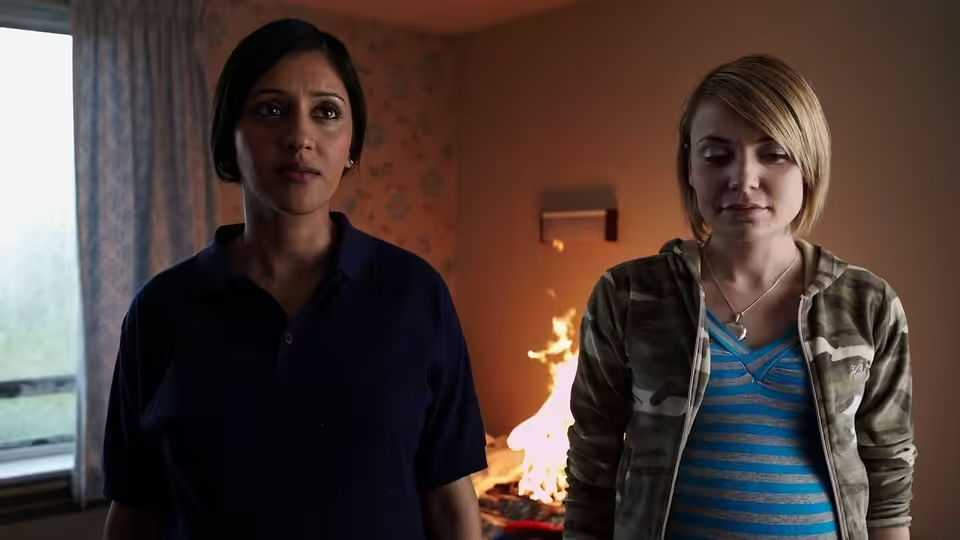
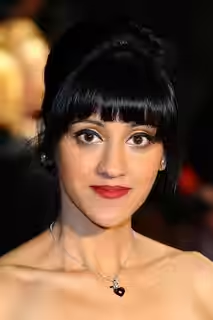
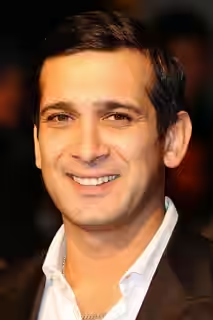
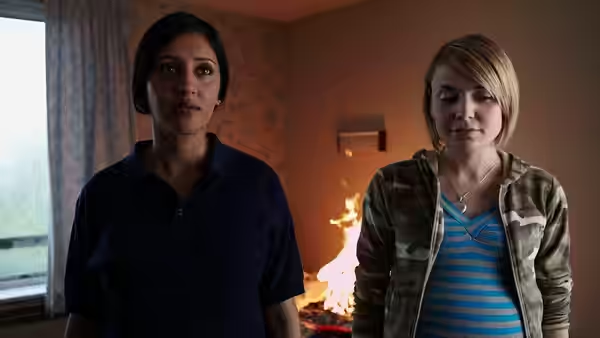
Lorraine Dunbar, played by Manjinder Virk, is central to that achievement. The performance has to accommodate another person’s speech, and its strength lies in making us listen without pretending that the actor and the speaker are interchangeable. Lisa Thompson, played by Christine Bottomley, gives the family portrait a different emotional emphasis and complicates our response to what we hear. We found the daughters’ contrasting responses painful: their feelings about the same family are so far apart that hearing both brings little reassurance.
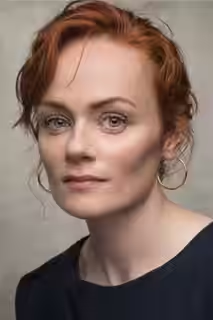
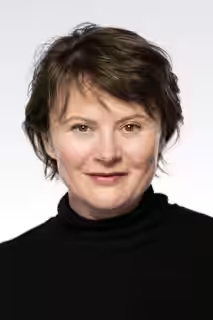
Monica Dolan, playing Ann Hamilton, is another reason the method holds. Her performance keeps our attention on the account being given, even while we remain aware of the work involved in matching someone else’s speech. The archive footage of Andrea Dunbar is particularly valuable because it interrupts our scrutiny of the actors and lets us attend to her. Those passages also expose a difficulty elsewhere: we can become so interested in how the testimony is delivered that we stop hearing it.
Ole Birkeland’s cinematography and Matthew Button’s production design make the estate surroundings and staged encounters feel like parts of the same film. That consistency matters when archive material is also competing for our attention. Yet some of the composed images ask us to admire the presentation at precisely the moment we want to concentrate on a voice. We occasionally caught ourselves studying an actor’s mouth for accuracy, and the film had to win our attention back.
Daniel Goddard and Nick Fenton’s editing makes the movement between archive material and performance comprehensible without resolving the differences between the family accounts. We can follow the film while remaining unsure how to reconcile what people tell us. Molly Nyman and Harry Escott’s music helps sustain the unease, though the recorded voices do most of the emotional work. At 91 minutes, the film is not overlong, but its concentration on Lorraine sometimes becomes wearing, with too little change in pressure from one passage to the next.
That difficulty is worth sitting with. We tend to trust documentary testimony more readily when we can look directly at the person giving it, and Clio Barnard makes that habit worth questioning. A straightforward interview would still leave us deciding which account to believe. The film allows conflicting responses to remain uncomfortable, and the actors cannot supply an agreement that the recorded speakers have withheld.
We recommend it with a warning about the sustained distress, not a reassurance that the technique makes it easier. There is little here for an evening when we need a film to put things right. Choose it when there is time afterwards to talk about what each of us heard.