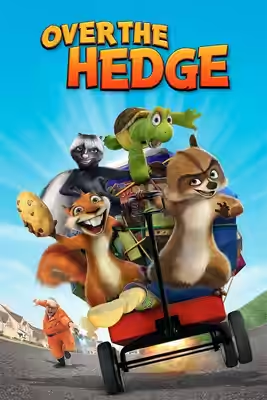
A funny, brisk animal comedy whose suburban satire is sharper than its familiar family lesson. Bruce Willis and Steve Carell give the crowded cast enough personality to keep the predictable story from becoming a chore.
Over the Hedge is a good family comedy with enough wit to make its familiar story worth sitting through. Directors Tim Johnson and Karey Kirkpatrick take aim at suburban consumption, then make plenty of room for animal slapstick. The comedy is sharper when the animals consider how humans live than when the story starts reminding us about family. Still, at 83 minutes, the film does not demand a large part of the evening to make a modest point.
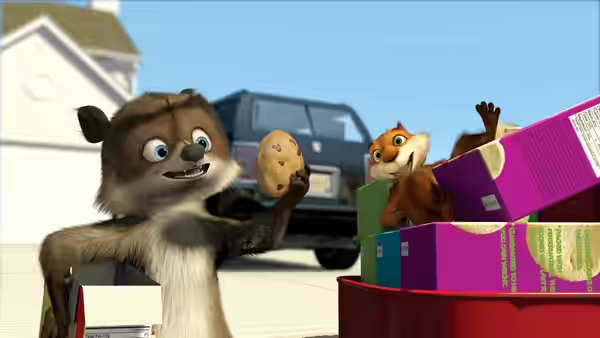
The early montage about human consumption is where it gets properly funny. We laughed at the humans’ excessive appetites, partly because we recognised ourselves. Looking at human habits through animals gives the film a simple, useful way of making everyday excess look foolish without stopping to deliver a lecture. The screenplay, credited to Karey Kirkpatrick, David Hoselton, Lorne Cameron and Len Blum, has more bite here than it does when moving everybody along the plot.
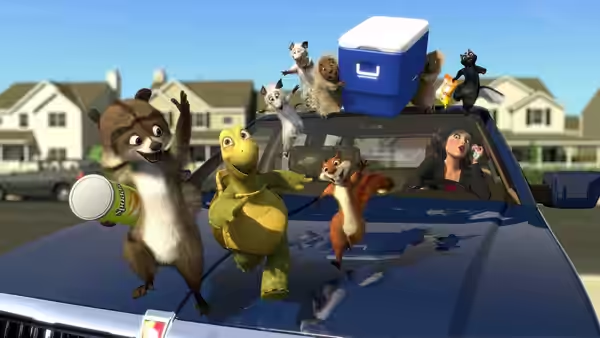
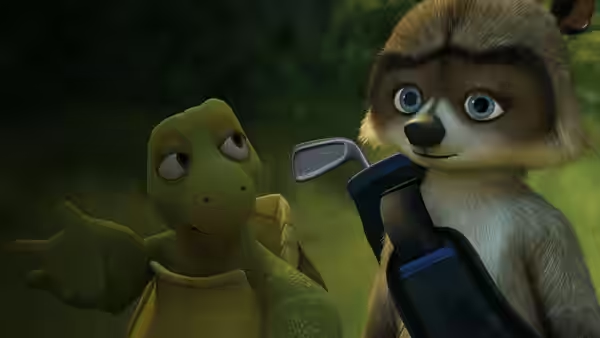
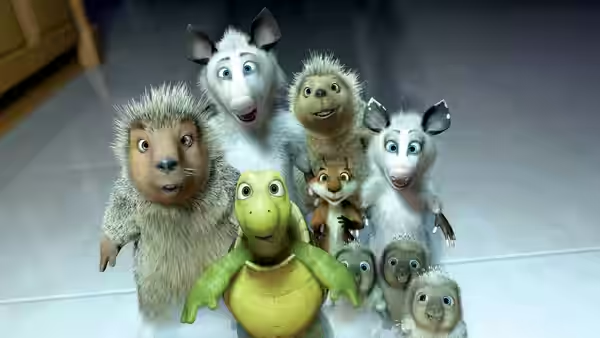
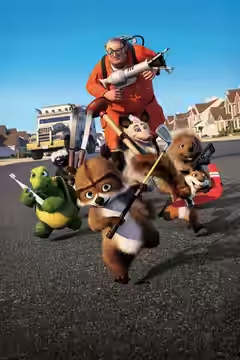
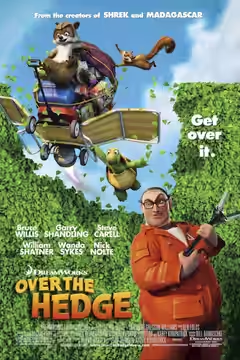
Bruce Willis gives RJ the assurance needed to hold together a busy voice cast, without making every line sound like a request for attention. Steve Carell is more conspicuous as Hammy, and rightly so: his energy gives the comedy a welcome jolt whenever the plotting becomes routine. There is pleasure in hearing performances with such different speeds share a film. Garry Shandling voices Verne, with Wanda Sykes as Stella and William Shatner as Ozzie, although the crowd leaves some characters less room than they deserve.
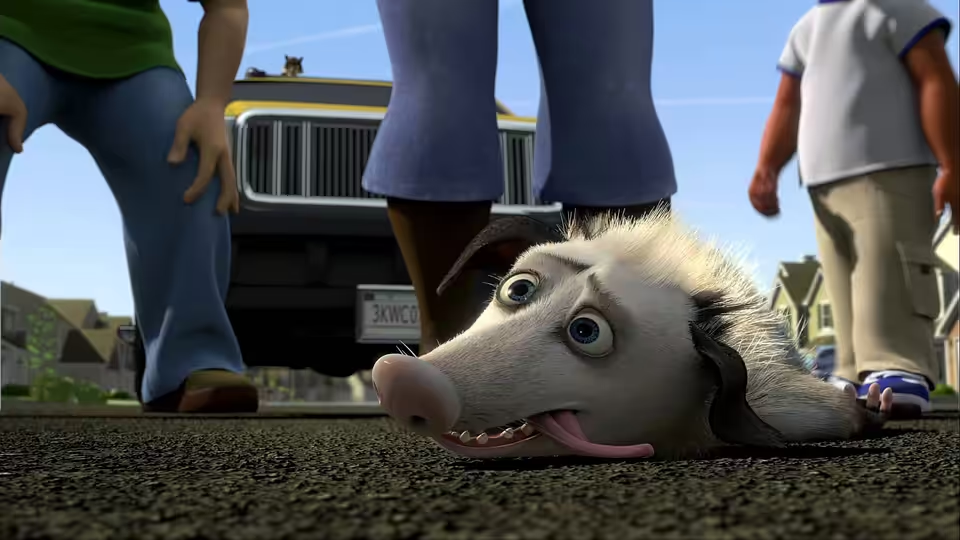
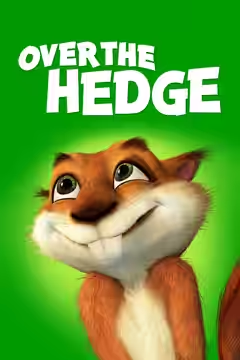
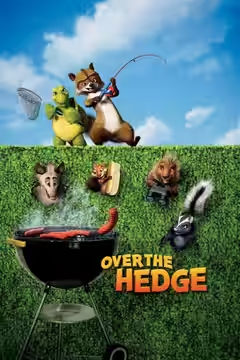
The expressive faces do useful work alongside the voices, especially when a reaction is funnier than another line would have been. Kathy Altieri’s production design supplies a suburban setting we can recognise, though little about its appearance stays with us. The animal designs are agreeable without being especially distinctive. Their changing expressions are more rewarding to watch, and the animation gives the performers room to make the comedy their own.
John K. Carr’s editing keeps the action moving briskly, which suits the film’s small scale and helps its crowded cast. There are stretches, though, when the pace gives us little time to enjoy a joke before the next commotion arrives. Rupert Gregson-Williams’s music makes less of an impression than the spoken performances. The voices supply so much of the comic timing that the music rarely becomes the reason a scene stays with us.
The chief limitation is how little the story develops its sharpest subject. Having noticed something funny about wasteful human consumption, the film too often settles for the standard business of animated adventure and a predictable lesson about family. Its screenplay can produce a smart line, but the larger story seldom surprises. That need not spoil a family comedy, though it does keep this one from becoming as interesting as its early observations suggest.
Within family animation, there is a place for something this unpretentious and easily enjoyed. The animal performances and quick exchanges offer enough for adults, while the physical comedy does not depend on catching every verbal joke. We recommend it for an evening when a small, lively diversion is the requirement. Expect the familiar family lesson, and let Carell make the case for spending 83 minutes in this company.