Annemarie Jacir’s historical drama earns its force through its ensemble and its attention to Palestinian life. We recommend it with a reservation: the crowded storytelling too often makes people explain what their performances already convey.
Palestine 36 is a good historical drama with an overcrowding problem. Annemarie Jacir wants to show how resistance involves a whole population, and gives several lives space within the same film. That breadth is worth having: the people outside the centre of the story matter here. But in trying to accommodate so much, the screenplay sometimes settles for introducing someone and explaining their position when we need longer in their company.
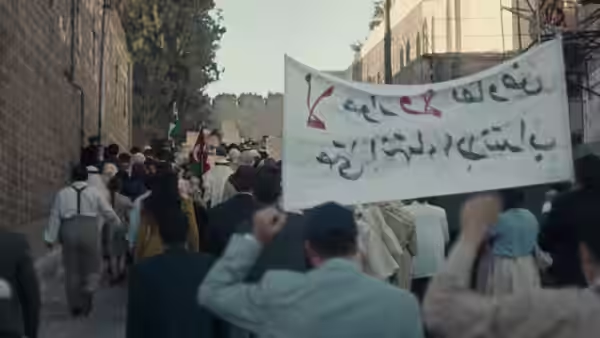
The attention to Palestinian village life gives the film its strongest passages. Everyday existence is allowed some importance of its own, rather than serving merely as preparation for the next confrontation. We were moved by the archival images of Palestine, because they give the places and people a presence that the explanatory dialogue cannot match. For those moments, we stopped waiting for the story to advance and wanted time to look.
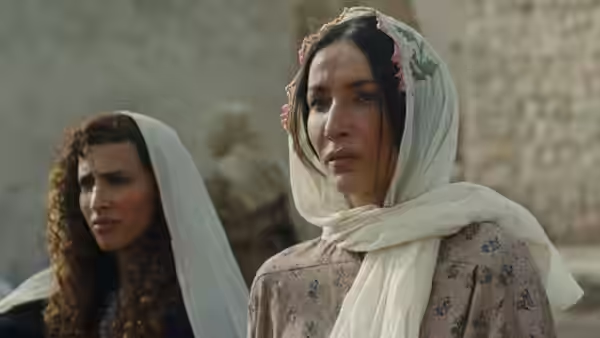
The ensemble helps sustain that interest across the changes of focus. Karim Daoud Anaya plays Yusuf, though the writing gives the central character less room to develop than the scale of the undertaking requires. Hiam Abbass and Yasmine Al Massri belong to a cast whose persuasive work makes the broader characterisations easier to accept. Faces often communicate fine differences of feeling; the script is less reliable when it requires those same people to state a historical position.
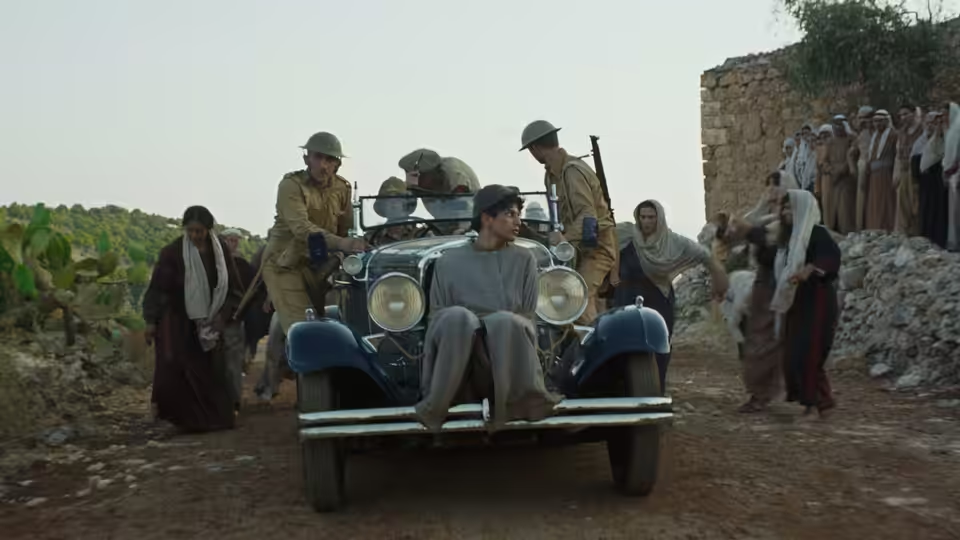
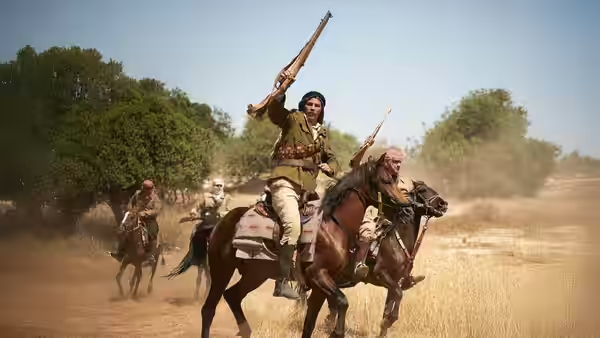
The period images are carefully made, with cinematography credited to Sarah Blum, Hélène Louvart and Tim Fleming. Their work gives the setting enough visual detail to reward attention beyond whoever is speaking. Nael Kanj’s production design contributes to that sense of a place inhabited by people with lives to carry on. There is pleasure in the care, although the polish sometimes makes a difficult history look more comfortably familiar than it should.
Tania Reddin’s editing keeps the interconnected stories moving, but movement cannot quite compensate for the shortage of time with particular characters. A transition can be clear and still arrive before a scene has given us enough. Ben Frost supplies the music; the performances and the historical images remain the more persuasive sources of feeling. Across its 120 minutes, the film has room for a substantial ensemble, but not quite for all the explanation that accompanies it.
Robert Aramayo’s Captain Wingate is the clearest weakness in the characterisation. The performance pushes towards caricature, making the military figure less convincing than the people around him. The problem is not that the film judges colonial authority harshly; it is that broad villainy asks too little of an actor and an audience. Annemarie Jacir’s writing is more effective when it allows uncertainty and conflicting pressures to emerge without spelling out their significance.
Against the conventions of the historical drama, this is a serious, accessible effort whose collective focus deserves attention. Its shortcomings are familiar ones: too many introductions, dialogue burdened with explanation, and a central figure who needs more development. Yet enough of the people register for the history to become more than information, and the care taken over their surroundings matters. Watch it for the ensemble, and allow for the passages when the screenplay insists on doing the talking.