Oren Peli’s home-made haunting is patient, cheap and, for two nights out of three, frightening in a way expensive horror has forgotten how to be. The bedroom is more interesting than the people in it, and the last reel spends what the rest earned.
Oren Peli’s film has a couple, a house, a camcorder and no one else. Peli wrote it, directed it, shot it, edited it, produced it and, the credits say, designed the costumes, which presumably means he told the actors to wear their own clothes. There is no score, no crew that we can see, and for most of its 86 minutes not much happens. It is, for most of its nights, frightening in a way that expensive horror has largely stopped being. It is also saddled with a boyfriend we could not stand and a last stretch that undoes some of the earlier work.
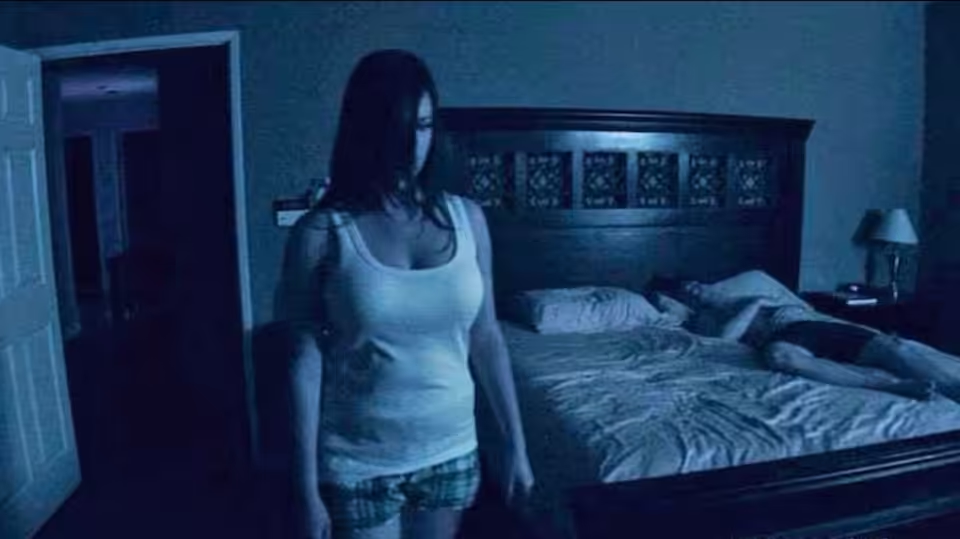
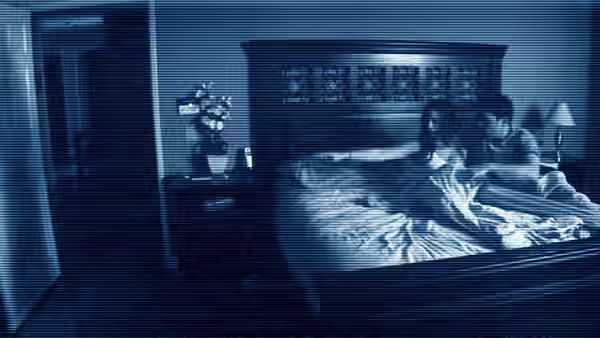
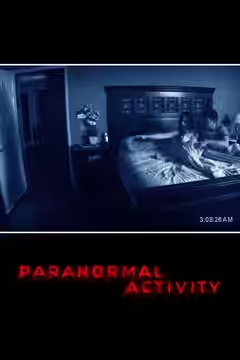
The set-up is thin by design. Katie (Katie Featherston) and Micah (Micah Sloat) live in a new two-storey house in the suburbs. She has been followed since childhood by something she does not have a name for; he has bought a camera to catch it. He sets it on a tripod at the foot of the bed each night, and the film’s real subject is what the tripod sees.
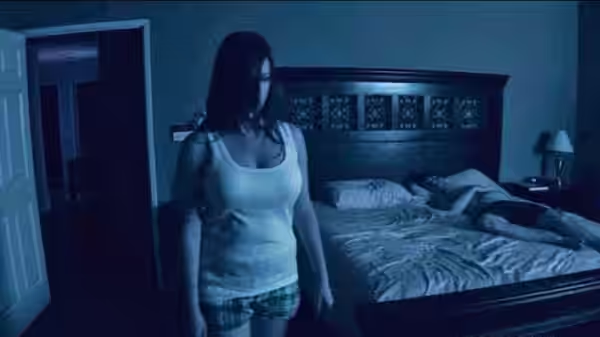
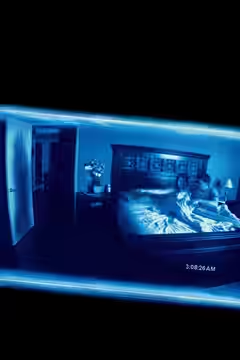
That shot is the whole invention. A wide, slightly grey view of the bed, the open door and a strip of landing, with a time-stamp ticking in the corner. Peli, as his own editor, fast-forwards through the hours of nothing, and the spinning clock is a promise: the footage will slow down when it matters. So you watch. You check the door, the shadow on the landing, the sheets. The first time the door moved on its own, a few inches, we found we had stopped breathing, and we were irritated with ourselves, because it was a door. That irritation is the film’s achievement; it makes you do the frightening yourself.
The sound does the rest. There is a low hum, somewhere near the bottom of hearing, that arrives before anything is visible, then footsteps too heavy to belong to either of them, then a bang from downstairs. Peli understands that a thud off-screen costs nothing and that an audience will build a monster out of it. The daytime scenes are shot handheld and a little too bright, so that the bedroom, when it comes back, feels like the only room in the house that matters.
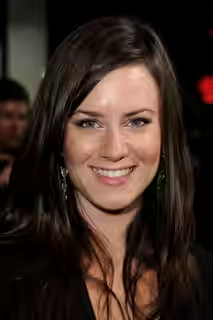
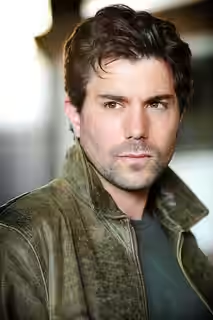
Featherston is good. She plays Katie as a woman who is frightened, tired of being frightened, and increasingly furious that the man she lives with treats her haunting as a home-improvement project. Sloat’s Micah is the problem, and possibly meant to be. He needles, films things he has been asked not to film, and when a psychic (Mark Fredrichs) visits, listens to the advice and does the opposite. We wanted to shake him by about the third night. Their bickering is believable, which is a compliment to both actors; that we ended up on her side and stayed there may or may not be what Peli intended.
The film’s flaws are the flaws of its method. Away from the bedroom it goes slack: the psychic’s visit is exposition delivered to a sofa, and a scene with Katie’s friend Amber (Amber Armstrong) is filler. Then there is the final stretch, which we will not describe. Several critics found it too tidy, and we agree. It asks the fixed camera to show something the camera has spent an hour teaching us it would never catch, and the spell breaks. Ten minutes shorter and the film would have been better.
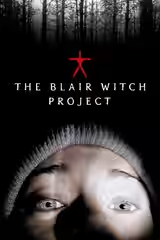
Its ancestor is obviously The Blair Witch Project, which put a camcorder in the woods in 1999. Peli’s improvement is the location. You can leave the woods. You cannot stop going to bed. The film was made in 2007 and did not reach British cinemas until 25 November 2009, and in those two years the idea lost none of its bite.
Watch it at home, late, with the lights off and the bedroom door open. Then see how long you leave it open.