Bobcat Goldthwait and Art Metrano find laughs in Jerry Paris’s thin police comedy, but the ensemble deserves better writing. At 87 minutes, it still feels padded, with too much waiting between jokes that work.
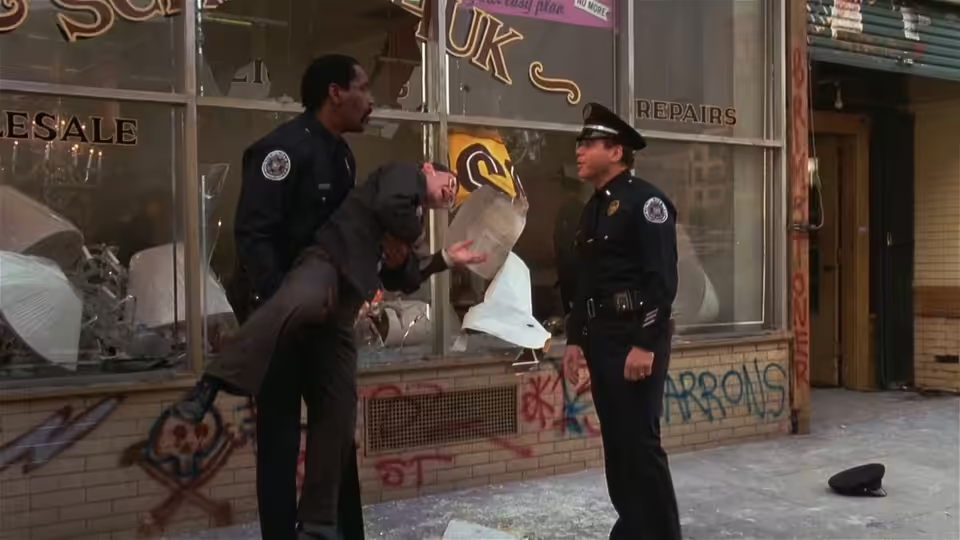
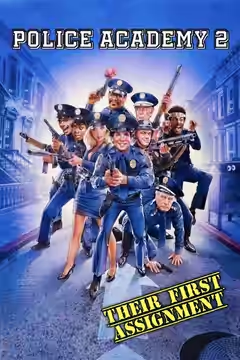
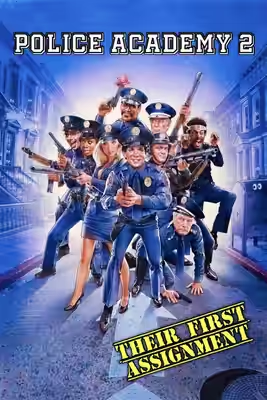
Jerry Paris’s Police Academy 2: Their First Assignment is a poor comedy with a couple of performances worth rescuing. Bobcat Goldthwait and Art Metrano find laughs, but the film leaves too much of the evening to an ensemble it has not properly supplied with jokes. At 87 minutes, it ought to feel light. Instead, long stretches pass without much comic reward, and the goodwill towards the performers begins to wear thin.
David Sheffield and Barry W. Blaustein’s script is slight even by the forgiving standards of this kind of crime comedy. A thin plot need not matter when each comic encounter has its own shape and surprise, but too much here depends on finding juvenile behaviour funny in itself. We have no objection to juvenile behaviour. We would simply prefer the joke to develop once the initial silliness has been established, rather than being left to appreciate the effort.
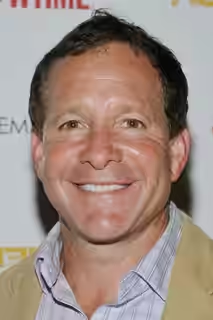
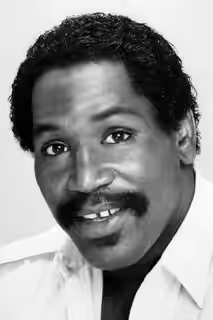
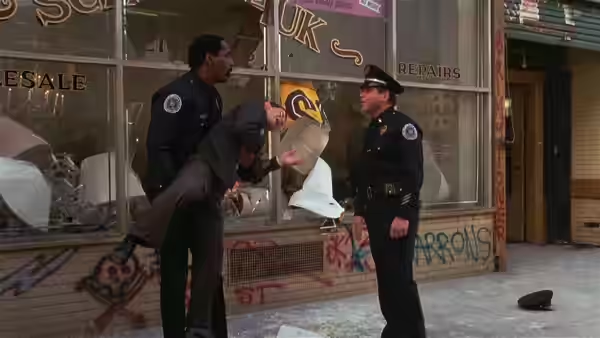
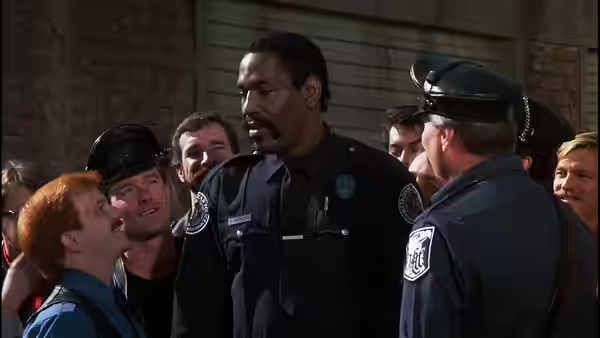
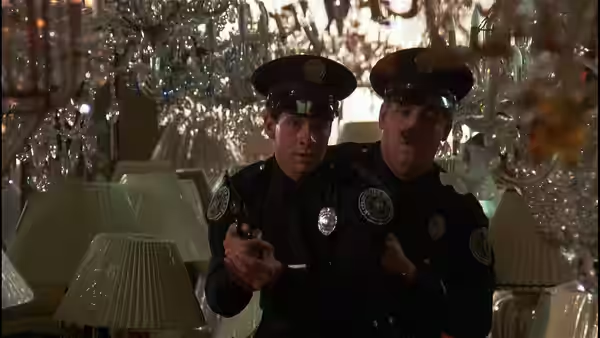
Steve Guttenberg plays Carey Mahoney, with Bubba Smith as Moses Hightower, David Graf as Tackleberry and Michael Winslow as Larvell Jones. The cast has the variety a broad ensemble comedy needs, and the performers do not seem short of enthusiasm. What is missing is the sense that the writing has found enough worthwhile business for them to share. Their contributions are intermittently enjoyable, but too often the film seems satisfied merely to have assembled them.
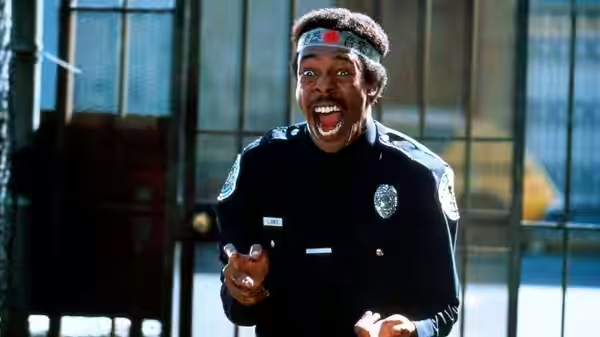
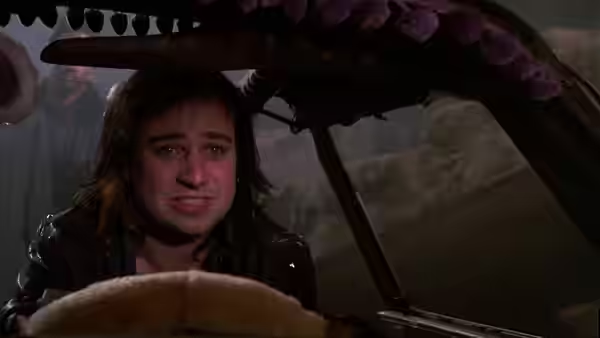
We laughed at Bobcat Goldthwait’s screeching as Zed, because his delivery makes even the act of getting a sound out seem absurdly difficult. The voice is excessive, abrasive and funny, and it gives the film a welcome suggestion that somebody might do something unreasonable. That will be intolerable to some viewers, which is fair enough. For us, the sheer oddness of the performance breaks through the otherwise routine fooling about.
Art Metrano does something useful with Lieutenant Mauser, too, making weak material seem more workable than it deserves. His performance has enough comic confidence to hold our attention without relying on quite so much noise. Neither actor can make the surrounding film feel more substantial, but their contributions stop it becoming a complete waste of time. There is a modest pleasure in watching performers find something playable where the script has given them little help.
James Crabe’s cinematography does little to make the comedy more expressive, while Bob Wyman’s editing never quite finds the briskness the material needs. Trevor Williams’s production design is serviceable, but offers little extra humour to reward a wandering eye. Robert Folk’s music supplies energy without making the jokes feel any less laboured. None of these contributions is the central problem; the scenes need stronger comic ideas before they need polishing.
The standard for a knockabout police comedy need not be especially lofty: invention, timing and a cast worth following will do. This has enough acting talent to make the shortage of good jokes frustrating. Its occasional successes are also quite specific, so there is little point pretending it will improve for anyone unmoved by Bobcat Goldthwait’s vocal assault. Try it only if that noise already counts as an attraction.