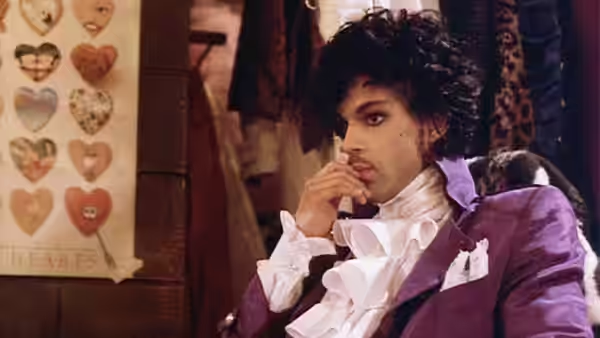
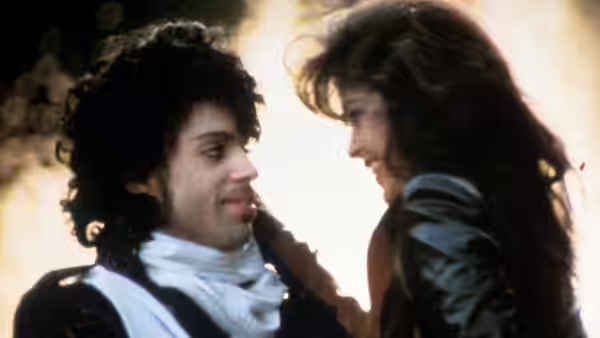
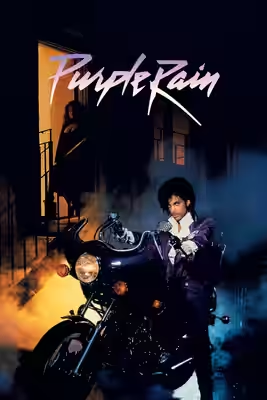
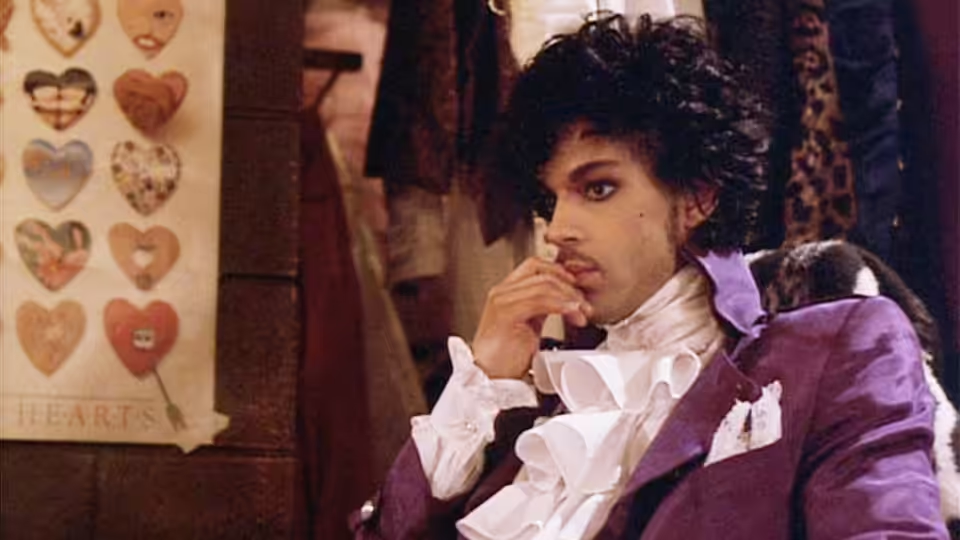
The Kid (Prince) sits pensively in a shop surrounded by clothing and heart displays
Film review

Purple Rain

1984 · Directed by Albert Magnoli · 1h 51m

In a sentenceThe screenplay should be grateful Prince brought his guitar

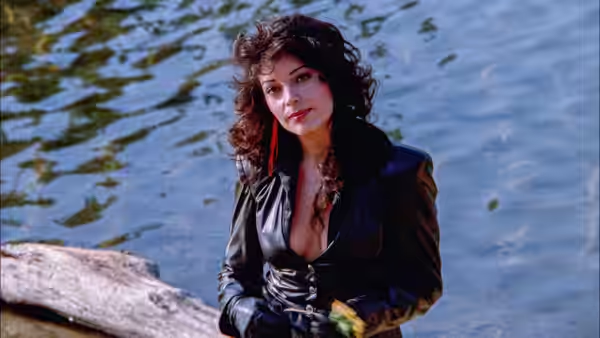
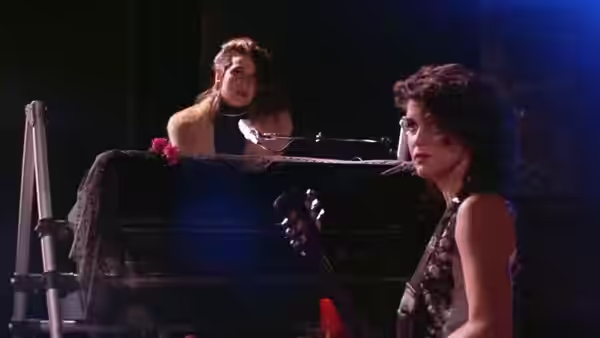
The Kid (Prince) takes the stage in a backstage musical that follows his personal life through drama and romance. Around him are Apollonia (Apollonia Kotero), Morris (Morris Day) and Jerome (Jerome Benton), with Olga Karlatos as Mother and Clarence Williams III as Father. His performances give voice to feelings that the surrounding drama brings into play. Wendy (Wendy Melvoin), Lisa (Lisa Coleman) and Billy (Billy Sparks) also feature in a story told through concert sequences as well as encounters away from the stage.

Plays from YouTube when you press play; nothing loads from them until then.

Fi1m review

Prince’s performances make Purple Rain worth the evening, despite acting and writing that cannot always support them. Albert Magnoli films the music with conviction; the drama needs considerably more help.

Purple Rain is worth an evening for Prince’s performances, provided we can forgive a drama that rarely matches them. Albert Magnoli understands what a musical star vehicle needs to deliver, and gives the concert sequences the attention they deserve. The film’s appeal depends heavily on how much pleasure we take in watching one performer hold a stage. Over 111 minutes, that can be a considerable pleasure, even with some awkward waiting between songs.

Prince makes that bargain easier than it sounds. His guitar playing has the assurance that his dramatic performance sometimes lacks, and his presence makes even the film’s excessive faith in The Kid understandable. We were moved by the title song: Prince’s guitar playing makes The Kid’s hurt convincing after dialogue that has struggled to do so. The songs allow changes of feeling to register without the script having to explain them.

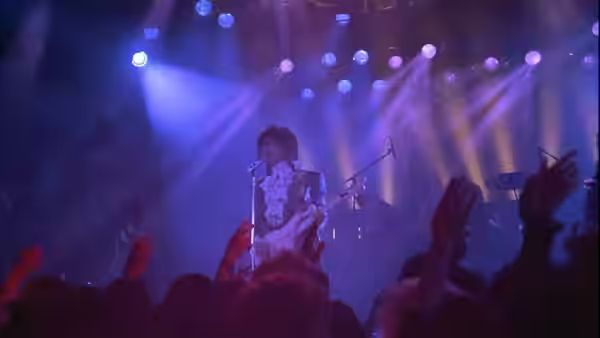
Donald E. Thorin’s cinematography gives the concert lighting a strong presence without allowing it to overwhelm the performer. We can enjoy the presentation and still watch Prince command attention through his playing. Editors Ken Robinson and Albert Magnoli keep these sequences fluid, giving the music enough continuity to build its own excitement. Whatever the weaknesses elsewhere, the concert passages feel shaped by people who understand why an audience has come.

Ward Preston’s production design makes the stage an appropriate home for Prince’s theatricality, while Marie France’s costumes share his appetite for display. The clothes help the film sell its star’s self-belief before the screenplay has earned it. Michel Colombier’s music has less room to distinguish itself beside songs this forceful. It cannot make the spoken drama as compelling, although that is hardly a problem a composer could solve.

Morris Day is the other good reason to stay. As Morris, he has a confidence in the dramatic scenes that makes us wish the film would spend more time with him. Prince and Apollonia Kotero are less comfortable carrying the story without musical assistance, and their acting leaves the weaker writing exposed. The charm is there, but charm cannot make every exchange persuasive, particularly when the film is asking us to take its troubles so seriously.

The screenplay by Albert Magnoli and William Blinn leans too heavily on broad melodrama, with too little convincing behaviour underneath the emotion. The Kid benefits from a film that is already firmly on his side, and the people around him do not always receive comparable attention. A backstage musical can accommodate an enormous ego; it becomes harder work when that ego is offered as sufficient explanation for the drama. The writing too often relies on Prince’s presence to keep us interested.

The concert scenes justify that patience, especially for anyone who values a musical performance as something worth watching in itself. Albert Magnoli gives them time to develop and trusts the music to hold our attention. We would recommend it most readily to someone happy to forgive uneven acting for the pleasure of watching Prince perform. Come for Prince, and allow for the conversations.

Critical consensus AI synthesised

62
Positive
5
Mixed
3
Negative
2

The reviews lean favourable on Purple Rain, with praise concentrated on Prince’s music and stage presence rather than the drama around them. Even several sceptical critics find the concert performances compelling, singling out the songwriting, guitar playing and showmanship. The more enthusiastic accounts also credit the concert lighting and camerawork, while some argue that the songs express the protagonist’s feelings more persuasively than the dialogue and acting.

The spread is wide, and the main disagreement concerns whether the filmmaking sustains that appeal away from the stage. The Hollywood Reporter praises an emotionally engaging story, evocative direction and fluid editing; The New Yorker finds the story mawkish and the direction fractured and flashy. Other reservations centre on weak lead performances, excessive length and melodrama that wears less well than the music. Even among the negative reviews, however, Prince’s musical performances remain a substantial source of pleasure.

The Hollywood Reporter
27 July 2017 · Duane Byrge
85*

Byrge calls the film an accomplished, emotionally engaging story of personal triumph. He especially praises Magnoli’s evocative direction and the film’s fluid editing and striking visuals.

Read the full review →
Variety
4 July 1984 · Cynthia Kirk
80*

Kirk finds the film a rousing, appealing backstage musical and praises Prince’s compelling screen presence. She also singles out the concert sequences for their vivid lighting and strong camerawork.

Read the full review →
Slant Magazine
24 August 2004 · ★★★/4 · Eric Henderson
75

Henderson argues that the film deserves more respect than its reputation suggests, despite its obviousness and Prince-centered vanity. He praises how the songs reveal the protagonist’s feelings and how the concert filming makes the climactic musical sequence work.

Read the full review →
Time Out
· FD
67*

The available excerpt offers an admiring view of Prince but does not reveal the review’s overall verdict. It singles out his magnetic stage presence and guitar performance.

Read the full review →
Radio Times
★★★ · John Ferguson
60

The critic calls it Prince’s first and easily best film, though its lead performances disappoint. Morris Day’s charismatic turn and Prince and the Revolution’s captured concert performances are singled out for praise.

Read the full review →
The AV Club
30 August 2004 · Nathan Rabin
50*

Rabin finds the film a muddled drama but an enduring showcase for Prince’s music and performance. He especially praises its songwriting and showmanship, while criticizing its acting and melodrama.

Read the full review →

Straight answers AI written, from our review

Is Purple Rain worth watching?
Purple Rain is worth watching for Prince’s concert performances, provided uneven acting and broad melodrama are not deal-breakers; we score it 72/100. We recommend it most readily to music lovers happy to sit through awkward dialogue for assured guitar playing, commanding stage presence and concert sequences that give the songs time to work.
How long is Purple Rain, and what is it rated?
Purple Rain runs 1h 51m. It is a drama and music film.
Where can I watch Purple Rain in Belgium?
Purple Rain is available to rent from Amazon Prime Video from €2.99. Availability is checked daily; the links above go straight to each service.
How violent or frightening is Purple Rain, and is it suitable for children?
Purple Rain carries a UK 15 certificate, so it is not suitable for children under 15. We would treat it as viewing for older teenagers and adults rather than a family musical, but the certificate alone does not establish how graphic any violence is or how frightening particular scenes might be.
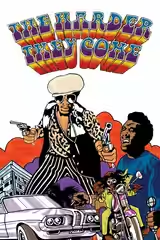
How does Purple Rain compare to The Harder They Come?
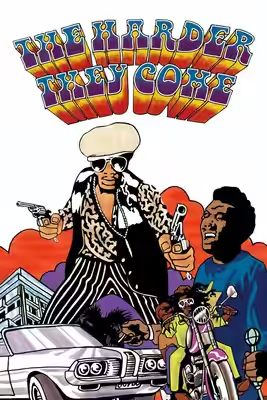
Purple Rain shares with The Harder They Come a magnetic musician whose songs make the strongest impression, but we find the latter’s drama more convincing in its anger at the obstacles facing a singer. Both have uneven storytelling: choose Purple Rain for Prince’s stage performances, or The Harder They Come for Jimmy Cliff and a reggae crime drama with more persuasive grievances.
What should I watch after Purple Rain?
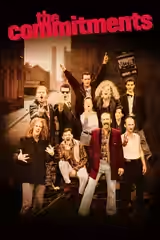
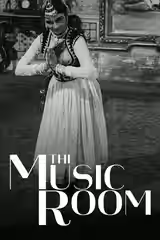
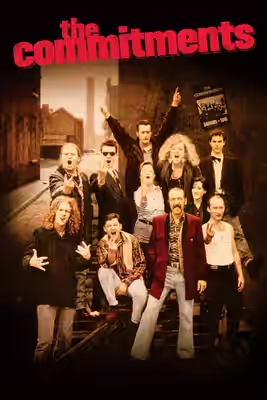
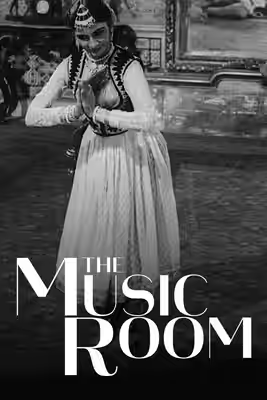
After Purple Rain, try The Harder They Come (1972, Fi1m 80): Another magnetic musician leads a drama whose songs make the strongest impression. Then The Commitments (1991, Fi1m 82): Band friction and live performance, with considerably more room for everyone else’s ego; and The Music Room (1958, Fi1m 88): For music, wounded pride and a protagonist who struggles to accommodate other people.

Cast

Awards

Academy Awards, 1985

Won
Best Original Song Score

Golden Raspberry Award for Worst New Star, 1985

Nominated
Golden Raspberry Award for Worst New Star

Golden Raspberry Award for Worst Original Song, 1985

Nominated
Golden Raspberry Award for Worst Original Song

If you liked this, try…

  1. The Harder They Come (1972, Fi1m 80)Another magnetic musician leads a drama whose songs make the strongest impression.

  2. The Commitments (1991, Fi1m 82)Band friction and live performance, with considerably more room for everyone else’s ego.

  3. The Music Room (1958, Fi1m 88)For music, wounded pride and a protagonist who struggles to accommodate other people.

  4. Beyond the Lights (2014) · not reviewed yetA more attentive romance about the personal cost of being somebody’s pop idol.

  5. All That Jazz (1979, Fi1m 84)A harsher look at showbusiness vanity, with musical sequences worth the difficult company.

Free account

Know what to watch tonight

Two lists that know where things are streaming, collections you can share, your own score beside ours, and Discover that remembers what you have seen.

  • Want to see, sorted by what is streaming now
  • Seen, with your score out of ten
  • No adverts, ever