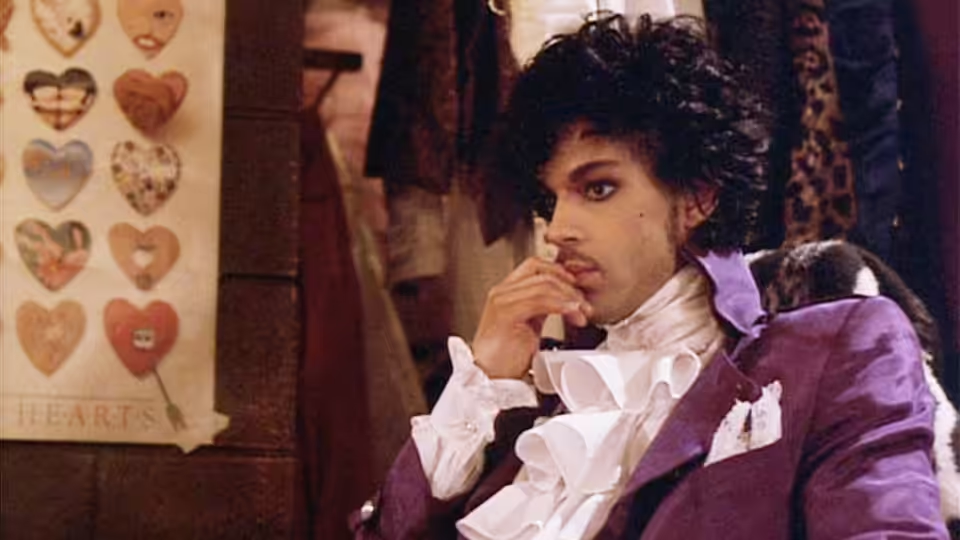
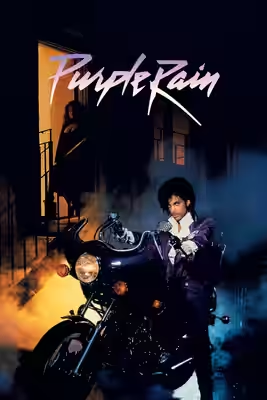
Prince’s performances make Purple Rain worth the evening, despite acting and writing that cannot always support them. Albert Magnoli films the music with conviction; the drama needs considerably more help.
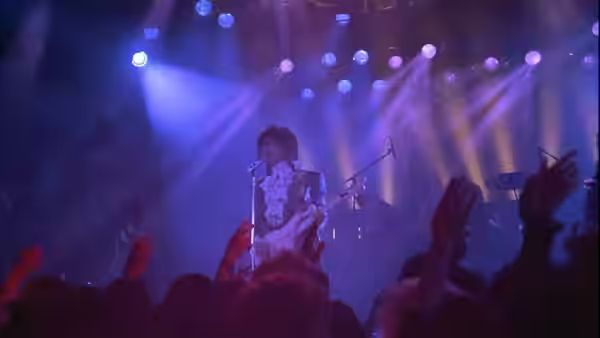
Purple Rain is worth an evening for Prince’s performances, provided we can forgive a drama that rarely matches them. Albert Magnoli understands what a musical star vehicle needs to deliver, and gives the concert sequences the attention they deserve. The film’s appeal depends heavily on how much pleasure we take in watching one performer hold a stage. Over 111 minutes, that can be a considerable pleasure, even with some awkward waiting between songs.
Prince makes that bargain easier than it sounds. His guitar playing has the assurance that his dramatic performance sometimes lacks, and his presence makes even the film’s excessive faith in The Kid understandable. We were moved by the title song: Prince’s guitar playing makes The Kid’s hurt convincing after dialogue that has struggled to do so. The songs allow changes of feeling to register without the script having to explain them.
Donald E. Thorin’s cinematography gives the concert lighting a strong presence without allowing it to overwhelm the performer. We can enjoy the presentation and still watch Prince command attention through his playing. Editors Ken Robinson and Albert Magnoli keep these sequences fluid, giving the music enough continuity to build its own excitement. Whatever the weaknesses elsewhere, the concert passages feel shaped by people who understand why an audience has come.
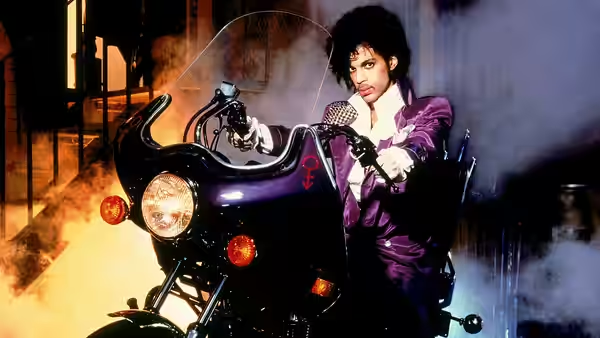
Ward Preston’s production design makes the stage an appropriate home for Prince’s theatricality, while Marie France’s costumes share his appetite for display. The clothes help the film sell its star’s self-belief before the screenplay has earned it. Michel Colombier’s music has less room to distinguish itself beside songs this forceful. It cannot make the spoken drama as compelling, although that is hardly a problem a composer could solve.
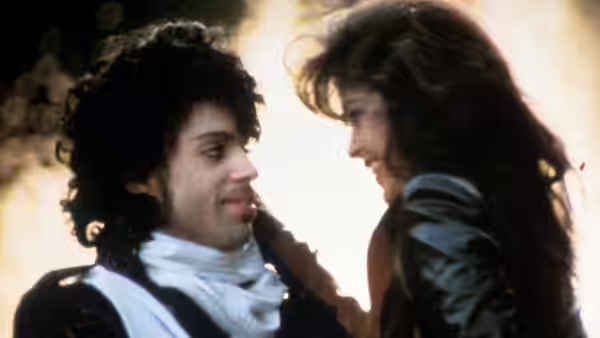
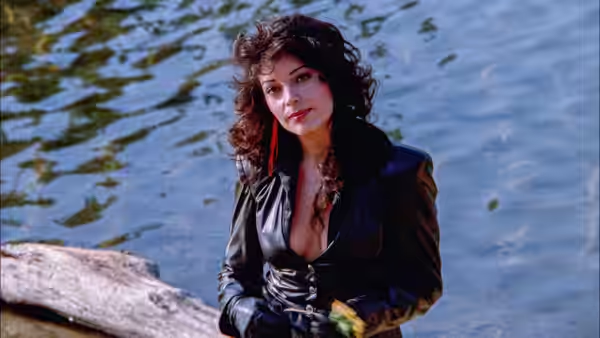
Morris Day is the other good reason to stay. As Morris, he has a confidence in the dramatic scenes that makes us wish the film would spend more time with him. Prince and Apollonia Kotero are less comfortable carrying the story without musical assistance, and their acting leaves the weaker writing exposed. The charm is there, but charm cannot make every exchange persuasive, particularly when the film is asking us to take its troubles so seriously.
The screenplay by Albert Magnoli and William Blinn leans too heavily on broad melodrama, with too little convincing behaviour underneath the emotion. The Kid benefits from a film that is already firmly on his side, and the people around him do not always receive comparable attention. A backstage musical can accommodate an enormous ego; it becomes harder work when that ego is offered as sufficient explanation for the drama. The writing too often relies on Prince’s presence to keep us interested.
The concert scenes justify that patience, especially for anyone who values a musical performance as something worth watching in itself. Albert Magnoli gives them time to develop and trusts the music to hold our attention. We would recommend it most readily to someone happy to forgive uneven acting for the pleasure of watching Prince perform. Come for Prince, and allow for the conversations.