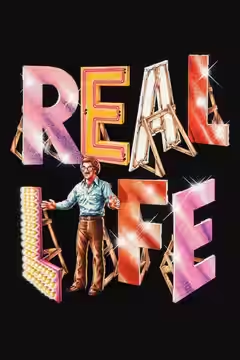
Albert Brooks’s first film imagines reality television twenty years before anyone made any, and gets nearly everything about it right. It is a sharp, sour comedy that loses some pace in the middle and never loses its nerve.
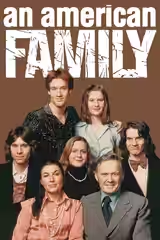
In 1973 American public television showed An American Family, a documentary series that followed the Loud family of California for months and watched them come apart. Albert Brooks, with his co-writers Harry Shearer and Monica Johnson, took that idea and asked a simple question: what if the man behind the cameras was not a sociologist but a show-business egotist who needed a hit? Real Life is his answer, and for a first film it is remarkably sure of what it is doing. It is funny, it is uncomfortable, and it was right about where television was heading long before television got there.
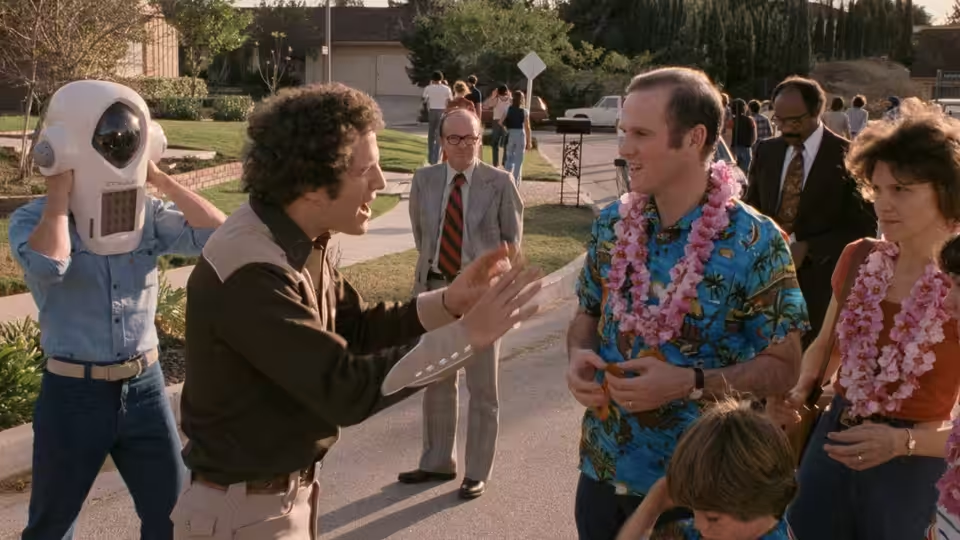
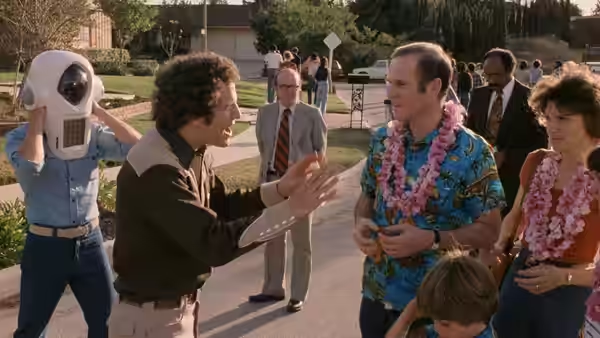
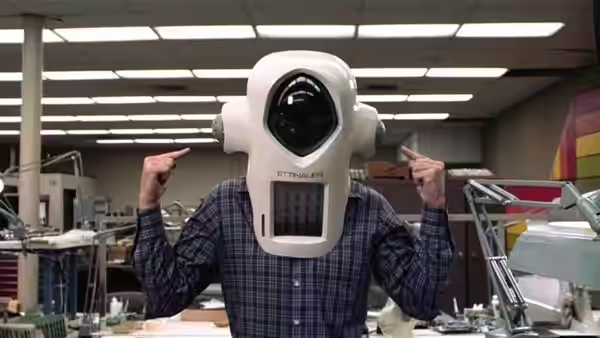
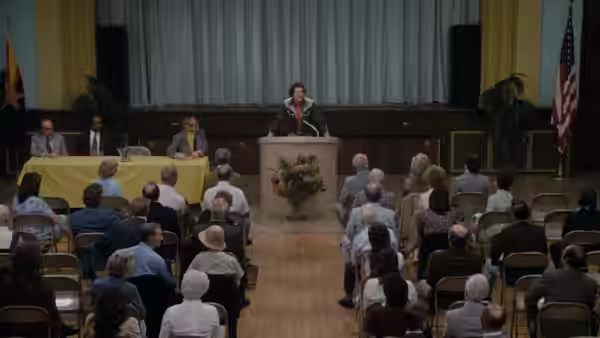
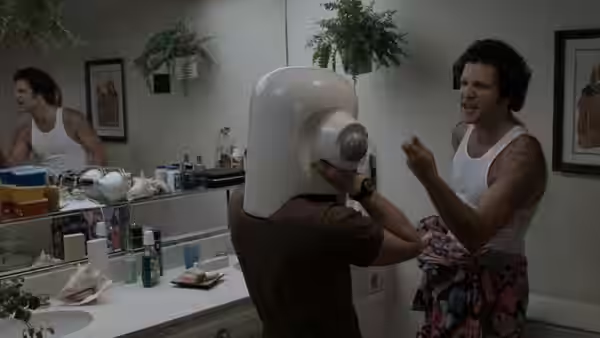
It opens in a community hall in Phoenix, where Brooks, in a tuxedo, sings a number to the assembled townsfolk to thank them for being chosen, with Mort Lindsey’s brass section behind him. Lindsey wrote the music and appears as himself, and his score stays in that key throughout: big, bright, Las Vegas confidence laid over a suburban street where nothing is happening. Then come the scientists, Hill and Cleary, with their charts and their definition of a typical family, and the cameras, which are worn on the head like diving helmets and follow the Yeagers into rooms nobody should be filmed in. Eric Saarinen shoots the house in flat, even, daytime light, exactly as a documentary crew of the period would have, so that the film we are watching looks like the one Brooks is making. That is the whole trick, and it holds for 99 minutes.
Charles Grodin is the film’s anchor. His Warren Yeager wants to be a good subject the way some people want to be a good patient, and he keeps glancing at the lens to check how he is doing. An operation at his veterinary practice goes as badly as an operation can go, and Grodin’s attempt to stay reasonable and professional for the camera while it happens is the funniest and most painful thing in the film. We laughed hard, and then felt slightly ashamed, which is the reaction Brooks is after; we were watching a man’s worst day and enjoying it, and the film knew we would. Frances Lee McCain’s Jeannette is the one who sees the trap first, and McCain plays her tiredness without asking for sympathy.
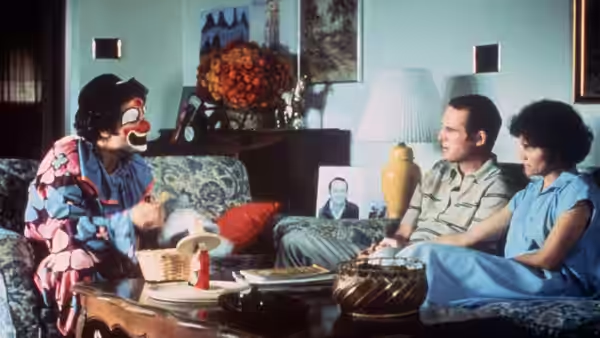
Brooks the character is another matter, and this is where the comedy turns. He is supposed to be observing the Yeagers and cannot leave them alone. He offers advice. He drops in. He takes their marriage as a note on his own performance. Every time the family does something dull, which is most of the time, he turns to the camera to explain why this is still fascinating, and David Finfer cuts these pieces of pleading against long stretches of the Yeagers eating and bickering so that the gap between what Brooks says and what we see grows wider with each reel. The film is about a man who set out to film a family and made a film about himself, and it is honest enough to admit that the finished object in front of us is that film.
Not all of it works. The middle third repeats the joke of Brooks intruding and the Yeagers flinching more often than it needs to, and around the hour mark we found ourselves checking how much was left. The children barely register; Lisa Urette and Robert Stirrat are given a scene or two each and otherwise exist to be in the background of their parents’ arguments. Brooks’s on-screen persona, all wounded reasonableness, is a fine instrument in short bursts and can grate when he is carrying a whole sequence alone. Penelope Spheeris produced, on what looks like very little money, and once or twice the seams show.
Set against the films Brooks made afterwards, Modern Romance and Lost in America among them, this is the rawest and the least polished, and also the one with the biggest idea. Those later films are about one anxious man. This one is about what happens when an anxious man gets a camera and a family who cannot say no, and that turned out to be a description of a great deal of television.
The second half takes a turn we will not describe. Watch it at home, where it looks more than ever like the thing it is imitating, and then try to think of a programme about ordinary people and cameras that it did not predict. We could not.