Julian Gilbey can stage a chase, and there are two here worth the price of admission. Around them is a gangland film in which everybody is horrible, every scene arrives on schedule, and faces from better British gangster films turn up to remind you of them.
Rollin’ with the Nines is a British gangster film about a garage crew that goes into the drug business, written by Julian Gilbey and Will Gilbey, directed by Julian, and cut by both. It has a car chase and a chase through woodland that are as well put together as anything in a British crime film of its budget, and almost nothing else. Most of its running time is spent with people we did not want to be near, saying things we had heard before.
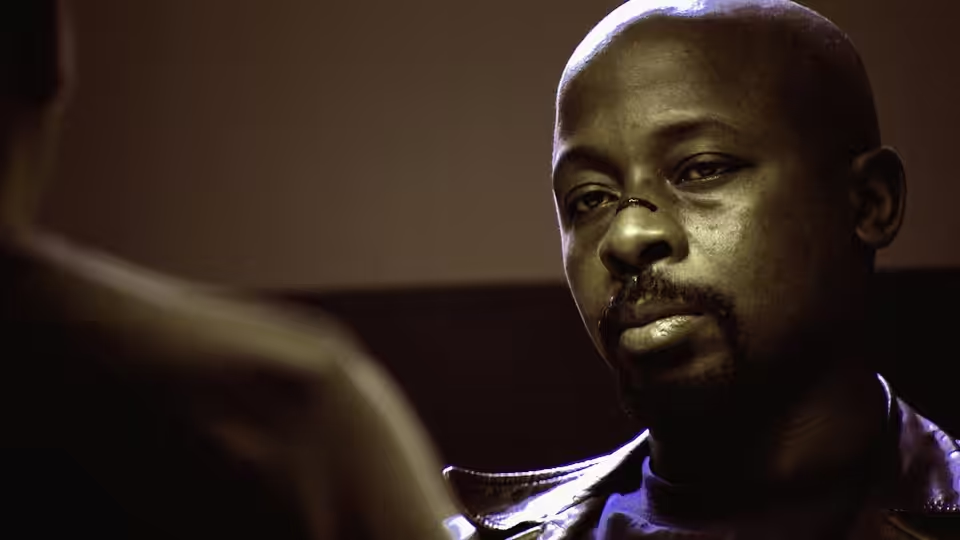
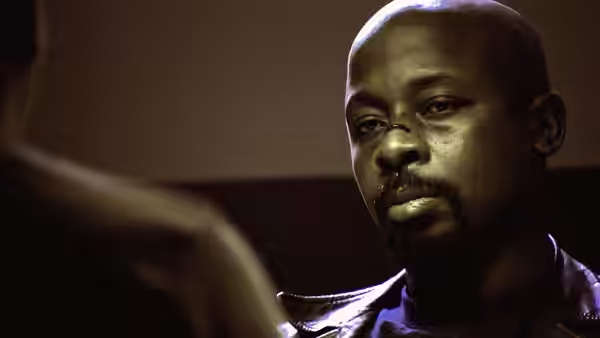
The cast is the most familiar thing about it, and the film plainly hopes that familiarity will do some of the work. Blackwood plays Finny as the nervous one, and he is the most watchable of the crew because he is the only one who seems frightened. Gee’s Pushy is louder and does less with it. Flemyng, as Capt. Fleming, has a handful of scenes and spends them looking as if he has wandered in from a better-lit film.
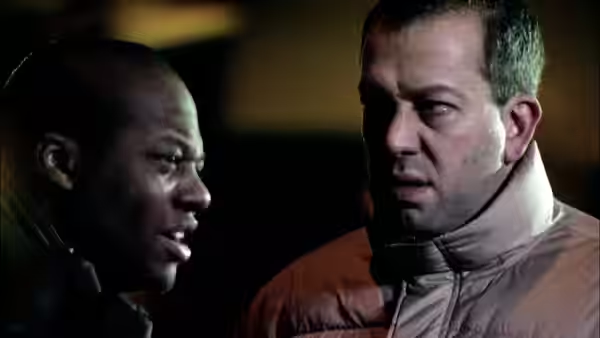
Terry Stone’s Detective Andy White is the part people will remember. Stone plays him big: a bent copper who enjoys being bent, leaning into every doorway, grinning at people he is about to rob. It is not subtle, and we are not sure it is good, but it is alive, and in a film this grim that counts. Naomi Taylor’s Hope is the steadiest thing on screen. Taylor underplays where everyone around her overplays, and the few scenes about a woman who has lost her brother are the only ones with any feeling in them.
The craft is why it is not a write-off. Ali Asad shoots the night scenes in hard orange streetlight and deep black, so that faces come out of nothing and go back into it, and the daytime scenes are drained of colour until the estate looks like a place the sun has given up on. The car chase is cut by Will and Julian Gilbey with real discipline. We always knew where both cars were, and the shots are held just long enough to register before the next one hits. We sat up for it. The pursuit through the woods is nearly as good, handheld and breathless, and it is the one stretch where the film stops telling us how hard everyone is and simply shows people running for their lives.
The script is the problem, and it is a problem in every scene the cars are not in. The dialogue explains what we have just seen and announces what we are about to. Every character is exactly as nasty as the genre requires and not one degree more interesting. We flinched at the first killing, and we were meant to. By the fourth we had stopped flinching and started checking the time. Violence in a film like this has to cost something, and here it is just the next thing that happens.
Nataasha Van Kampen’s flats and lock-ups look like places people actually live and hide things, and Shireena Facey has dressed the crew without a single wrong trainer. Sandy McLelland’s music and the garage tracks carry a good deal of the mood that the writing does not. These are the marks of a crew that cared, working on a story that did not give them much to care about.
Bullet Boy, from 2004, covered the same London ground with half the gunfire and a great deal more to say about why young men pick up guns. The reviews so far have split, with one trade paper warmer than the rest, and we are nearer the cold end: there is talent here, and two sequences that prove it, and a film around them that treats its own people as targets.
If you want a chase, the one on the road is worth finding and the one in the woods is a bonus. The 18 certificate is earned early and often, and the 96 minutes feel longer than they are.