An amiable family comedy about a boy and a faulty robot, with enough affection to make its familiar story worth an evening. The friendship is convincing; the warnings about technology need more thought.
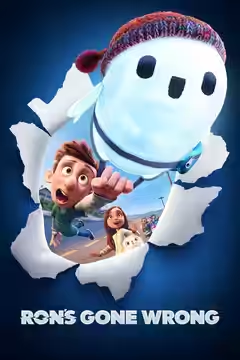
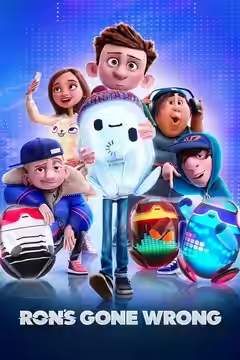
Ron’s Gone Wrong is a funny, affectionate family film with an uncertain grasp of the technology it wants to criticise. Directors Sarah Smith and Jean-Philippe Vine have a useful starting point: a socially awkward boy gets a robot companion whose malfunctions make getting along with people no easier. They understand how much comedy can be found in that shared difficulty, and how quickly it can become painful. The friendship is good enough to make the film worth an evening, despite the muddle around it.
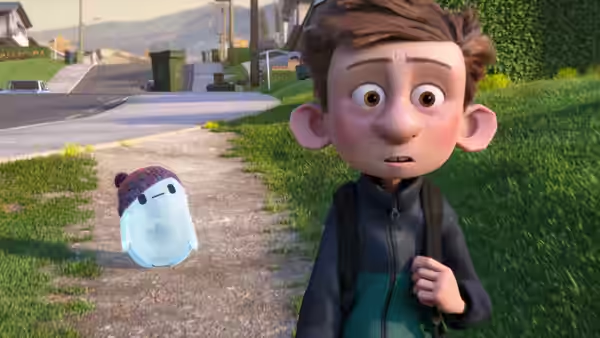
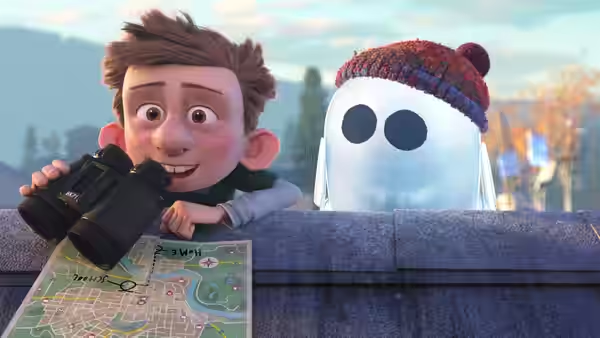
Jack Dylan Grazer gives Barney’s embarrassment enough bite to stop him becoming a generic lonely child waiting for the plot to deliver a companion. The early scenes take his uncertainty about other people seriously, while still finding room for jokes. Once Ron arrives, there are two characters struggling with behaviour that seems to come easily to everyone else. We felt for Barney more than we expected, because the resemblance between his hesitant social efforts and Ron’s malfunctions makes the slapstick a little uncomfortable.
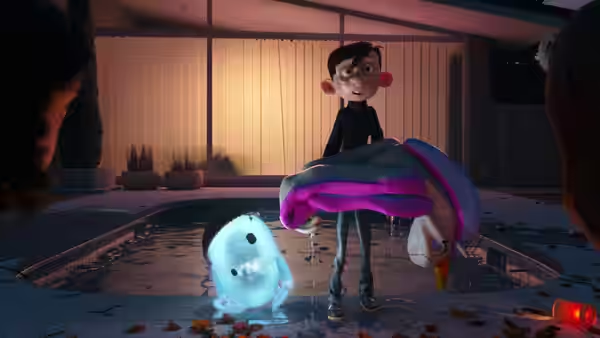
Zach Galifianakis voices Ron with a deadpan delivery that makes the robot’s mistakes funnier than a more eager performance would. There are stretches where the voice becomes monotonous, and another malfunction does not always amount to another joke. Even so, his lack of apology gives the character a stubborn comic presence that plays well against Barney’s self-consciousness. Their growing affection is believable because the script allows them to be difficult company for each other.
David Peers’s cinematography keeps the physical jokes legible, allowing Ron’s buggy movements to supply the variety that his voice sometimes lacks. Production designers Aurélien Predal and Nathan Crowley make the B*Bots appealing enough for us to understand their attraction. The care in the animated surfaces helps sell these machines as things children might want to have around, which is useful in a story questioning that desire. Against the more inventive end of family animation, this is modest work; Ron has to supply much of the fun himself.
David Burrows’s editing is brisk within the comic scenes, but cannot disguise how often the story repeats itself. The film is liveliest when it lets boy and robot deal with one another; the corporate plot keeps interrupting a relationship that is already interesting. Henry Jackman’s music supplies warmth, though it is too ready to underline feelings the voices have already made clear. At 107 minutes, the film has enough room for the relationship to develop without stopping so often to explain itself.
Writers Peter Baynham and Sarah Smith are alert to the pressure to accumulate online connections, and to the loneliness that can persist despite them. Their account of what companies gain from collecting people’s data is less satisfying. The criticism stays broad, while the familiar corporate story supplies distractions instead of helping the film think through its own warnings. We understand why Barney wants a friend, but the script is less clear about what it wants children to understand about the technology offering him one. Worth a family evening, especially with someone who remembers how hard finding a friend can be.