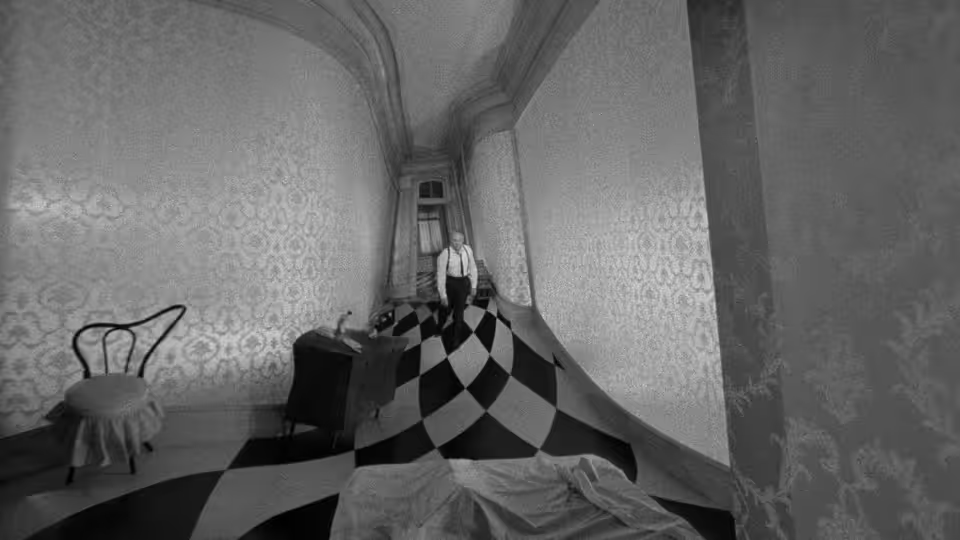
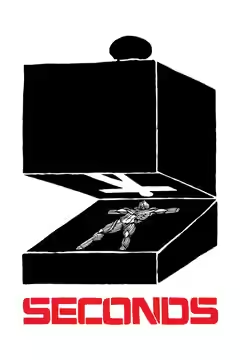
Frankenheimer’s story of a banker who buys a new face and a new life is as frightening as anything from its decade, with James Wong Howe’s camera doing most of the frightening. The middle hour in California drifts; everything either side of it is exact.
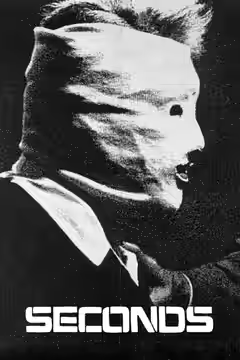
John Frankenheimer had already made The Manchurian Candidate when he took on David Ely’s novel, and Seconds is the colder film. Lewis John Carlino’s screenplay asks a plain question: if a company could give you a new face and a new life, would the man inside change with it? The answer is no, and the film spends 107 minutes making that answer hurt. It is a horror film with almost no violence in it, and it frightened us more than most that have a good deal.
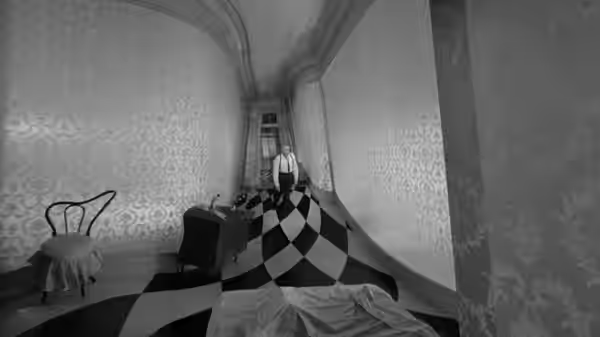
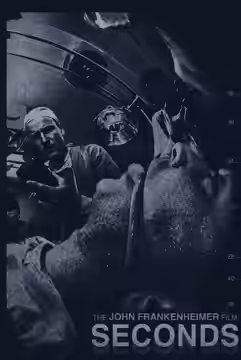
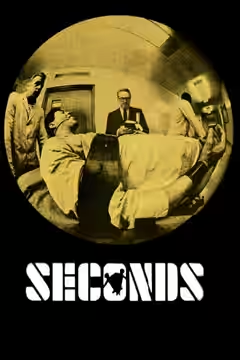
The first reason to see it is James Wong Howe. He shoots the opening at Grand Central with lenses so wide that the pillars bend and a face a few inches from the camera stretches like something pulled. The camera follows John Randolph’s Hamilton through the crowd at shoulder height, hand-held, so that we are the thing tailing him. Later Howe rigs the camera to the actor so that a corridor lurches and the face in front of it does not. Ferris Webster and David Newhouse cut the early scenes a beat short each time, as if somebody were listening at the door.
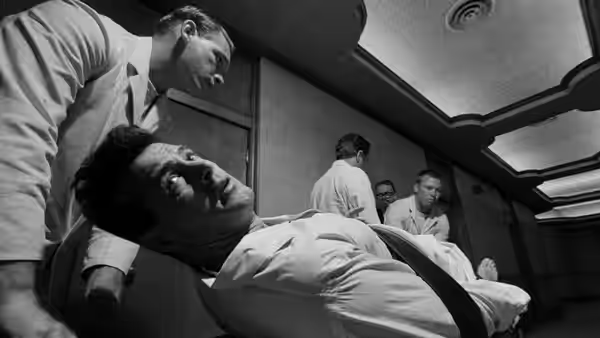
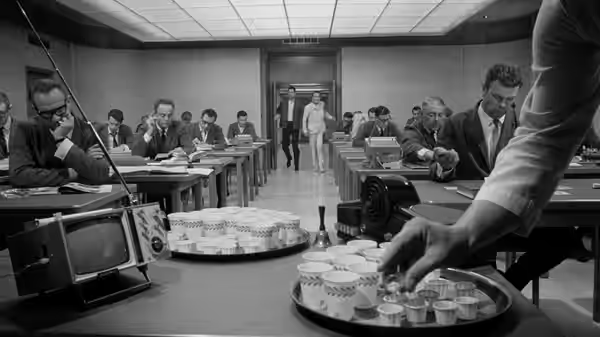
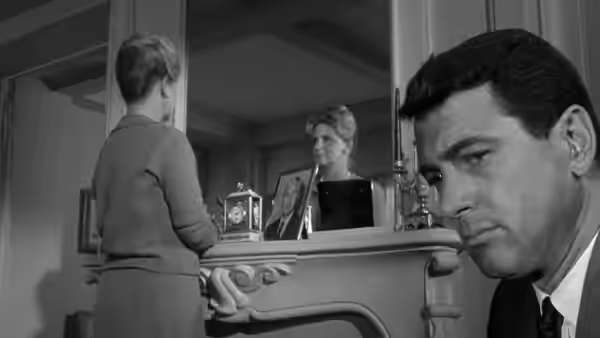
Randolph plays Hamilton as a man who has stopped noticing his own life. His conversations with Emily (Frances Reid) are held from separate beds, about nothing. When the Company gets hold of him, its people are the politest in the film. Jeff Corey’s Mr. Ruby eats his lunch while he explains the terms. Will Geer’s Old Man speaks softly about a man’s right to his dream, and means it, and that is the most frightening thing in the first hour. They show Hamilton a film of himself doing something he has not done and offer him the choice of signing or not. We watched Randolph’s face during that screening and felt sick, which is what the scene is for.
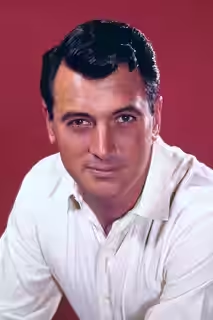
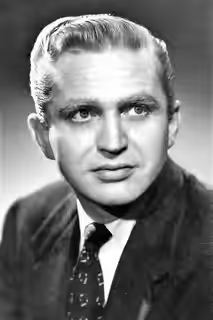
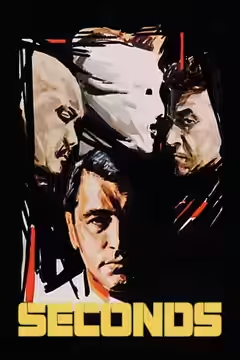
Then Rock Hudson arrives, and the casting is the film’s best idea. Hudson was the handsomest man in American pictures for a decade, and here he plays a middle-aged banker who has been handed that face and does not know what to do with it. For a while he is stiff, and we took it for a weakness before we understood it. Tony Wilson walks like a man in someone else’s suit. The scene that undoes him is a cocktail party at his new house, where he drinks too much and begins telling the guests things a painter from California could not know. Hudson goes from good cheer to panic without the film cutting away, and it moved us more than we thought this film had room for. He is playing a man who has found out that what he wanted was not a new life but the old one, lived properly.
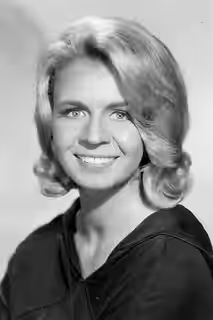
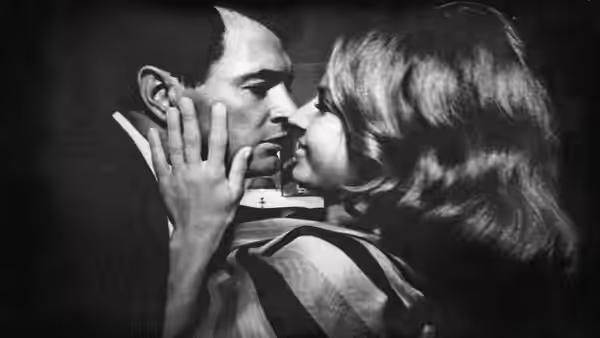
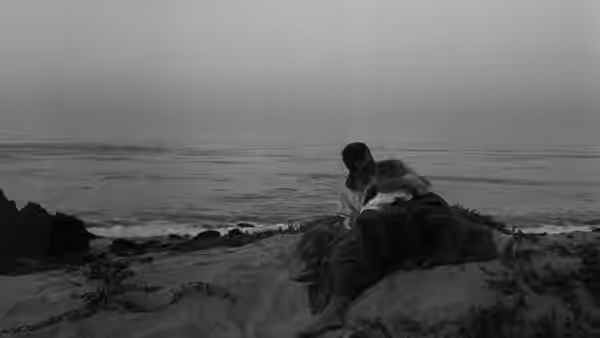
The California stretch is where the film slackens. Salome Jens’s Nora Marcus finds Wilson on the beach and takes him to a grape harvest in the hills, where several dozen naked people stamp fruit and shout about freedom. It is meant to show a man failing to let go, and it does, but Frankenheimer lets it run well past that point, and Nora is a way of getting Wilson to the party rather than a woman in her own right. Jerry Goldsmith’s score, an organ and strings that sound like a funeral service played at the wrong speed, is exactly right in the offices and lays it on thick in the sun.
The reviews in 1966 were divided, and we can see why: the film changes its manner three times and asks you to trust that the pieces belong to the same story. They do. The last quarter of an hour, which we will not describe, is the place the whole film has been walking towards, and Frankenheimer shoots it with a stillness the opening has taught you to dread. We came out of it quiet.
Watch it at night, and do not read about the ending anywhere first. It is one of the few films from its decade that has not softened with age.