Saoirse Ronan’s comic timing makes this theatrical whodunit worth an evening. The period trimmings and her partnership with Sam Rockwell are more reliable pleasures than a mystery too pleased with its own cleverness.
Tom George’s See How They Run is worth an evening for its comic partnership, provided a demanding murder puzzle is not the main attraction. It wants to make us laugh at the familiar habits of a whodunit while giving us the comfort of watching one behave much as expected. Mark Chappell’s screenplay supplies enough good jokes to make that a reasonable proposition. It also spends too much time pointing out conventions when it could be making its suspects more interesting.
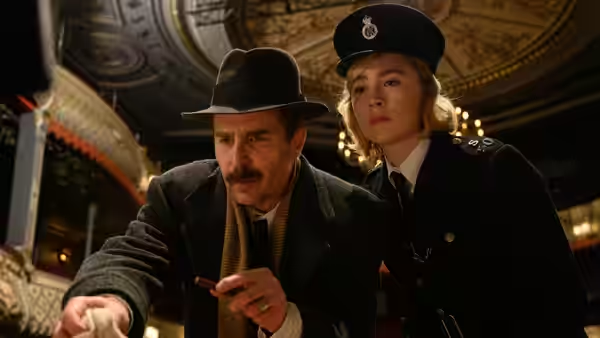
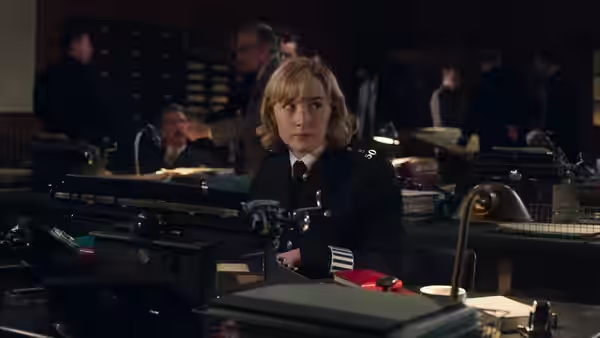
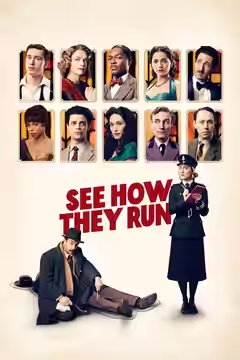
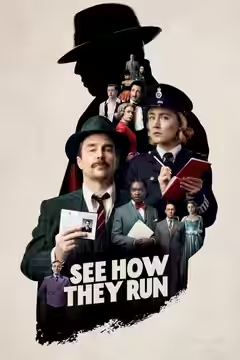
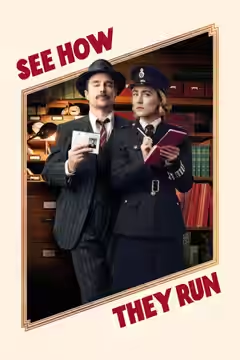
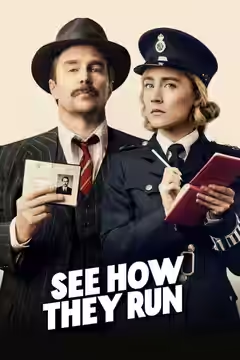
Saoirse Ronan is the reason that balance mostly holds. Her Constable Stalker takes the investigation seriously enough for us to care about her, even when the film is busy teasing the genre she inhabits. We laughed at the constable’s earnestness: the deadpan delivery makes her eagerness funny without requiring us to think her foolish. There is affection in the performance, and an exact sense of how long a comic reaction should last.
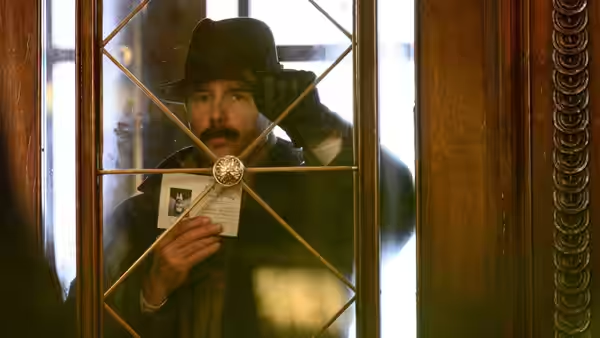
Sam Rockwell’s Inspector Stoppard supplies the fatigue that her enthusiasm needs to rub against. He is good company, although his accent is sometimes distracting enough to make us notice the performance before the character. The pairing works because he leaves space for his partner rather than trying to equal her comic energy. It is also where the film finds some feeling: we become interested in whether these two can work together, independently of the case.
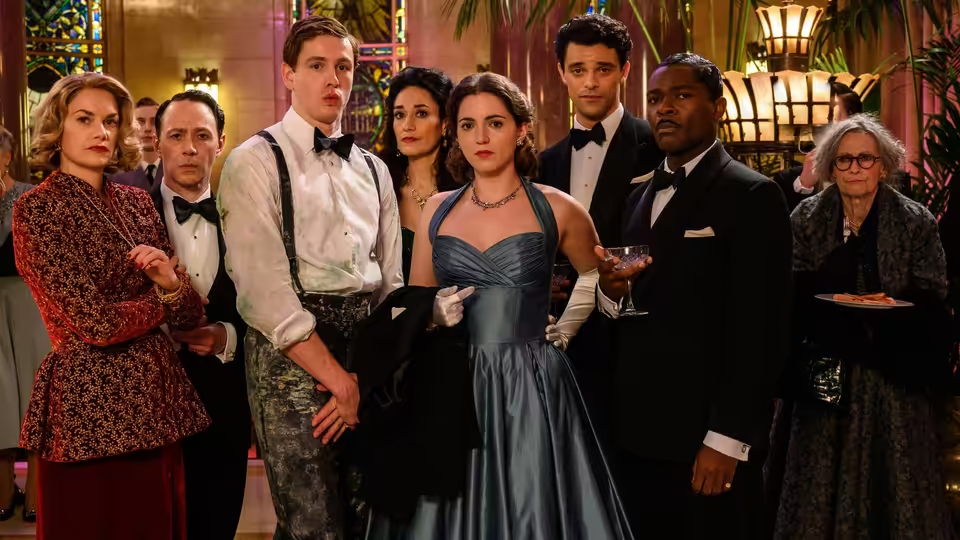
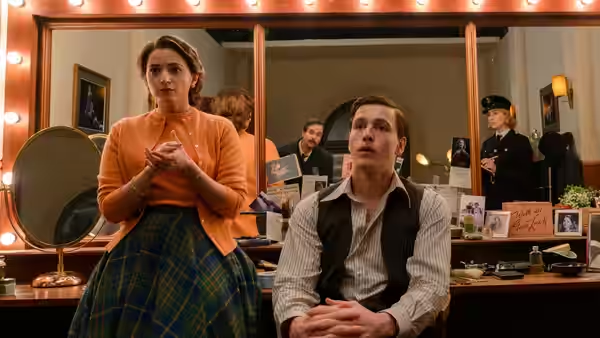
Jamie Ramsay’s cinematography gives theatreland a carefully arranged prettiness, and the period setting is a pleasure to look at. Amanda McArthur’s production design makes the same surroundings feel comfortably lavish, a useful fit for a story so taken with theatrical self-importance. Neither contribution is at fault when the investigation starts to feel thin. The danger is that the director lets the attractive surroundings do too much of the entertaining while the people inside them remain broad comic sketches.
Editors Peter Lambert and Gary Dollner give the comedy a brisk, playful rhythm, helping the film move past jokes that would suffer from being held any longer. The cutting supplies energy that the accumulation of clues does not always earn. Daniel Pemberton’s music suits the light tone, though it does little to make the investigation feel urgent. Across 99 minutes, there are passages where we would happily exchange another flourish for a clearer reason to suspect someone.
The larger problem is the screenplay’s fondness for announcing how familiar all this is. A comic whodunit still needs to make us curious about the answer, and recognising a tired device does not automatically make using it amusing. Here, the extra complications sometimes leave us waiting for the investigation to get on with it. Tom George handles the silliness more comfortably than the moments that ask for seriousness. Those passages ask for a concern the broad characterisation has not quite earned.
We would have welcomed a sharper puzzle, but we were rarely impatient with the investigators. Their company supplies enough pleasure to make the weaker passages tolerable. Watch it for Saoirse Ronan, and take an interest in Stalker’s progress before investing too heavily in the suspects.