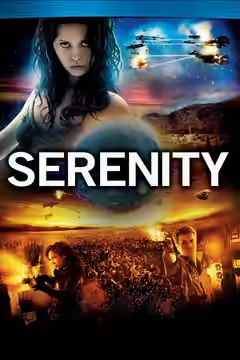
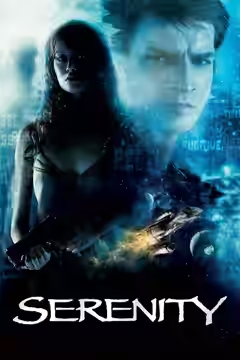
Joss Whedon’s science-fiction adventure is quick-witted, well acted and worth an evening for the space-adventure crowd. The cast make entertaining company, though several characters deserve more attention than the busy storytelling allows.
Serenity is an enjoyable science-fiction adventure with a weakness for a smart reply, including moments when a little silence might help. Joss Whedon writes and directs with considerable confidence in the appeal of his ensemble. For much of the film, that confidence is justified: the performances are alert and the dialogue gives the actors something to play. We recommend it to the space-adventure crowd, with a warning that some of the characters get less attention than they deserve.
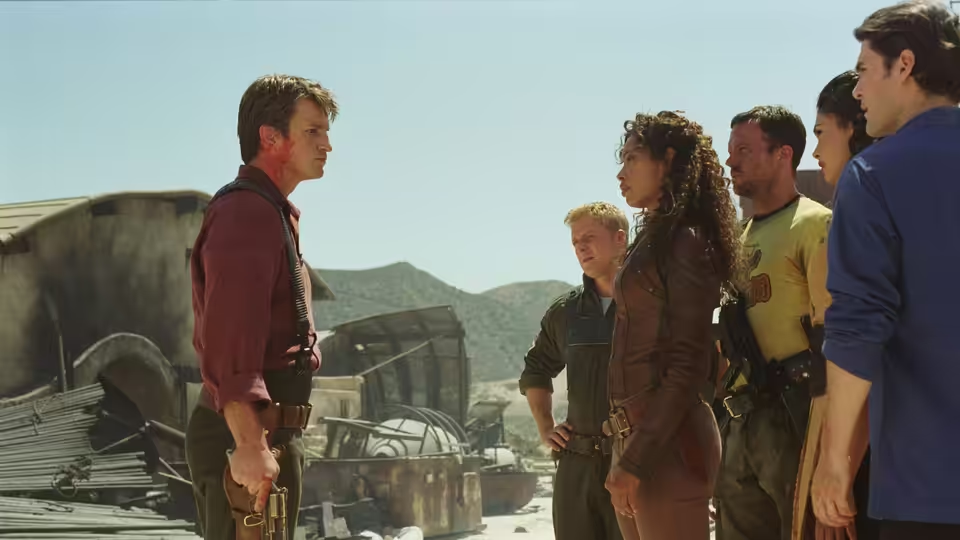
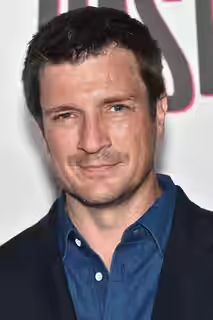
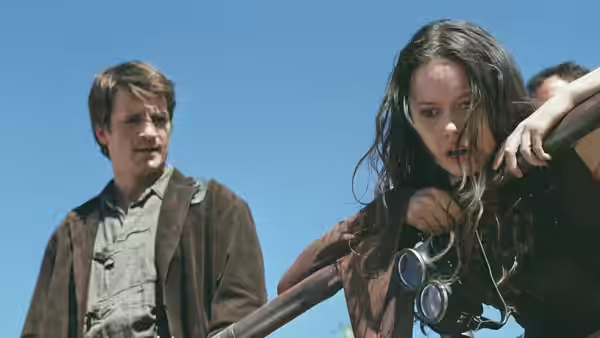
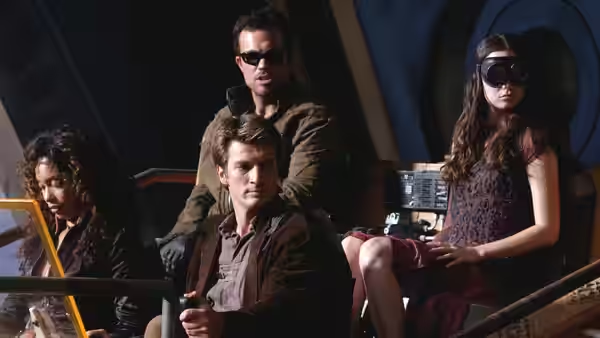
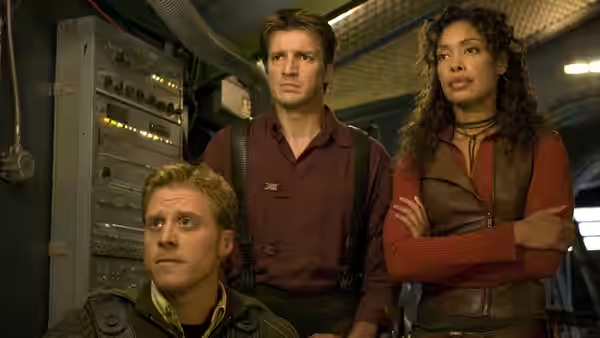
Nathan Fillion is the main reason it works. As Malcolm ‘Mal’ Reynolds, he gives the humour a useful edge of impatience, making the lines sound like things the character needs to say. We laughed at the clipped delivery of the one-liners, because Fillion makes annoyance funny without appearing to wait for our approval. His performance gives the action someone worth following, and he can hold our attention without constantly asking for it.
Summer Glau’s River Tam brings a welcome uneasiness to the ensemble, while Chiwetel Ejiofor gives The Operative a seriousness that holds up against the prevailing humour. Both performances suggest more than the dialogue spells out. The limitation is how unevenly Joss Whedon distributes that attention: some characters register quickly and then have little room to develop. Gina Torres and Alan Tudyk are good company, but we wanted more from their roles than the film allows.
Jack N. Green’s cinematography helps keep the action readable, an important virtue in a film with this much competing for attention. Barry Chusid’s production design gives the science-fiction surroundings a practical, low-tech character that suits the actors’ unceremonious manner. The spaces feel made for people to occupy, and the ensemble looks comfortable in them. The larger images make less of an impression, although the film seldom depends on spectacle alone to keep us interested.
Lisa Lassek’s editing helps the early stretch move briskly without throwing away the exchanges that make the ensemble enjoyable. The pace is less sure once there is more story to explain, and some conversations continue after their point is clear. David Newman’s score supplies urgency during the action, although it makes less of an impression than the voices. We missed a more distinctive musical presence, particularly when the film reaches for a weight its dialogue cannot supply on its own.
The suspicion of government power gives the adventure something worth considering, even if the political writing is not equally convincing throughout. Joss Whedon is good at making an irreverent tone carry a serious objection to authority. He is less persuasive when the broader ideas require sustained attention, and the eagerness to keep things lively occasionally works against him. Still, the questioning of authority gives the action a purpose beyond getting the cast into another difficult situation.
By the standards of the genre, the emphasis on actors and dialogue is a considerable virtue. We would have liked more time for the supporting cast and fewer exchanges in which everyone seems determined to have the last word, but the company earns the 119 minutes. Choose it for the performances and the humour. Anyone mainly hoping to admire the machinery may find the conversation a persistent interruption.