Gordon Parks gives Shaft a persuasive leading man and a New York worth looking at. The plot is thin, but Richard Roundtree and Isaac Hayes make this crime thriller worth an evening.
Gordon Parks’s Shaft is worth an evening for Richard Roundtree, the music and the city, with a caveat about the detective story. The mob’s claim on Harlem gives it a blunt, workable conflict, but the writing does too little to make that conflict interesting. What keeps us watching is John Shaft himself. Richard Roundtree has enough presence to make waiting for the plot to improve a reasonably agreeable occupation.
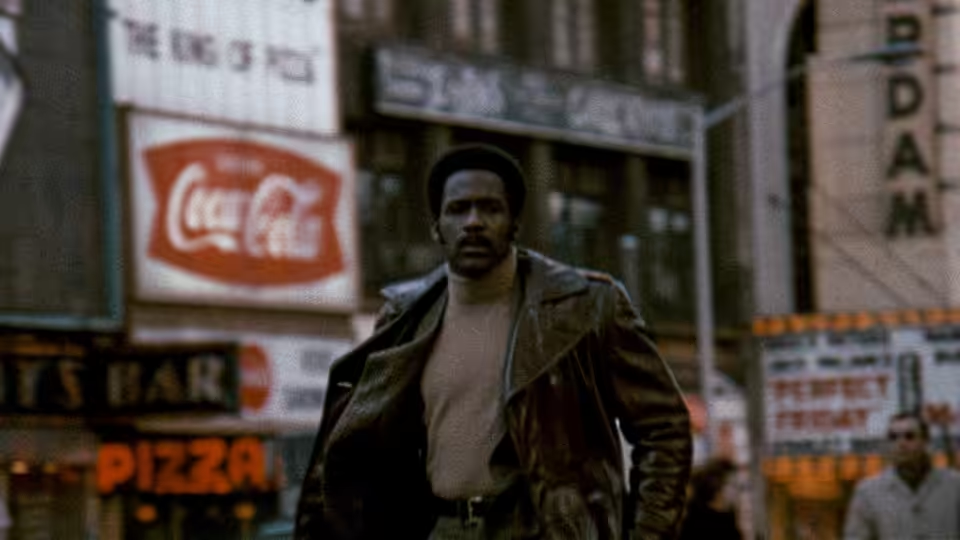
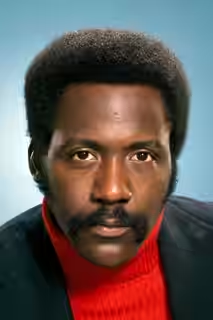
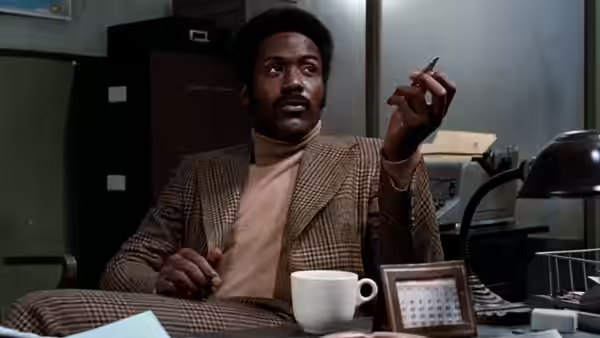
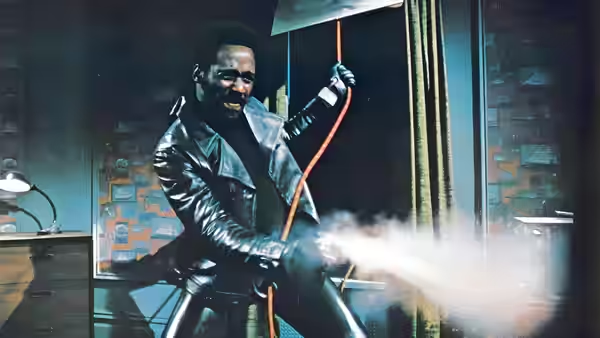
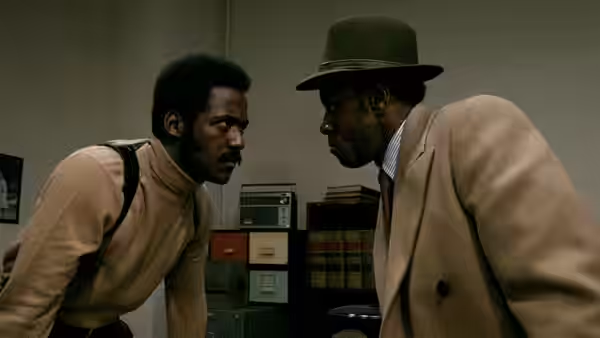
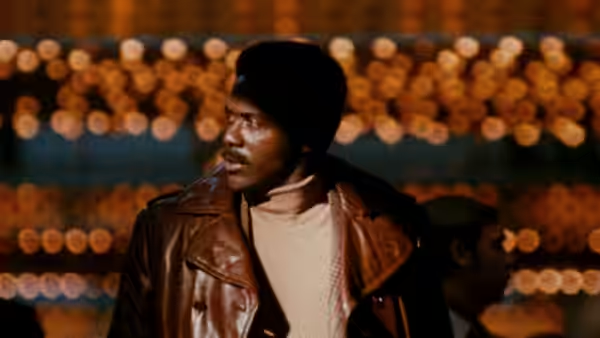
As a Black private eye, John Shaft occupies the centre of a genre that often treats the detective’s independence as his chief qualification. Richard Roundtree makes that independence convincing without asking us to find him agreeable. There is a cost to the reserve: we sometimes want more humour, or simply a less guarded response, from the man we are following. Still, the performance gives the film a steady presence, and Gordon Parks knows how much attention it can bear.
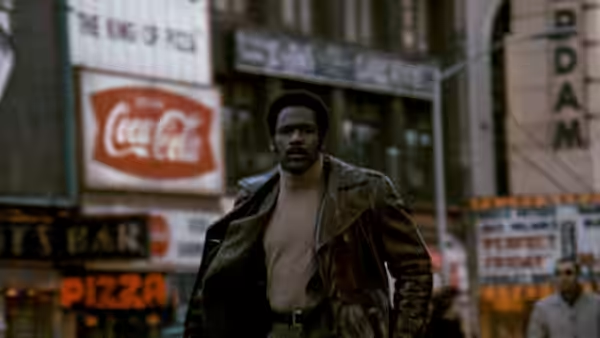
Urs Furrer’s cinematography is a substantial part of the appeal. New York feels like somewhere the film has bothered to look at, rather than a location chosen to make a familiar crime story appear tougher. There is enough interest in the city itself to keep us looking when the dialogue has ceased to surprise us. Gordon Parks allows that attention to place to count, and it gives the film a sense of ordinary life beyond its leading man.
The music does more than its fair share, too. Isaac Hayes and J.J. Johnson receive the music credits, and Isaac Hayes’s opening theme supplies an assurance the screenplay cannot always match. We were delighted by that opening: the theme makes the introduction to John Shaft feel like sufficient entertainment in itself. The music’s warmth also helps a film whose hero can seem determined not to enjoy himself. The danger is that the introduction promises an ease and excitement that the story only intermittently delivers.
Ernest Tidyman and John D.F. Black’s screenplay is the main limitation, relying on a conventional detective plot without making its familiarity especially pleasurable. We do not need a crime film to reinvent the investigation, but we do need some curiosity about what comes next. Hugh A. Robertson’s editing allows the pace to slacken as the climax approaches, precisely when that curiosity should be strongest. At 100 minutes, the film is hardly overlong, yet we notice the stretches in which neither the plotting nor the pace is helping Richard Roundtree. His presence can only do so much.
For a detective thriller, these are substantial reservations, and anyone coming chiefly for a satisfying case may find them decisive. We kept finding enough to enjoy in the performance, the music and the view of New York to stay interested. There is a good evening here for crime-film enthusiasts who do not require intricate plotting. Go for Richard Roundtree, and give the investigation some latitude.