Jalmari Helander’s revenge film has one idea, an old prospector who will not die and an SS platoon that keeps trying, and runs it for 91 minutes. The set pieces are brutal and inventive; the last half hour is the same set piece again.
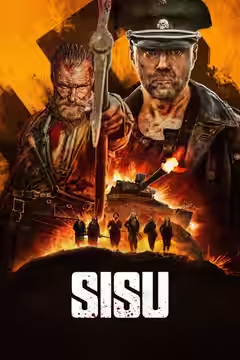
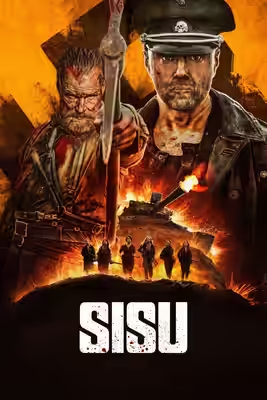
Lapland, 1944. The German army is leaving Finland and burning it on the way out, and an old man is digging for gold in a riverbed with nobody for company but a dog and a horse. A card at the start tells us that sisu is a Finnish word with no English equivalent, something like stubbornness carried past the point where stubbornness makes sense. Jalmari Helander’s film then spends 91 minutes demonstrating the word with a pickaxe. It has one idea, executes it with real skill for about an hour, and then keeps executing it.
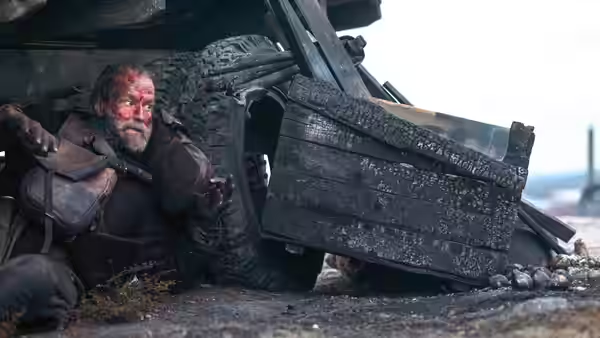
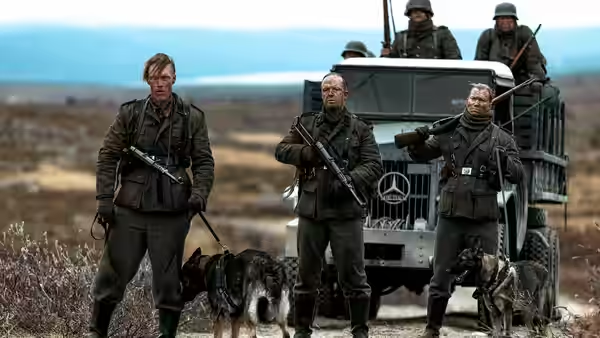
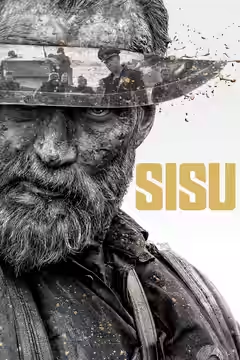
Jorma Tommila plays Aatami with a face like a quarry wall and almost no lines. His body is a map of old wounds, and each new one is treated as an inconvenience. When a platoon of retreating SS men, led by Aksel Hennie’s Bruno, stop his horse on a scorched road and take an interest in his saddlebags, Tommila does not act menace. He waits, and the waiting is the performance. We believed he could not be killed some time before the film got round to explaining why.
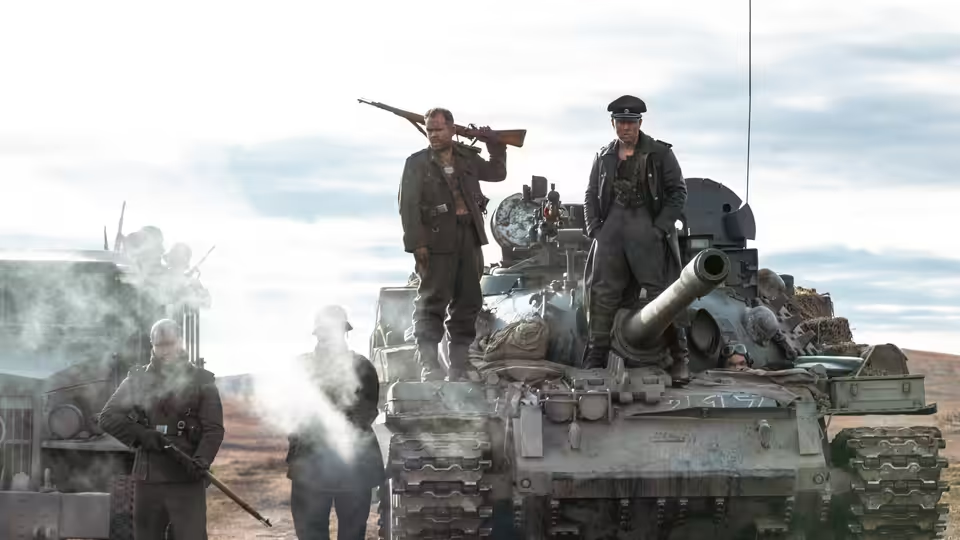
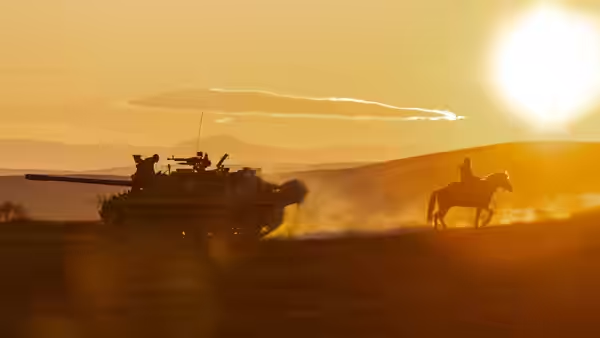
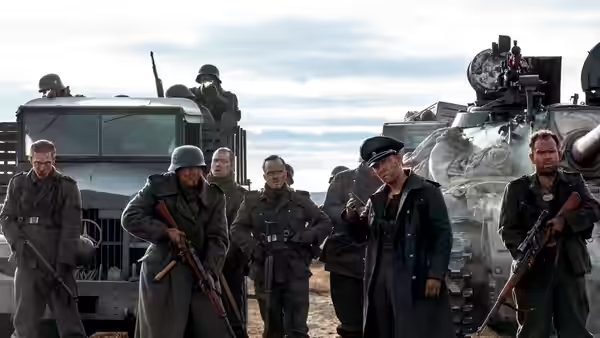
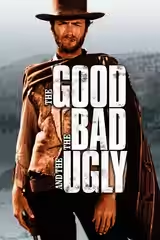
Kjell Lagerroos shoots the north as a flat, ashen plain under a low sun, smoke on every horizon, the colours narrowed to mud, soot and the occasional flare of blood. Otso Linnalaakso gives the platoon a tank, a truck and a string of burned villages to pass through, all of it rusted and blackened, so the war looks over already and these men simply have not been told. Anna Vilppunen puts Aatami in a coat that seems to have survived several wars on its own. Tuomas Wäinölä and Juri Seppä’s score is twanging guitar and low drone, borrowed from the spaghetti western and not shy about it, and the chapter cards that break the film into sections make the debt plainer still.
The set pieces are the reason to go. There is a minefield, and what Aatami does with it made us laugh out loud and then wince, in that order, about a second apart. There is a hanging that does not go the way hangings go. There is a passage under a lake in which he solves the problem of breathing in a way we did not see coming and will not describe. Helander stages each of these in clean wide shots, so we always know where the mines are and where the men are, and Juho Virolainen holds on the aftermath a beat longer than is comfortable.
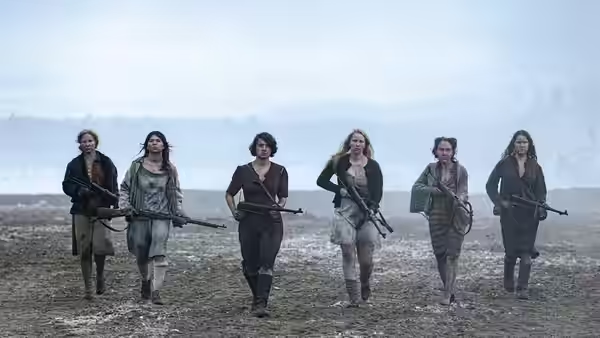
Hennie plays Bruno as a man who knows the war is lost and has decided the gold is his pension, which gives the villain a motive the genre usually cannot be bothered with. Jack Doolan’s Wolf is his nastier lieutenant. Mimosa Willamo’s Aino, one of a truckload of Finnish women the platoon is carrying as prisoners, is the film’s bid for stakes beyond the saddlebags. It is a thin part, but Willamo gets one look, late on, that says more about what these women have been through than the script does.
The trouble is that the film has only the one shape. The Germans close in, Aatami should be dead, Aatami is not dead, the Germans are. It is a fine shape. It is the same shape the eighth time as the first, and somewhere in the last half hour the injuries stop registering as injuries and the physics stops bothering to pretend. The digital effects grow larger and less convincing as the stunts grow larger and less plausible, and a speech about the legend of the man does work the pictures had already done better. We were never bored. We had simply stopped being surprised, and surprise is most of what the film has.
Helander’s Rare Exports (2010) took a small, silly idea and kept a straight face all the way through, and the straight face is still his best trick. Sisu is the same trick at a higher volume. If a quiet Finn killing Nazis in inventive ways for an hour and a half sounds like your evening, it is your evening, and the film will not waste a minute of it. If it does not, nothing here will change your mind. It runs 91 minutes and carries a 15 certificate, and both are the right numbers.