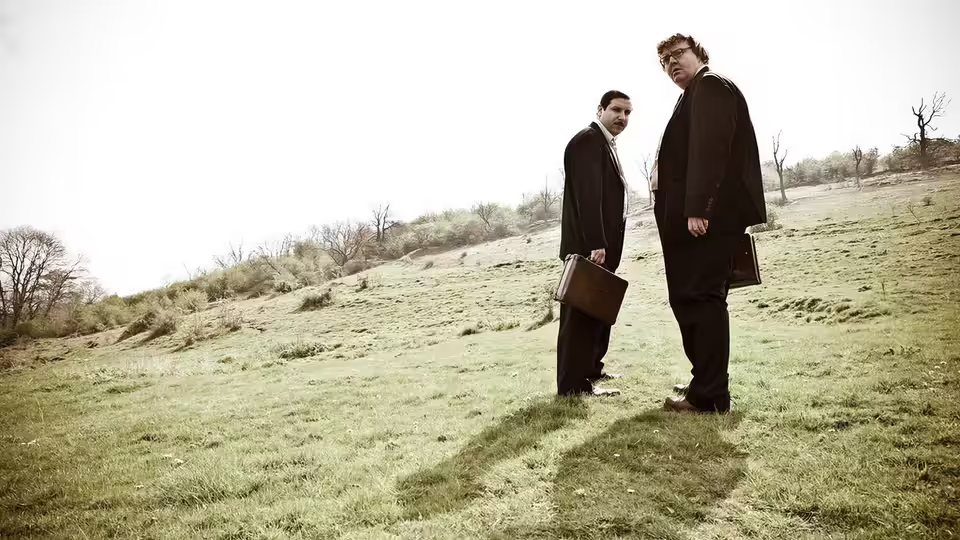
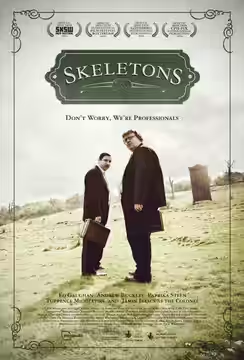
Nick Whitfield’s supernatural comedy earns our affection through Ed Gaughan and Andrew Buckley, even when the storytelling wobbles. Its eccentricity occasionally feels laboured, but the humour has warmth and the sadness gets through.
Skeletons is a good, uneven supernatural comedy whose chief pleasure is the company of its leading pair. Nick Whitfield, writing and directing, makes room for absurdity without treating every suggestion of pain as an invitation to another joke. That gives the film something worth staying for when its storytelling becomes untidy. We recommend it to anyone with patience for a fantasy that is more assured about its people than its plot.
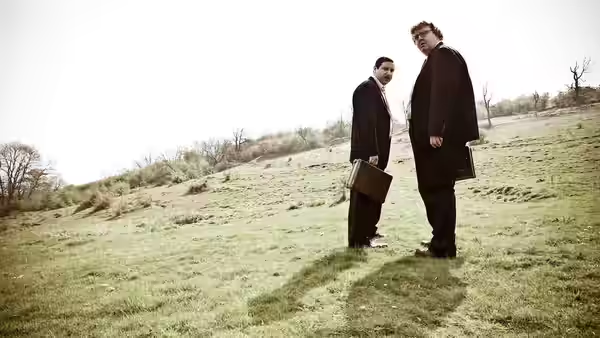
Ed Gaughan’s Davis and Andrew Buckley’s Bennett make that recommendation possible. Their appeal depends on an understated approach: neither performance seems determined to advertise how peculiar the material is, and the comedy benefits from their restraint. We warmed to them because their performances allow vulnerability to sit alongside the ridiculousness without demanding a change of acting style. Spending time with the pair remains enjoyable even when the story gives us reasons to question where it is going.
Whitfield is also good at letting the humour admit something uncomfortable. The emotional passages work because the comedy has already encouraged affection, rather than merely asking us to admire a succession of odd ideas. We were moved more than we expected; the hurt registers through the performances instead of being left entirely to the supernatural premise. The film does not maintain that balance throughout, but its willingness to take these people seriously matters.
Zac Nicholson’s cinematography gives the strangeness an atmosphere in which it can settle. It is an important contribution to a film that would become tiresome if every department insisted on telling us how eccentric it was. Simon Whitfield’s folk music is particularly well judged, supporting the humour and feeling without seeming imported from a more conventional comedy. The sound and images help make the shifts of tone easier to accept, even when the writing has not quite earned them.
The principal weakness is Nick Whitfield’s script, which can mistake an unusual premise for sufficient dramatic development. Some of the plotting feels predictable despite the eccentricity, and the less convincing passages require goodwill that the actors have to supply. Rachel Tunnard’s editing cannot make every change of tone feel settled, although the film avoids becoming an exhausting succession of competing moods. At 94 minutes, it still has stretches where the charm is doing work the story ought to have done.
Within supernatural comedy, understatement is a useful choice: the stranger the proposition, the less the actors need to point at it. Skeletons understands that better than it understands how to keep its mystery consistently persuasive. Its roughness sometimes suits the humour, though we would not defend every loose passage as a deliberate virtue. Choose it for Gaughan and Buckley, and allow a little patience for the writing; their company makes the allowance worthwhile.